I’ll tell you a story—a true but anonymous one.
There once was a father, let’s call him John, and his 19-year-old son, let’s call him Junior. They lived in New York State’s countryside, far from the city, where the cows, deer, and wild flowers are plentiful. They were happily living their lives even if they were technically lower middle class by pay grade.
One day, Junior was pulled over by a police officer who said that his inspection sticker had expired. The police officer knew his father and let him off with a warning, but said he better get that inspection done. “It’s the law,” the officer said.
In fact, Junior knew that his sticker had been expired for months, but had no choice.
Although the car drove perfectly fine, it had a Check Engine light on, which prevented it from passing the annual inspection.
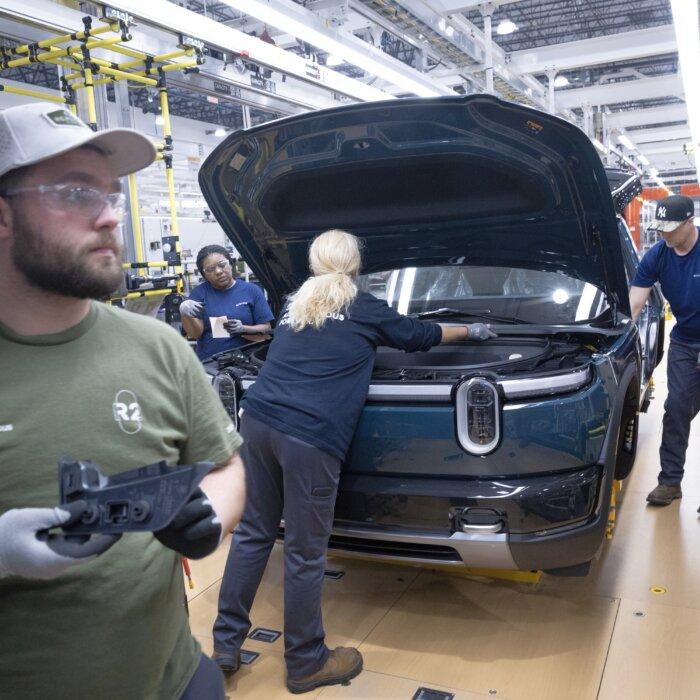

Before the police stop, he already had it checked out with his dad at a trusted, local auto repair garage. The mechanic said it was the catalytic converter—a device which reduces the car’s carbon emissions. Replacing it would cost thousands of dollars.
Back to the story: The mechanic offered a complicated way to get the Check Engine light off involving connecting a device to the car and driving the car for at least an hour so that it could pass the inspection without getting a new part. Desperate to save money and unclear on the legal boundaries involved, John and Junior gave it try, only to find that it didn’t work after an hour.
“You just need to drive it for longer,” the mechanic assured them, but they had to get on with their day. They also realized this was going to be an annual inspection headache if the underlying problem was never fixed.
Months later, long after inspection expiration, the traffic stop by the police officer happened. Now John and Junior tried another mechanic—the nicest mechanic, who they had known for many years and who had his daughter fixing cars alongside him. He gave similar advice for circumventing the system, getting that Check Engine light off, and quickly passing inspection without a new part. He couldn’t fathom asking his customers to pay top dollar for a brand new catalytic converter that made no practical difference in the operation of the car.
Ultimately, John and Junior ended up at the dealership and had to fork over $3,000 for the brand new catalytic converter. After all of that, the dealership completely forgot to do the $21 inspection, which was the whole point. Junior had to go back to the local mechanic for that.
And it’s not just a New York and California problem. States with similarly high emissions standards include Colorado, Connecticut, Delaware, Maine, Maryland, Massachusetts, New Jersey, New Mexico, Oregon, Pennsylvania, Rhode Island, Vermont, Washington, and Virginia.
This true story does not just show an unnecessary loss of money; this is a loss of trust in America, in a democratic form of government, and in humanity. What ordinary American could possibly go through this process and not walk away more cynical and disenchanted with the state of our society? Ironically, this is a sign of a broken system that should check its inner operations—its engine. An unbiased inspection may find these states failed.
Of course, everyone wants clean air and no smog, but there are other ways to achieve that without disadvantaging common folks who have less money to spend. One way is to make cars registered in urban areas meet higher requirements—requirements which will theoretically benefit city dwellers the most. Another is to require dealers to pay for any repairs.
Probably the best way is to be patient and ease up on top-down scientific diktats. It is commonly held that there is a finite amount of oil in the world. After all, oil is a non-renewable fossil fuel, as every school child knows. As that oil runs out (supposedly in 50 years or so), gasoline prices will naturally rise, gas-powered car ownership will decline, and there will naturally be less emissions. The world and its expectations universally adapt and the problem solves itself. To New Yorkers, I think it would be a breath of fresh of air.