For more than seven decades, the stain of Japan’s wartime atrocities in China colored Sino-Japanese relations.
During that period of time, Japan pursued a careful balancing act with China. Tokyo sought to expand trade with Beijing while managing political disagreements, in the hope that economic integration would stabilize its most important regional relationship.
That era appears to be ending.
To be clear, Japan is not “decoupling” from China in the absolute sense. In fact, China remains Japan’s largest trading partner.
But the shift in Japan’s economic and security policies can’t be ignored.
A Future Free of Beijing’s Dominance
These policy changes didn’t happen in a vacuum. They reflect a profound shift in Japanese thinking, borne of generational changes and a reassessment of Japan’s future.On the one hand, this relatively new outlook is driven by China’s increasingly aggressive behavior in the region. Beijing’s recent record of belligerence has actually accelerated the thinking and action of Japan’s new leadership. They see no benefits of becoming dominated by Beijing in every area that matters.
On the other hand, Japan’s new generation of political leaders are unmoved by the past. Nor do they see any moral necessity to apologize for events that took place long before they were even born.
Rare Earths: China’s Weapon of Choice
Beijing’s use of rare earth minerals as a blunt object with which to hammer those nations that it disagrees with is a well-understood fact. In a recent dispute over Taiwan, Beijing cut Tokyo’s supply of key minerals for months.Beginning in late 2025 and continuing into 2026, Beijing sharply restricted exports of several heavy rare earth elements and dual-use materials to Japan following growing diplomatic tensions surrounding Taiwan and Japan’s expanding defense posture. The restrictions affected critical materials including dysprosium, terbium, gallium, and yttrium—minerals indispensable to Japan’s defense and high-technology industries.
The hard reality is that China dominates the mining and, more specifically, the processing of rare earth elements that are essential to semiconductors, precision-guided weapons, electric vehicles, advanced radar systems, aerospace components, and high-performance permanent magnets.
In short, like other highly developed nations, much of Japan’s economy is dependent upon a steady, reliable supply of rare earth minerals, of which China has an undeniable global stranglehold.
For Tokyo, the lesson was unmistakable.
Japan Learned the Lesson
Of course, this year’s rare earth fracas is not Japan’s first encounter with Chinese economic coercion.Following the 2010 Senkaku Islands dispute, China sharply curtailed rare earth exports to Japan, exposing the vulnerability of Japanese manufacturers.
Since then, Japan has steadily diversified suppliers, invested in Australia’s Lynas Rare Earths, expanded recycling programs, built strategic stockpiles, and funded research into alternative materials.
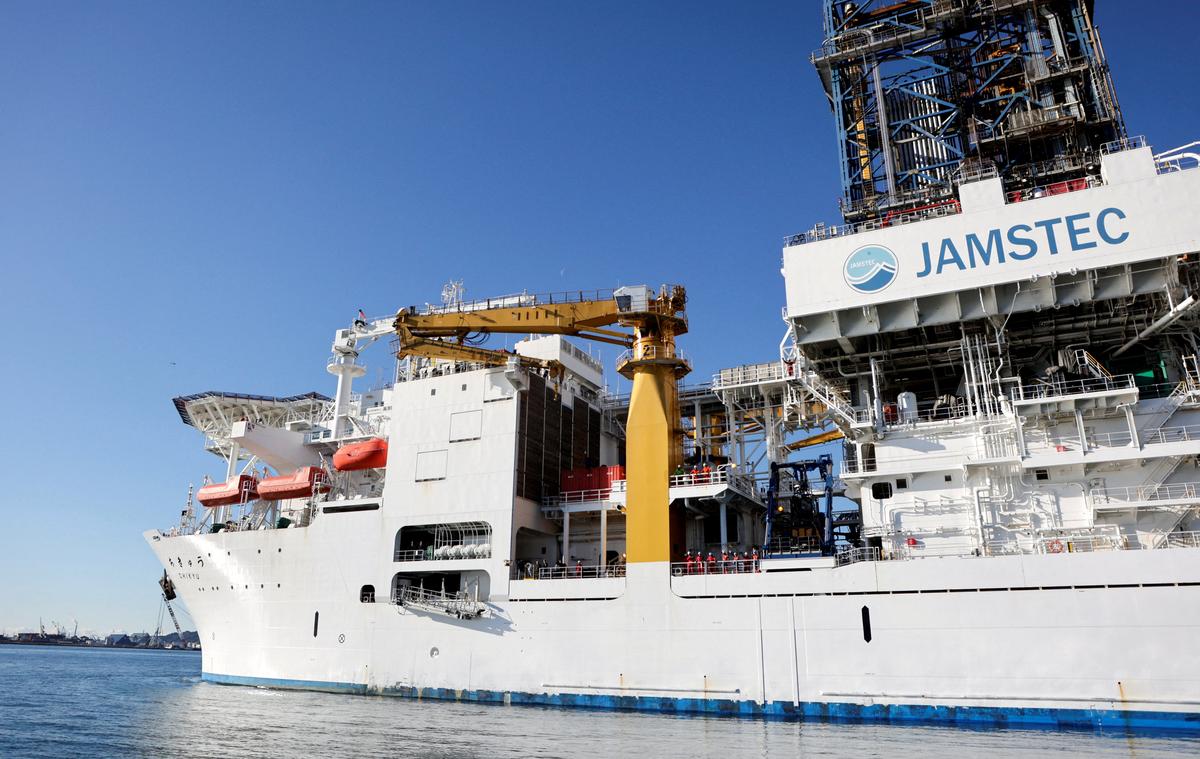
Tokyo is now investing heavily in developing rare earth deposits around Minamitorishima, where recent deep-sea extraction trials successfully recovered rare-earth-rich sediments that could eventually reduce Japan’s dependence on Chinese supplies.
Japan’s Front Line
Perhaps nowhere is this transformation clearer than Taiwan.Prime Minister Sanae Takaichi has asserted that a Chinese attack on Taiwan could threaten Japan and result in a military response under existing Japanese security legislation. Those remarks triggered a severe diplomatic crisis with Beijing and prompted economic retaliation, including tighter export controls and restrictions affecting Japanese industries.
Tokyo’s strategic logic is straightforward.
Taiwan sits astride Japan’s southwestern island chain. Chinese military control of Taiwan would fundamentally alter the military balance in the western Pacific while threatening Japan’s sea lanes and access to vital energy imports.
Japan Seeks More Strategic Autonomy
Japan’s policies increasingly match its rhetoric. Japan’s newest defense white paper identifies China as its most significant long-term strategic challenge, particularly regarding military activities near Taiwan and Japan’s southwestern islands.As a result, defense spending has reached approximately two percent of GDP, its largest military buildup since World War II.
That buildup includes the acquisition of long-range strike missiles, expanding missile defense, and investing heavily in drones and artificial intelligence. It also involves strengthening cyber capabilities and deepening defense cooperation with the United States, Australia, the Philippines, and other Indo-Pacific partners.
Tokyo knows that in the face of rising Chinese aggression, it must either act to preserve its national autonomy or lose it.