Cuba is in the news again.
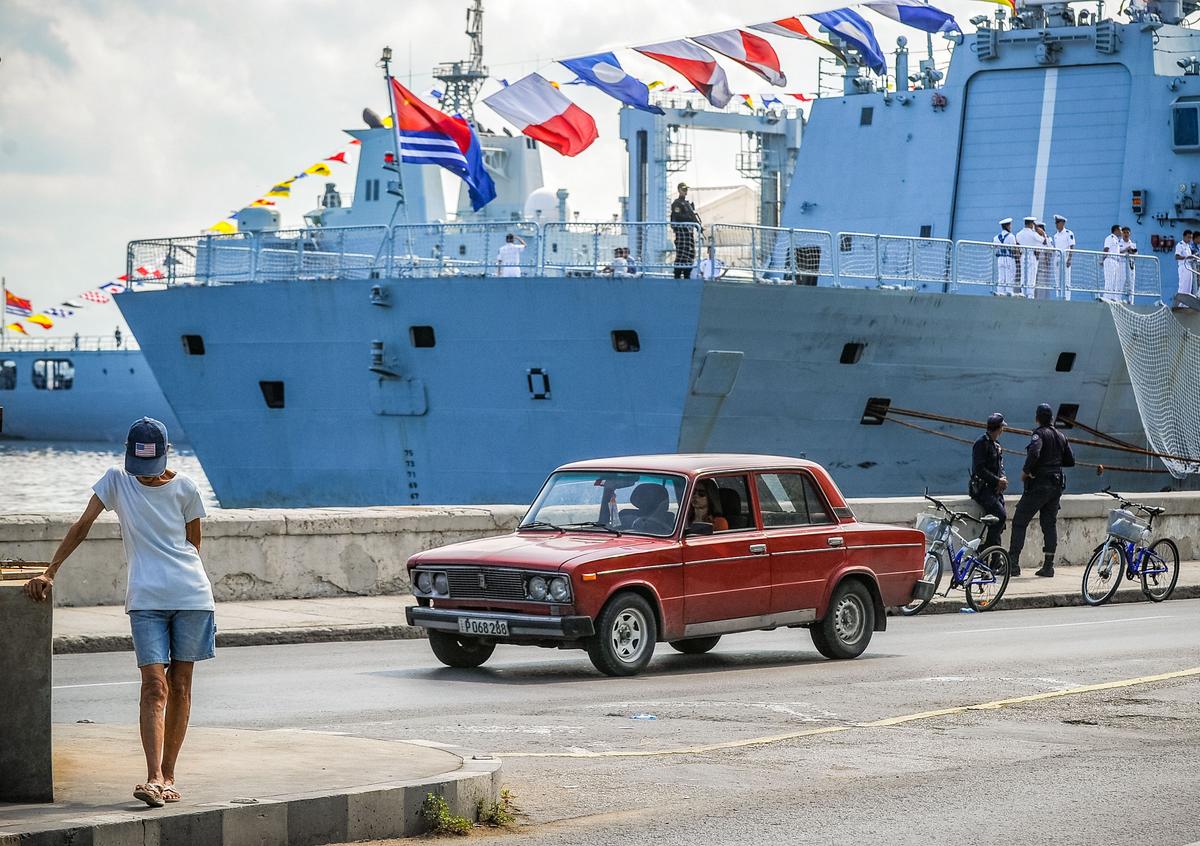
For decades, Cuba played a recurring role as the strategic asset for the United States’ most strategic rivals. During the Cold War, it was the communist Soviet Union. Today, it’s communist China.
Although China’s relationship with Cuba differs fundamentally from the Soviet military alliance of the 1960s and 1970s, the adversarial nature of large communist powers toward the United States remains unchanged, as does the strategic logic of leveraging Cuba’s geographic proximity to the United States.
Geography Is Cuba’s Greatest Strategic Asset
Located just 90 miles from Florida, Cuba occupies one of the most advantageous intelligence positions in the Western Hemisphere. As global ambitions of the Chinese Communist Party (CCP) expand, cultivating a long-term strategic relationship with Havana offers Beijing opportunities that extend far beyond the limited impact of simple trade and diplomatic relations with the tiny nation.
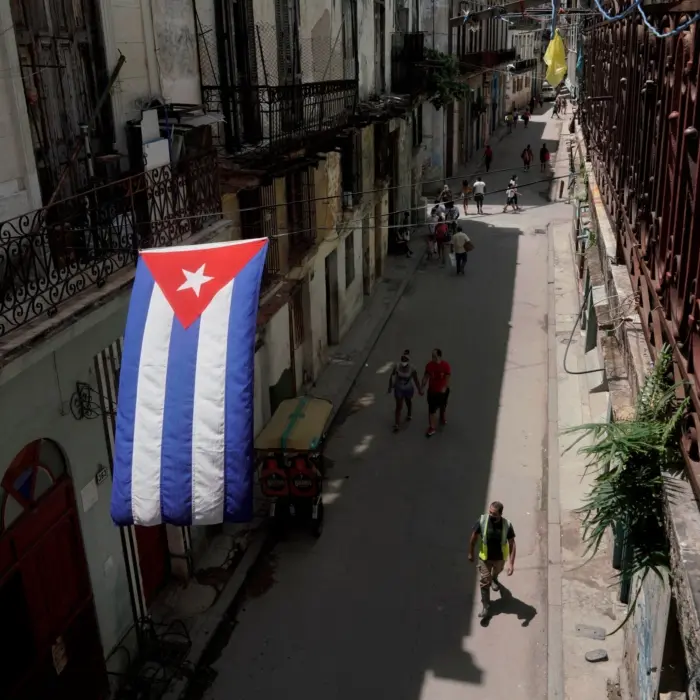
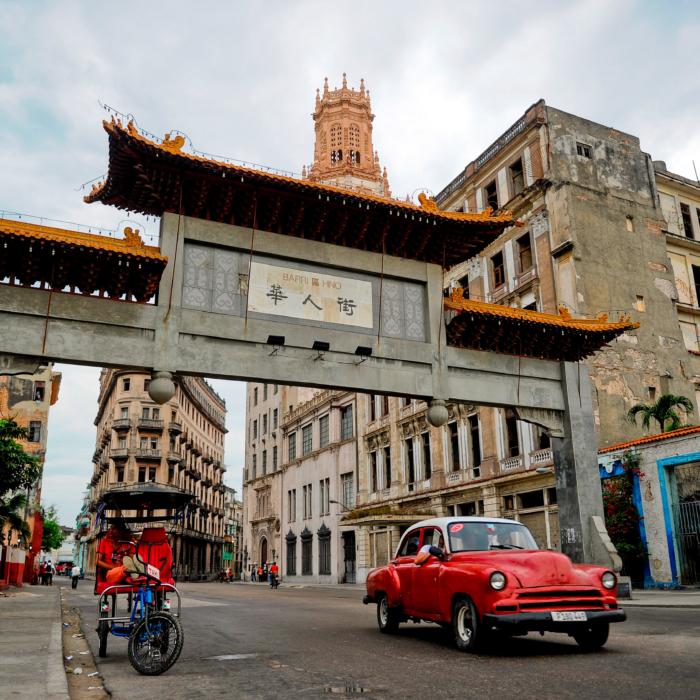
Few locations offer better access to monitoring activity along the U.S. southeastern coastline. Cuba sits astride shipping lanes entering the Gulf of America and is near numerous U.S. military installations, including facilities in Florida and the broader southeastern United States.
This isn’t a state secret, either.
U.S. officials have expressed concern that China-linked facilities (and Russia-linked facilities) in Cuba could support signals intelligence collection against U.S. military communications, satellite activity, and electronic emissions.
The report stops short of concluding how the facilities are operated, but it argues that they warrant close scrutiny.
Intelligence Collection Without Permanent Bases
That resembles China’s preference for a low-profile spy strategy.
Unlike the United States, China has generally avoided establishing large overseas military bases. Instead, the CCP has increasingly emphasized dual-use infrastructure, commercial ports, telecommunications, satellite facilities, and intelligence partnerships that can provide strategic advantages without maintaining major troop deployments abroad.
Nonetheless, American intelligence officials have publicly stated that China is expanding its overseas intelligence capabilities, including in Cuba. Chinese and Cuban officials have repeatedly denied allegations that Beijing operates spy bases on the island, calling such reports politically motivated.
But who directly operates individual facilities isn’t as important as their functionalities. U.S. intelligence experts note that modern electronic surveillance often requires relatively small footprints while yielding substantial strategic value.
More Than Listening Posts
The CCP’s interest in Cuba extends beyond electronic surveillance. A close relationship with Cuba represents both practical value and symbolic significance.
The island offers the opportunity to deepen its influence in the Caribbean, or even reestablish its credibility. Keep in mind that over the past two decades, Beijing has steadily expanded its economic and diplomatic presence across Latin America through infrastructure investment, trade agreements, development financing, and technology exports.
China was and remains keen to demonstrate its ability to compete with the United States within Washington’s traditional sphere of influence, which is another reason Cuba is important to Beijing. This is particularly relevant in light of the recent U.S. removal of Venezuelan dictator Nicolás Maduro from power and the rollback of the CCP’s influence in Panama.
Watching America’s Military
For the United States, the need to check the CCP’s influence in the region is real and urgent. Should Chinese-linked intelligence collection continue to expand in Cuba, analysts believe that the facilities could contribute to monitoring various forms of electronic activity originating from the southeastern United States.
Analysts note that Cuba’s geographic position provides a favorable location from which intelligence collection could occur if the necessary capabilities were present. Potential intelligence targets may include military communications, naval activity along the Atlantic and Gulf coasts, electronic emissions associated with training exercises, and space-related activity from Florida’s Space Coast.
Can Washington Push China Out of Cuba?
The United States has a variety of options at its disposal to reduce the Chinese regime’s influence in Cuba. Snatching Cuban leader Miguel Díaz-Canel and/or Raúl Castro in the night may be one. The United States has a legal framework against Castro and the Cuban leadership, similar to the one attached to Maduro, that could enable the United States to act within a legal context.
The United States could also tighten export controls and sanctions targeting Cuban entities involved in oppression, or even military or intelligence cooperation.
On the flip side, Washington could seek closer engagement with Havana through a carrot-and-stick approach.
The United States could offer selective sanctions relief and/or expanded economic cooperation to reduce Cuba’s dependence on Chinese financing. That could persuade Havana to accept closer economic engagement with the United States, allowing the impoverished island nation to finally reap the benefits of its proximity to the United States the same way Mexico and Canada have.
There would be real and immediate benefits, including short-term economic relief and long-term increases in infrastructure financing, security cooperation, and investment alternatives. Both would transform the Cuban economy and Cuban lives.
Risks of Escalation?
Is there a risk that Cuba will grow closer to China under U.S. pressure?
Potentially, yes.
During the Cold War, American efforts to isolate Havana contributed to closer Soviet–Cuban cooperation. But given recent U.S. policy toward Venezuela, it seems unlikely that Beijing will make any moves to directly counter U.S. hegemony regarding Cuba.
However, China is providing much-needed solar energy panels to partially replace the energy that used to come from Venezuelan oil, as well as economic aid. Both are increasing amid rising U.S. pressure on Cuba.
Meanwhile, Beijing would likely portray U.S. pressure as more evidence that Washington opposes sovereign nations choosing their own international partnerships.
The problem is that actions have consequences. Allowing the Chinese regime to freely spy on U.S. military operations and communications from Cuban locales is a policy that Cuban leaders know is subject to U.S. response.
At least, it is from this U.S. administration.