This copy is for your personal, non-commercial use only. Distribution and use of this material are governed by our Subscriber Agreement and by copyright law. For non-personal use or to order multiple copies, please contact The Epoch Times Reprints.
As the gubernatorial election season continues in California, will the Golden State continue on its far-left path as an asset of the Chinese Communist Party?
It could reasonably be argued that, in some ways, California is linked to China almost as much as to the United States. That assertion may seem over the top, but a look at the facts is enlightening.
California is called the Golden State, and for good reason. It has one of the most productive economies in the world, leading in high tech, defense, entertainment, agriculture, and more, and is the nation’s gateway to the Pacific.
But the recent history of its relationship with China—including trade dependency, political relationships, technology transfers, elite financial incentives, media influence, and law enforcement failures surrounding fentanyl trafficking—shows an uncomfortable pattern.
A Huge Economic Dependency Problem
The state increasingly appears to be the Chinese Communist Party’s preferred entry point for political, economic, and cultural access into the United States. What’s more, California’s ruling class has become deeply intertwined with Chinese interests in ways that increasingly blur the line between economic engagement and strategic dependence.
And Beijing leverages that dependence every way it can.
For example, California’s economy is heavily dependent on trade with China, particularly in technology, agriculture, manufacturing, and consumer markets. State leaders have openly pursued closer economic and climate cooperation with Beijing, including a widely publicized 2023 trip to China by Gov. Gavin Newsom, during which he met personally with Chinese Communist Party (CCP) leader Xi Jinping.
More recently, reports surfaced alleging that Newsom administration officials held closed-door “cooperation” discussions with Chinese regime representatives during China–California trade forums.
Meanwhile, California continues to position itself as economically distinct from broader U.S.–China tensions, particularly in climate cooperation and trade diplomacy. This matters not only because California is acting counter to national policy, but also because Beijing does not separate economics from politics. The CCP views economic relationships as instruments of influence.
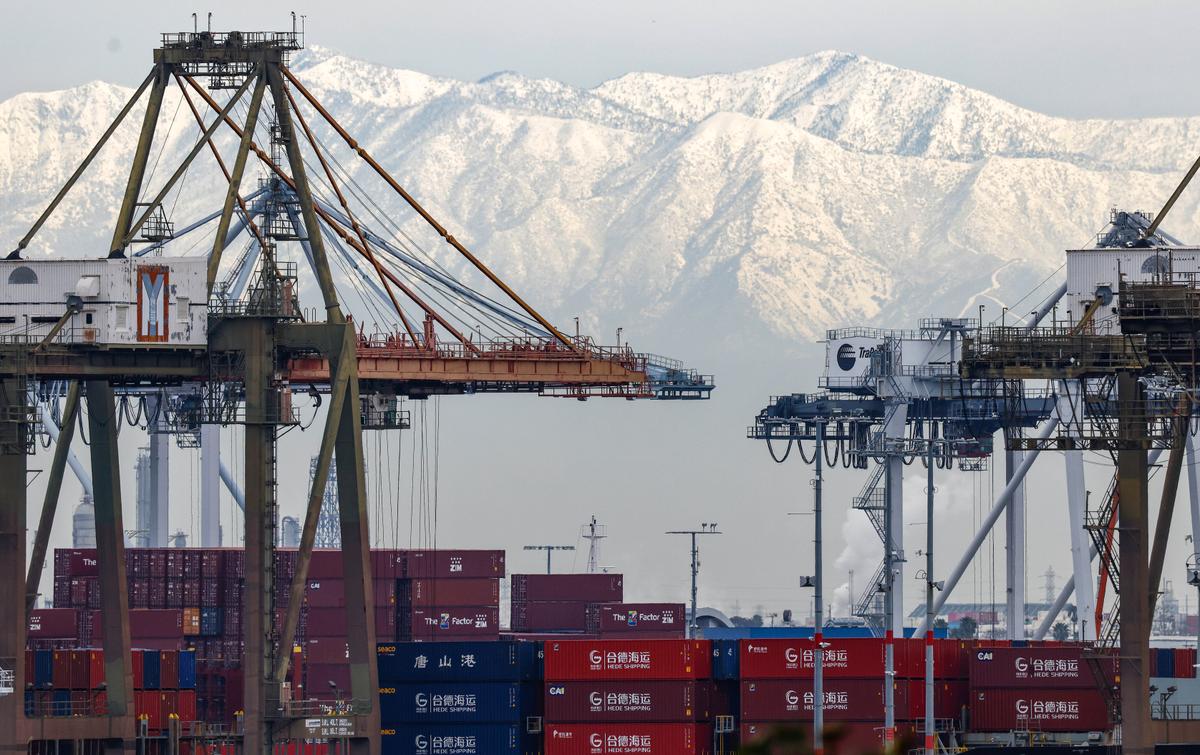
Shipping cranes stand above shipping containers at the Port of Los Angeles, on Feb. 20, 2026. Mario Tama/Getty Images
Silicon Valley and the China Connection
California’s technology sector has long relied on China for manufacturing, market access, supply chains, engineering talent, and investment flows.
Over several decades, American tech giants in Silicon Valley helped build China’s industrial and technological rise by transferring manufacturing capability, expertise, and intellectual property. In return, they gained access to cheap labor and the Chinese market.
But the relationship evolved into something more strategic. China’s rise in advanced manufacturing, artificial intelligence, surveillance technology, and semiconductors was accelerated in part through financial partnerships and technology relationships tied to both Silicon Valley and Los Angeles.
At the same time, Beijing aggressively recruits Western scientific talent and cultivates elite influence networks within universities and the technology sector.
A recent report highlights concerns surrounding California-linked and Newsom-backed initiatives allegedly connected to CCP influence networks tied to Beijing’s united front system. Similarly, the Hoover Institution warned that California–China cooperation initiatives risk functioning as channels for CCP political influence disguised as commercial or climate partnerships.
Political Elites and Chinese Connections
The deeper issue is not trade alone. It is the alignment between California’s elites and the Chinese regime. Investigations and reports have increasingly focused on California political figures, donors, and advisers with extensive ties to Chinese business and political networks.
For instance, a Washington Examiner investigation reported that individuals linked to CCP influence operations and Beijing-connected firms donated substantial sums to California political figures and to allies of the governor. And longtime associates of the governor tied to ChinaSF—a San Francisco initiative designed to attract Chinese investment—have faced renewed scrutiny over relationships with former Chinese officials. Additional reporting has raised broader questions about California-based initiatives allegedly serving as conduits for Chinese political influence operations.
What’s more, the CCP increasingly operates at the local level in California. That may be because local governments are often less scrutinized than state and national offices. That is certainly the case in California. In May 2026, former Arcadia Mayor Eileen Wang pleaded guilty to acting as an unregistered agent for China. Prosecutors alleged that she worked with Chinese government-linked entities to promote pro-Beijing propaganda efforts.
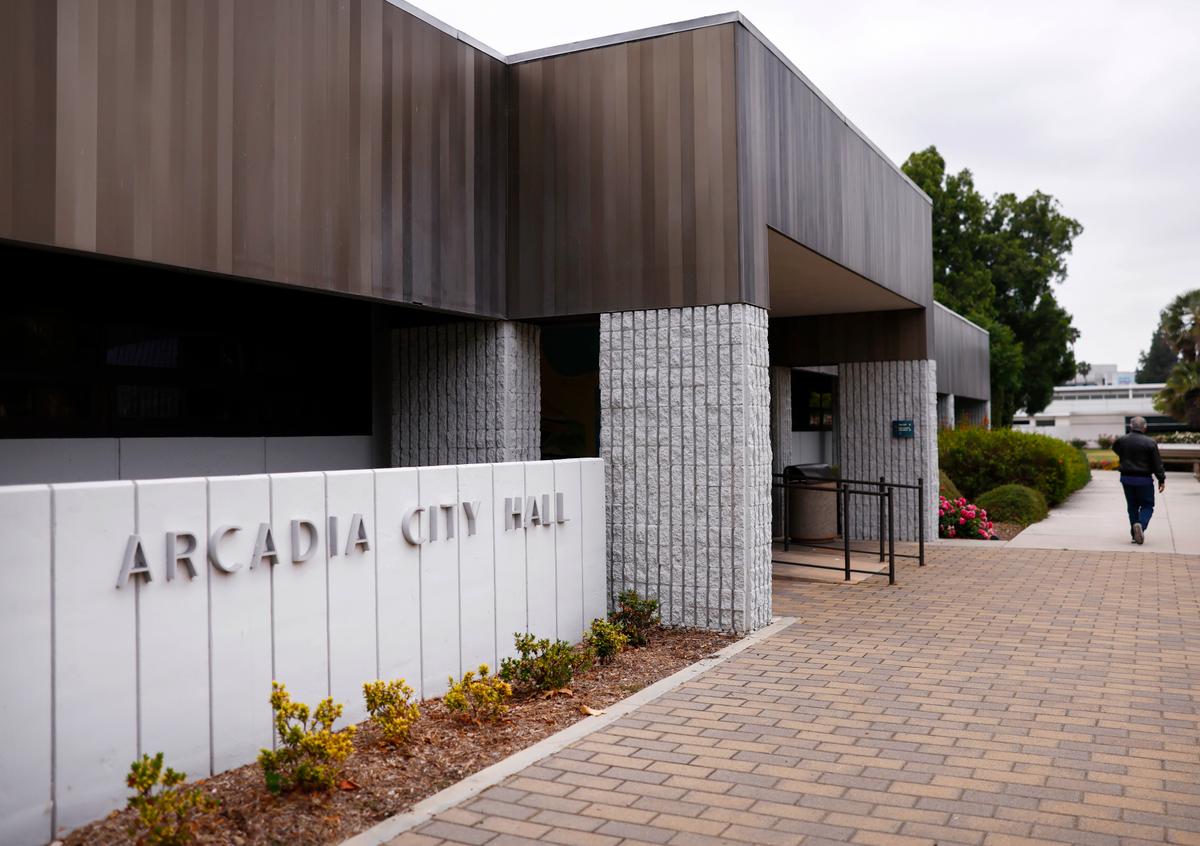
Arcadia City Hall in Arcadia, Calif., on May 13, 2026. Mario Tama/Getty Images
A California billionaire with ties to the CCP has even been linked to funding riots in Los Angeles. Again, none of this absolutely proves direct disloyalty. But it does reveal an increasingly dense web of political, economic, and institutional interdependence. But it is clear that Beijing views California’s local political infrastructure as fertile ground for influence-building.
Media Narratives and Self-Censorship
California’s economic dependence on China also shapes information environments across a wide spectrum of activities. Hollywood, technology firms, universities, and media companies all possess major financial exposure to Chinese markets or manufacturing relationships. That creates powerful incentives for self-censorship and narrative management.
As a result, criticism of the Chinese regime’s human rights abuses, intellectual property theft, political repression, or fentanyl role in California is often muted relative to the scale of the threat. Even during the governor’s 2023 China trip, U.S. media reportedly had restricted access, while Chinese state media received preferential access.
Silencing critical facts is what the CCP does to protect itself and, apparently, its political allies, too.
Fentanyl and Strategic Blindness
Perhaps nowhere is California’s vulnerability to Chinese influence more devastating than in the area of fentanyl. China remains the dominant source of precursor chemicals used by Mexican cartels to manufacture fentanyl. Although Beijing occasionally announces crackdowns, U.S. officials and investigators have repeatedly argued that Chinese enforcement remains inconsistent and politically selective.
Meanwhile, California continues suffering catastrophic overdose deaths, open-air drug markets, and organized trafficking networks. Yet state leadership rarely frames fentanyl as part of a broader geopolitical challenge involving China’s strategic leverage over the United States.
Silence on this issue is revealing as well.
The Larger Question
The real issue is not whether California’s leaders consciously “serve” Beijing, but rather, whether the state’s political and economic elites have become so financially and institutionally intertwined with China that meaningful confrontation is no longer politically possible or economically desirable.
That is how strategic dependency develops. Not through conquest per se, but through incentives, markets, investments, and access to corrupt elites who increasingly profit from preserving the relationship regardless of the national security consequences.
Beijing understands this perfectly.
Do the voters of California?
Views expressed in this article are opinions of the author and do not necessarily reflect the views of The Epoch Times.