For four years, I have believed that a secure border requires more than walls and patrols. It requires economic alignment. It requires bringing manufacturing back to North America. It requires Mexico not as a problem to manage, but as a strategic partner.
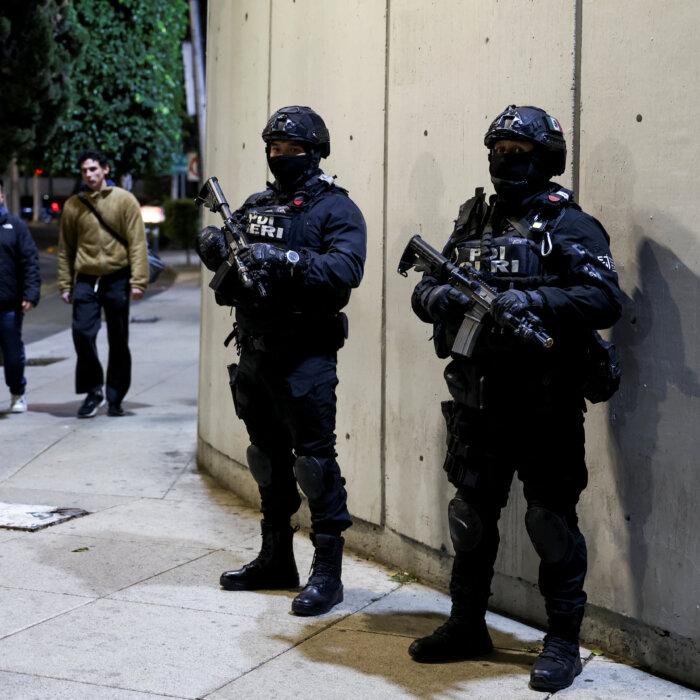
My family lives on both sides of that border. When my husband is working in the kitchen at The Barn restaurant at Sovereignty Ranch and his phone starts dinging over and over again, it is not news alerts. It is videos from friends and relatives across Mexico—car bombs, military vehicles burning, Mexican soldiers killed, roadblocks, and gunfire. His mother, his siblings, our nieces, our nephews, his cousins, and the cousins of my children are there. We pay attention.
The recent violence erupted during Anarchapulco. At the same time my husband’s phone was lighting up with images from family and friends, mine was filling with messages from people who were actually there. Not spectators reading headlines, but attendees, speakers, and families sheltering in place. One person’s cab driver was killed. Others could not reach the airport.
Anarchapulco is not affiliated with the Confluence gathering we host each year, but the communities overlap heavily. Confluence is the annual gathering my family hosts, bringing together farmers, entrepreneurs, technologists, and families committed to personal responsibility, health and wellness, strong food systems, faith, and building grounded, parallel structures rooted in community. Many of the same speakers rotate between both events, and a meaningful portion of attendees participate in each. It is essentially the same extended community meeting in different places throughout the year. So the violence was not abstract. It was personal on two fronts: my husband’s family in Mexico and a broader community of people I know and care about on the ground in Acapulco.
First things first: prayers up. But as I pray, I think.
Mexico is North America. My husband reminds me of that often, yet many Americans speak of Mexico as though it is culturally and geographically distant. It is not. It is our neighbor and our largest trading partner. In recent years, Mexico has surpassed both China and Canada in total goods trade with the United States. That shift alone changes the strategic picture. When nearly a trillion dollars in commerce moves across a shared border each year, those trade routes are more valuable than ever. And when organized crime effectively taxes portions of those routes through extortion, cargo theft, and corridor control, that hidden cost becomes more expensive than ever.
Entire industries depend on this relationship. In the automotive sector, it is common for components to cross the U.S.–Mexico border multiple times during production before a finished vehicle rolls off the line. The border is not just a boundary; it is part of the assembly process.
For four years, I have believed that rebuilding American manufacturing means shifting supply chains away from China and back into North America. That naturally means Mexico—a massive workforce, geographic proximity, established infrastructure, and the USMCA framework already in place. If we are serious about industrial sovereignty, Mexico is not optional.
Which is why I find myself wondering whether drugs are the headline and trade is the deeper story. Fentanyl is real. It devastates families and cuts straight to the heart of parents. It is emotionally powerful and politically potent. But it is not the only destabilizing force at work.
Cartels do not only traffic narcotics. In many regions, they extort legitimate industries. Avocado growers in parts of Mexico have faced organized crime taxation, and cargo theft on Mexican highways has risen in recent years, costing businesses billions and driving up insurance and transport costs. Those costs ripple through supply chains and undermine nearshoring efforts. They function as a shadow tariff on North American manufacturing.
If car parts cross the border multiple times before becoming an American-made vehicle, and along the way commerce is vulnerable to unofficial taxation or corridor control by criminal organizations, that is not simply a law enforcement issue. It is an industrial strategy issue. North American manufacturing depends on secure highways, railways, ports, and border crossings. As global supply chains are recalibrated and the USMCA review approaches, the stability of those corridors becomes even more significant.
So I ask, not as an insider, but just as a wife, a farmer married into a Mexican family: What if this moment is as much about securing trade routes as it is about fentanyl? What if cooperation between governments is driven by the need to stabilize the economic bloodstream of North America?
It is easier to rally around the moral clarity of fighting drugs. It is harder to discuss strategic rail lines, freight corridors, and industrial realignment. Yet throughout history, great powers have always cared deeply about trade routes, shipping lanes, and the arteries of commerce.
On a personal note, I hope Mexico becomes safer. I hope I do not feel that pit in my stomach when my husband travels home, and I hope I don’t constantly have to be on alert when I am there with my children. I hope highways carry produce and car parts instead of fear, and I hope that the relationship between the United States and Mexico evolves into one that creates shared abundance across North America.
Maybe that is optimistic. But when your family straddles a border, geopolitics is never theoretical. It is lived. If drugs are the headline, trade may still be the stake, and if securing trade routes strengthens families, stabilizes communities, and reduces the influence of fentanyl along the way, that would be a blessing on both sides of the line.