Many Canadians will assume that CUSMA has collapsed. It has not. The agreement remains in force while negotiations continue. What has changed is the certainty that businesses, investors, and governments relied upon. Instead of a long period of stability, North America now faces annual reviews and continuing negotiations. For a country as dependent on trade as Canada, uncertainty itself becomes an economic cost.
This decision is entirely consistent with President Trump’s political philosophy. Throughout both of his presidencies, he has preferred leverage over permanence, negotiation over predictability, and flexibility over fixed commitments. By refusing an automatic extension, he keeps trade at the centre of American politics, reassures his manufacturing base that he continues to fight for American jobs, and gives Washington the ability to reopen negotiations whenever it believes further concessions can be extracted.
Canada enters these discussions from a position of considerable strength in some aspects, but also significant vulnerability in others. Nearly 75 percent of Canada’s merchandise exports are destined for the United States. More than $1 trillion in goods and services crosses the Canada-U.S. border each year, making it one of the largest bilateral trading relationships in the world. Our automotive industry depends upon highly integrated supply chains where components routinely cross the border multiple times before a vehicle reaches the customer. Even modest uncertainty can delay investment decisions worth billions of dollars.
The greatest danger is therefore not an immediate recession. It is the gradual erosion of Canada’s competitiveness. Investors making decisions on factories, mines, pipelines, artificial intelligence infrastructure, or critical minerals often think in decades, not months. When the rules appear uncertain, capital waits. That delay affects productivity, wages, and long-term economic growth far more than a temporary tariff dispute.


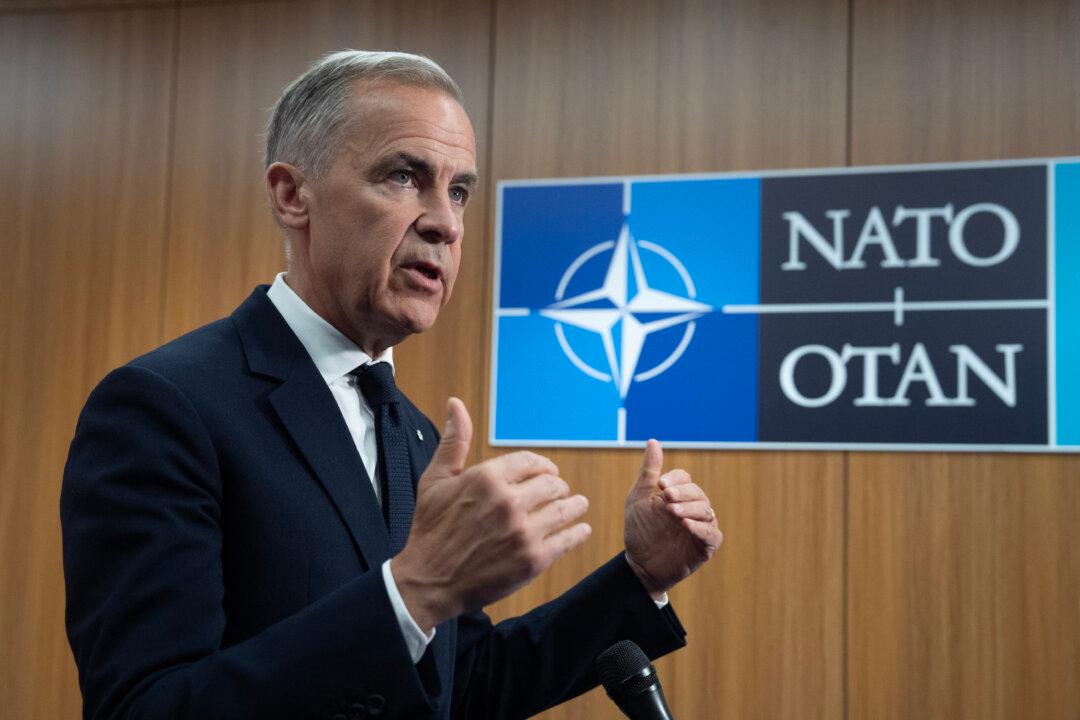
Prime Minister Mark Carney now faces his first major strategic economic challenge. His reputation has been built upon stability, sound economic management, and investor confidence. Yet this dispute cannot be resolved through monetary expertise alone. It requires political negotiation, strategic patience, and a clear national vision. Canadians will rightly expect their government not merely to react to events in Washington but to demonstrate that Canada possesses its own long-term economic strategy.
There is, however, an important lesson in all of this. Canada can no longer rely on the assumption that our economic relationship with the United States will simply continue unchanged because it always has. Regardless of who occupies the White House, the era of automatic North American integration has ended. Success will increasingly depend upon Canada’s own competitiveness rather than the goodwill of our largest trading partner.
This moment should become a catalyst for renewal. We should finally eliminate interprovincial trade barriers that cost our economy billions of dollars every year. We should accelerate nation-building infrastructure, expand pipelines and LNG capacity, strengthen our manufacturing base, invest in critical minerals and artificial intelligence, and diversify exports through Europe and the Indo-Pacific. Most importantly, we must confront Canada’s persistent productivity challenge, which has quietly become the defining economic issue of our generation.
The question is no longer whether America will change. The question is whether Canada finally will.