Canada’s economy has grown, but too many Canadians no longer feel more prosperous. Productivity has stalled, business investment has weakened, housing affordability has deteriorated, and confidence in upward mobility has declined. The empty storefronts appearing in shopping malls across the country are not the cause of this decline, but they are among its most visible symptoms.
For generations, Canada’s prosperity rested on a confident middle class. Families earned good incomes, bought homes, raised children, and supported the businesses that anchored communities across the country. Today, globalization, automation, and artificial intelligence are reshaping the economy at extraordinary speed, while Canada is struggling to generate the investment and productivity needed to maintain rising living standards.
The numbers tell the story. According to the Organization for Economic Co-operation and Development (OECD), Canadian workers produced approximately US$75 of economic output per hour worked in 2023, compared with US$97 in the United States. In other words, American workers generated almost 30 percent more output for every hour worked. Productivity may sound like an economist’s concern, but it ultimately determines wages, competitiveness and long-term prosperity. When productivity stalls, living standards eventually follow. Canada’s labour productivity has grown by less than 1 percent annually over the past two decades, one of the weakest performances among advanced economies.
At the same time, Canadians increasingly believe the traditional path to middle-class success is slipping away. An Ipsos survey found that only 45 percent of Canadians believe they are living in their ideal home, while an Angus Reid survey reported that seven in 10 Canadians consider housing in their community expensive, with 43 percent describing prices as unreasonably high. Home ownership, once a defining milestone of middle-class life, is becoming unattainable for many younger Canadians.
The problem extends well beyond housing. Canada’s productivity challenge is fundamentally an investment challenge. The OECD reports that business investment per worker has fallen to only 85 percent of its 2014 level. During the same period, investment per worker increased by 21 percent in the United States, 13 percent across the euro area, and 11 percent across the OECD. Businesses cannot become more productive if they invest less in machinery, technology, and innovation.

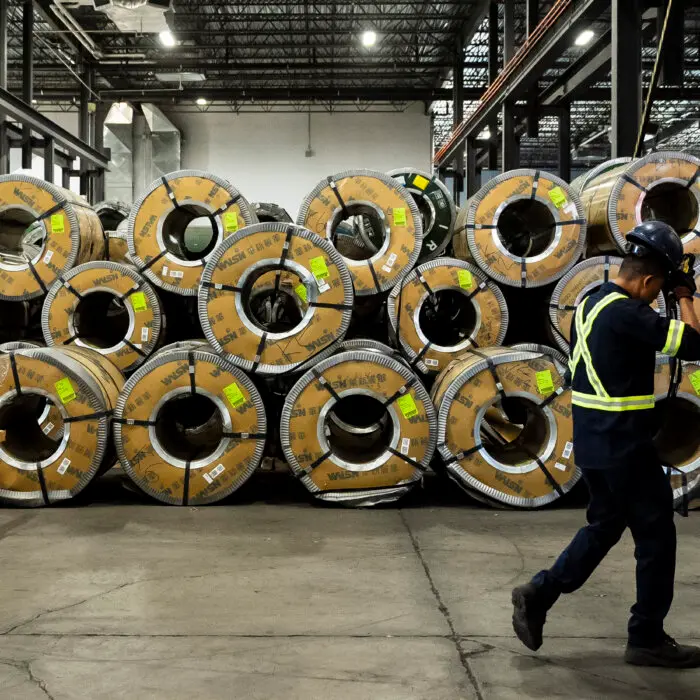
The innovation gap is equally troubling. Canadian businesses invest only about 1 percent of GDP in research and development, compared with an OECD average of approximately 2 percent. Countries that consistently invest less in innovation should not expect to lead tomorrow’s industries or create tomorrow’s highest-paying jobs.
None of this is inevitable. History demonstrates that every major technological revolution has disrupted economies before creating new industries and greater prosperity. The Industrial Revolution, electrification, and the digital revolution all transformed labour markets while ultimately raising living standards. Artificial intelligence has the potential to do the same. The danger is not technology. The danger is failing to prepare Canadians to succeed alongside it.
That preparation begins with education. Our schools should place greater emphasis on critical thinking, financial literacy, entrepreneurship, digital capability, and lifelong learning. Mid-career retraining must become a normal part of working life as technology continues to evolve.
Canada must also become a nation that builds again. Advanced manufacturing, artificial intelligence, aerospace, defence, biotechnology, critical minerals, energy, and advanced robotics should form the backbone of a modern industrial strategy. These sectors create high-value employment, strengthen national security, and improve long-term competitiveness.
Governments must also unleash entrepreneurship by simplifying regulation, encouraging investment, and making it easier to start and expand businesses. At the same time, housing must return to the centre of economic policy. Faster approvals, modernized zoning, better infrastructure planning, and higher construction productivity are essential if home ownership is to remain within reach of ordinary Canadians.
Perhaps most importantly, we must help more Canadians become owners, not simply employees. The defining economic divide of the coming decades will increasingly separate those who own productive assets from those who depend solely upon wages. Broader participation in retirement savings, employee share ownership, and capital markets should become central to rebuilding middle-class wealth.
Canada does not suffer from a shortage of talent, creativity, or ambition. It suffers from weak productivity, insufficient investment, and declining economic mobility. We cannot redistribute our way to prosperity. We must build it. If we restore a confident and growing middle class, the storefronts will fill again. More importantly, Canadians will once again believe that hard work, enterprise, and personal responsibility provide a realistic path to a better life.