Everywhere I look right now, people are arguing on the internet about gold, silver, bitcoin, the dollar, the Fed, bubbles, and collapse. Is gold in a bubble, or is it the yardstick proving the dollar is? Is silver about to explode? Is bitcoin the future or just the ultimate speculation?
The other morning, I walked out and looked across the pasture instead. My cows were grazing in the dry creek bed, heads down, tails flicking, not a care in the world, completely unaware of interest rates or central bank policy.
And I caught myself thinking: How are my cows doing compared with these other “assets”?
It’s right there in the word livestock. A stock that is alive.
That question took me somewhere deeper than price charts. It made me realize that how we value cows today is radically different from how humans valued them for most of history.
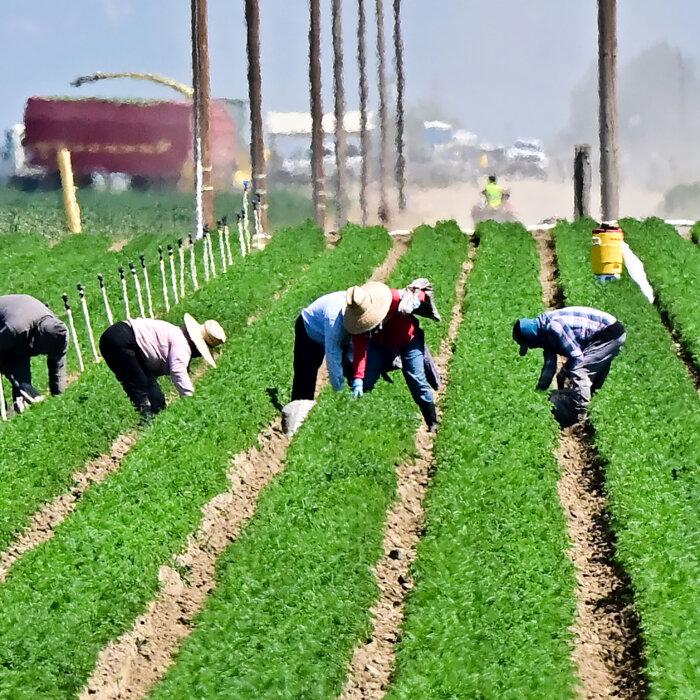
For thousands of years, wealth wasn’t abstract. It wasn’t digits in an account or metal in a vault. Wealth walked, grazed, reproduced, and fed families. Cattle were food, fertilizer, fuel, clothing, and trade all at once.
Among pastoral tribes in parts of Africa, this isn’t ancient history—it’s daily life. Groups such as the Maasai have long built their survival around cattle. Milk nourishes families every day. Manure is dried and used for cooking fires. Urine is used in traditional hygiene and medicinal practices. Blood can be drawn from a cow without killing her, providing protein and iron when meat is scarce. These communities live in harsh climates where modern supply chains would fail quickly, yet their wealth walks with them and sustains them.
They may not measure wealth in dollars, ounces, or digital coins. They measure it in animals that keep children alive through drought. That’s a form of value most modern portfolios can’t model.
Even in the United States, cattle once functioned as a primary store of wealth. In the late 1800s, historical livestock records show that a cow often cost roughly the equivalent of about one ounce of gold. Around 1900, it was still in that same general range. Over the decades, that relationship has stretched and snapped back again. There have been periods when a cow equaled several ounces of gold, and others when it was worth less than one.
Gold cycles with fear, currency strength, and confidence in the economy. Silver often follows similar financial tides. Bitcoin rides waves of liquidity, speculation, and technological adoption. Their prices can swing wildly based on headlines and sentiment. Cows move to a different rhythm.
The cattle market runs on a long biological cycle, often described as roughly 13 years. It isn’t driven by central banks. It’s driven by grass, weather, and reproduction. When cattle prices are high, ranchers face a choice: sell heifers for income now, or hold them back to grow the herd. Expansion takes time. From the moment a heifer calf is born, it takes about 18 months to two years before she’s bred, nine months of pregnancy, and then more time before her calf is old enough to sell. Depending on how animals are raised, you’re looking at roughly three and a half to five years before that decision to grow the herd turns into real financial return.
That long lag is what creates the cattle cycle: Expansion leads to oversupply, which crashes prices, which leads to herd liquidation, which tightens supply, which eventually drives prices up again. Right now, we’re in a time of high cattle prices, yet the national herd remains historically small. That suggests something important: As a society, we are not strongly viewing cattle as long-term stores of value the way earlier generations did.
Gold, silver, and bitcoin are forms of financial capital. They store purchasing power across time, especially when paper currency loses value. But they rely on a functioning system to convert into food, fuel, or shelter. A cow belongs to a different category. She is living, productive capital.
A beef cow is stored calories on the hoof. She converts sunlight, grass, and water into protein and fat humans can live on. Her manure fertilizes soil and can be used as fuel. Her hide, bones, and fat all have uses. And if she has a calf, your wealth multiplies. Unlike gold or bitcoin, cattle can reproduce. But unlike gold or bitcoin, they also need land, water, feed, and management. This is not a simple apples-to-apples comparison. One is passive capital. The other is biological capital. But biological capital is what feeds people.
Dairy cows make this contrast even clearer. A dairy cow doesn’t just sit as stored value. She produces food every single day. Milk becomes cream, butter, yogurt, and cheese. In small direct-to-consumer farm systems today, raw milk often sells for $6 to $15 per half gallon. That makes a dairy cow both a store of value and a daily dividend-paying asset. She still reproduces. She still holds long-term worth. But she also provides steady, ongoing nourishment and income.
On our farm, we breed our dairy cows with beef bulls. That means every calf can be raised for beef, feeding our restaurant and our community. The cow gives milk now, calves for the future, and eventually beef as well. It’s a layered form of wealth: daily yield, long-term reproduction, and stored food.
When we talk about stores of value, we’re usually talking about numbers—prices, charts, balances. But there is a deeper layer of value that exists outside zeros and ones. If the power goes out, if supply chains break, if grocery shelves empty, your portfolio can’t be eaten. In those moments, value collapses back down to land, water, skills, community—and animals that can turn grass into food.
For most of human history, that was obvious. Wealth breathed. It reproduced. It left manure that grew crops. It could walk to water. Looking at my cows, unconcerned with markets, I’m reminded that there are layers of value. Financial capital sits on top. Living capital sits underneath. One depends on confidence. The other depends on grass, time, and care.
After thinking about all this and digging into the history, I don’t think it’s an either-or between gold, silver, bitcoin, or dollars and cattle. Livestock is an important piece of the puzzle. An important store of value. An important part of my total portfolio. I say total portfolio kind of jokingly—I don’t really have much of a portfolio—but cows are definitely a big part of it.