Commentary
Running errands the other day, I stopped to fill my car and noticed the small sticker on the pump: 10 percent ethanol.

It’s something most of us see every day and barely think about, but standing there with the nozzle in my hand it struck me again how strange some of the contradictions are in our modern food and energy system.
In the United States we dedicate tens of millions of acres of farmland to growing fuel.
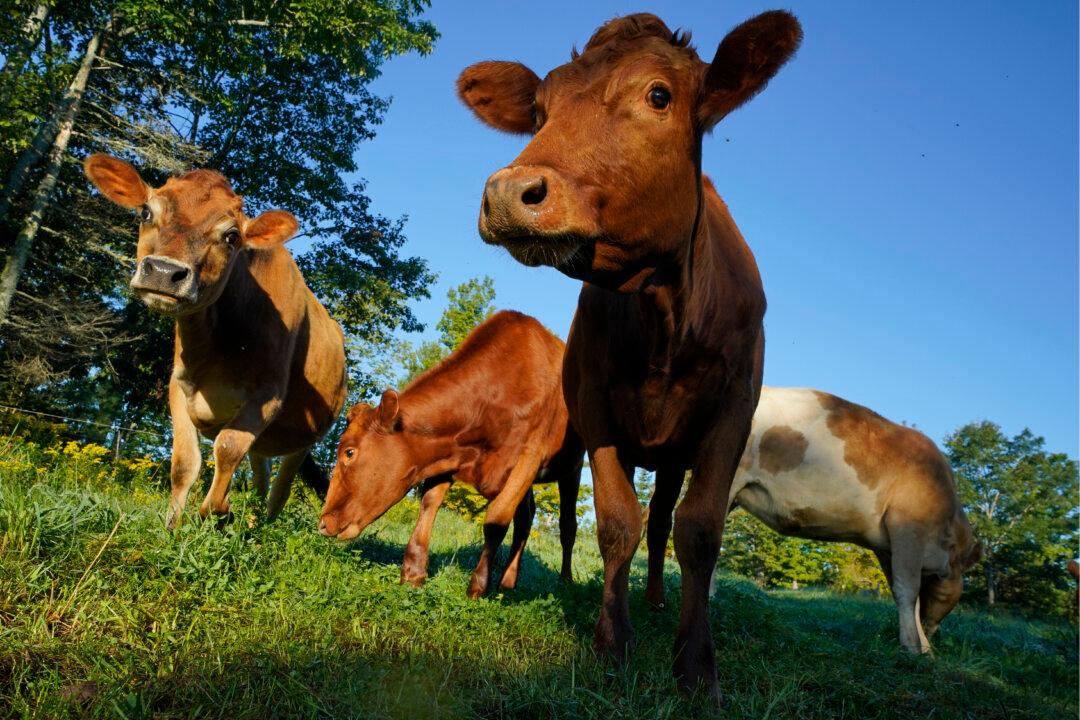
Corn that could feed people or livestock—or better yet, land that could be diversified away from corn entirely—is fermented into ethanol and blended into gasoline. Imagine if even a portion of those acres were growing lentils, beans, barley, or other staple crops that we currently import. Imagine if some of those fields were transitioned back into grasslands where cattle could graze and soil could rebuild itself.
Instead, we grow corn for fuel.
For years we were told this was necessary because fossil fuels were running out. During the early 2000s the message from Washington was clear: oil was scarce, dependence on foreign energy was dangerous, and biofuels were part of the solution. The country needed to become “energy independent,” and ethanol was supposed to help get us there.
Yet if you look closely at how ethanol is produced, the logic begins to unravel.
Growing industrial corn requires enormous amounts of nitrogen fertilizer, much of it manufactured using fossil fuels. The crop itself is largely genetically modified to survive repeated spraying with glyphosate. Tractors plant and harvest the fields using diesel, and the corn is then transported to ethanol plants where it is heated, fermented, distilled, and blended into gasoline.
In other words, we burn fossil fuels to grow corn so we can add a small percentage of ethanol to fossil fuels.
At the pump, most Americans are filling their tanks with fuel that is roughly 90 percent gasoline and 10 percent ethanol. When you step back and look at the full cycle, it starts to feel like a system chasing its own tail.
The modern ethanol boom took shape in the mid-2000s when Congress passed the Renewable Fuel Standard, requiring that a certain amount of biofuel be blended into the nation’s gasoline supply each year. Because corn ethanol was the easiest biofuel to produce at scale, it quickly became the dominant source.
Today roughly 40 percent of the U.S. corn crop goes to ethanol production.
That statistic alone should give us pause. It is difficult to claim that American agriculture is feeding the world when such a large share of our most productive farmland is being used to fill gas tanks.
Meanwhile, the United States imports enormous amounts of food from around the globe.
The environmental math of ethanol production is equally troubling. Industrial corn requires heavy fertilizer applications, and much of that nitrogen does not remain in the soil. It runs off into rivers and streams, eventually contributing to the massive dead zone that forms each year in the Gulf of America. Herbicides and pesticides follow similar pathways through our watersheds.
As a farmer who believes in regenerative systems, this part of the story is impossible to ignore. Healthy ecosystems move toward diversity. They build soil, hold water, and cycle nutrients naturally. The ethanol economy pushes agriculture in the opposite direction, encouraging monoculture corn production across millions of acres.
The deeper you dig into the policy behind ethanol, the more it begins to look less like environmental stewardship and more like a government-directed market.
Billions of taxpayer dollars have flowed into the ethanol industry through subsidies, mandates, and tax credits over the past two decades. Even today the Renewable Fuel Standard guarantees demand by law, ensuring ethanol must be blended into gasoline regardless of whether the market would choose it on its own.
This mandate built an entire industrial ecosystem of ethanol plants, rail networks, commodity trading systems, and political lobbying groups dedicated to protecting the policy. Once a system like that exists, it becomes extremely difficult to unwind.
Yet the contradictions remain.
At the same time farmland is being used to produce fuel, we are importing food that could be grown here. And while we were told ethanol was necessary because oil was scarce, the United States sits on enormous domestic energy reserves. Some estimates suggest there may be more oil beneath Texas than exists in Saudi Arabia, though much of it is heavier crude that our refining infrastructure was not originally designed to process.
It raises an obvious question.
If taxpayer dollars were going to be spent in pursuit of energy independence, would it not have made more sense to invest in refining capacity that could process the oil already beneath our feet while allowing farmland to produce food?
Instead, public policy pushed agriculture toward fuel production and built an entire industry around it.
History shows that when governments attempt to engineer markets, the long-term consequences are rarely well thought out. These programs often cost enormous sums of money, and much of that money eventually flows to a relatively small number of corporations and investors who positioned themselves early in the system.
Farmers themselves are not the villains here. Farmers respond to incentives. If the market rewards corn, farmers plant corn. If ethanol plants are paying, the corn goes to ethanol plants.
But the incentives themselves deserve scrutiny.
The United States has some of the most fertile farmland in the world. That land could be feeding communities, rebuilding soil, restoring grasslands, and producing diverse crops suited to different regions. Instead, a significant portion of it is tied up in a system that requires fossil fuels to grow crops that are then turned into fuel to supplement fossil fuels.
It is hard to see how this qualifies as environmentally sound policy in any meaningful sense. Industrial corn production requires synthetic fertilizer, heavy chemical use, diesel-powered equipment, and enormous monocultures that degrade soil and pollute waterways. Turning that corn into ethanol requires even more energy and infrastructure. When you step back and look at the entire system from soil to fuel pump, it is difficult to argue that this is truly a cleaner or more responsible path.
It is just as difficult to see how it makes financial sense. Billions of taxpayer dollars have flowed into subsidies, mandates, and infrastructure to support the ethanol industry. Yet the result is a fuel blend that still relies overwhelmingly on gasoline and farmland that could be producing food and managed in ways that actually improve the landscape—building soil, filtering water, and cleaning our waterways rather than polluting them.
And yet the policy is so deeply entrenched—with entire industries, rural economies, and political alliances built around it—that it is difficult to imagine it ever changing.
Perhaps the simplest way to think about it is also the most logical. Let farmland grow food. Let soil build fertility and filter water. Let grasslands support grazing animals and restore ecosystems. And if we need fuel, let us produce it from the oil that exists deep within the Earth rather than pretending that polluting millions of acres of farmland for a small percentage of biofuel is an environmental policy.
Because it isn’t.
It is an economic policy—one whose costs stretch far beyond what can be easily seen or even fully explained in a single article.
Sometimes it helps to step back, look at a system plainly, and remember that just because something has existed for decades does not mean it was ever particularly logical in the first place.