Commentary
Not long ago, dairy bottle calves were practically a throwaway animal.I remember when you could pick them up for $10 or $20 apiece. Sometimes a little more, sometimes even less if the dairy just needed them gone. They were a gamble. A newborn calf without its mother requires milk replacer, constant feeding, and careful management, and even then, there is no guarantee it survives.
For some people, that gamble became a business model. Buy a bunch of them cheap, raise the ones that make it, and hope the math works out in the end.
But those calves were cheap for a reason.
They required labor, time, and feed long before they were worth anything close to what it costs to raise them.
Today, the same type of calf—3 days old, still a bottle baby—is reportedly bringing about $2,100 in some dairy regions.
That is not a small market shift.
That is a complete inversion of the economics.
I first heard this from someone on Instagram. For the purposes of this article, we’ll call her Wyoming Rancher. I called her immediately to verify. She told me she had spoken with multiple farmers and people involved in the logistics chain between dairies and feedlots in several dairy regions of the country, all reporting the same thing: 3-day-old beef-on-dairy bull calves selling for roughly $2,100.
To understand why, it helps to know how modern dairies breed their herds.
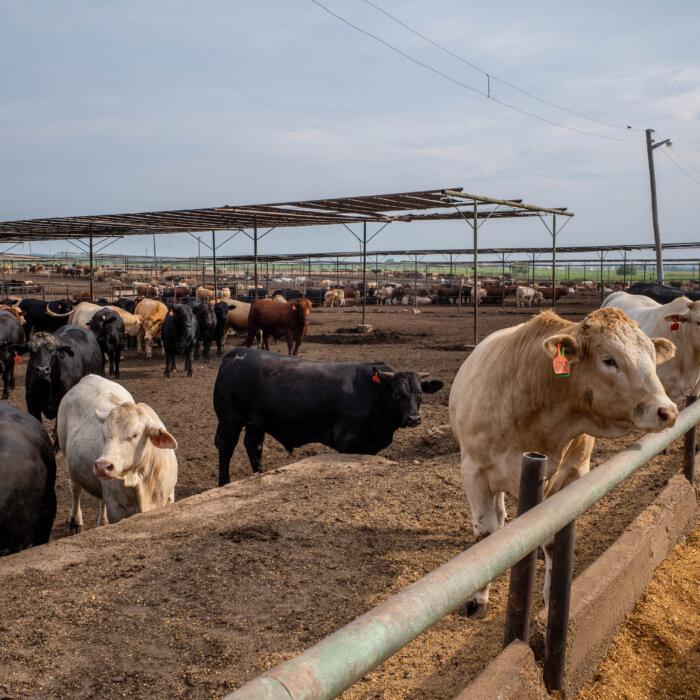
Most dairies rely heavily on artificial insemination and often use sexed semen, which allows them to choose whether a calf will be male or female. The most productive milk cows in the herd are typically bred with female dairy genetics so the farm can produce replacement heifers for the milking herd. The rest of the herd is often bred to Angus or Wagyu male sexed semen so those calves can be sold into the beef market.
The result is what the industry now calls beef-on-dairy calves.
According to Wyoming Rancher, this breeding strategy has become common because the genetics complement each other. Holstein cows provide large frames and excellent feed efficiency, while Angus or Wagyu genetics add marbling. The combination often grades well on the rail, making these animals attractive to feedlots and packers.
She also noted that both Jersey and Holstein dairy breeds can produce surprisingly good marbling, meaning the finished animal has the potential to grade well as beef.
In other words, these calves are no longer simply by-products of the dairy system. They are becoming an intentional part of the beef supply chain.
For readers who are not ranchers, it helps to understand what the normal cattle system looks like.
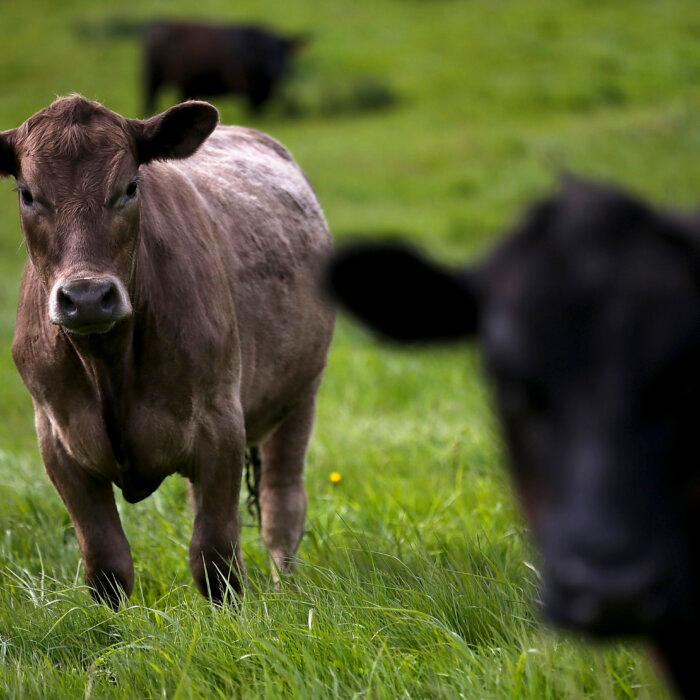
In a typical cow-calf operation, a cow gives birth and raises that calf on pasture. The calf stays with its mother until what ranchers call weaning weight, usually at about 9 months of age, often just before the cow gives birth to the next calf.
Last year, I bought Angus calves at weaning weight from my neighbor—animals already nearly as tall as their mothers—for about $1,700. At that stage, the hardest part of raising them is already done. They have survived the fragile newborn stage, grown on their mother’s milk and grass, and only need a few months finishing on grain or several months on grass before they become finished cattle.
That is why weaning-weight calves are normally considered a much safer investment than bottle babies.
Which is exactly why $2,100 newborn calves are so remarkable.
If people are paying more for a 3-day-old bottle calf than for a calf that has already made it through nine months of growth, it suggests that there simply aren’t enough calves available through the traditional system.
And there is a reason for that.
For years now, drought, economic pressure, and the entire COVID-19 debacle pushed ranchers across the country to sell their breeding cows. When those cows go to slaughter it temporarily adds more beef to the system, which can mask the problem for a while.
But every breeding cow that leaves the herd takes years of future calves with her.
The real pinch point doesn’t show up until later, when those calves simply aren’t there.
The United States cattle herd is now the smallest it has been in more than 60 years, and the consequences of that liquidation are only beginning to ripple through the supply chain.
These $2,100 newborn calves may be an early sign that the market is starting to feel that shortage.
Anyone paying that price for a 3-day-old bottle calf is making a long-term bet. That animal will not reach finishing weight for roughly 18 to 20 months. Until then, it must survive bottle feeding, disease risk, feed costs, and the normal uncertainties of raising cattle.
It is a risky investment.
But the gamble does not end there.
As Wyoming Rancher explained in our conversation, the market cannot absorb higher and higher beef prices forever. At some point, beef becomes expensive enough that consumers begin buying less of it. When that happens, the finished cattle market drops, and someone at the end of the chain takes the loss.
That is the gamble people are making right now.
At the same time, beef-on-dairy calves may become an increasingly important part of the beef supply during the shortage that appears to be developing. With fewer traditional beef calves being born, the dairy industry is stepping in to help fill part of the gap.
But there is a cost to that shift.
A bottle calf raised on milk replacer requires significantly more labor and feed than a calf that stays on its mother until it is fully self-sufficient. In the traditional cow-calf system, the mother does most of the work of raising the animal. Bottle calves replace that natural system with purchased inputs.
Which means that the economics of beef may look very different in the years ahead.
Agriculture has a long memory. Every decision ripples forward through time. Drought, economic pressure, and the policy chaos surrounding COVID-19 pushed ranchers to liquidate breeding herds just to survive. Regulators continue to add layers of rules and restrictions that make farming harder and more expensive with every passing year.
Individually, each of these pressures might seem manageable.
Together, they reshape an entire industry.
The ripple effect of those years of drought, policy mistakes, and economic pressure has already led to the smallest cattle herd in many decades. Now we are seeing the next ripple: $2,100 bottle calves.
No one knows exactly where the next ripple will land.
But if the starting point is a badly diminished herd and calves that cost more than many finished animals once did, it is hard to see how that path leads to stronger food security for the American people.