This copy is for your personal, non-commercial use only. Distribution and use of this material are governed by our Subscriber Agreement and by copyright law. For non-personal use or to order multiple copies, please contact The Epoch Times Reprints.
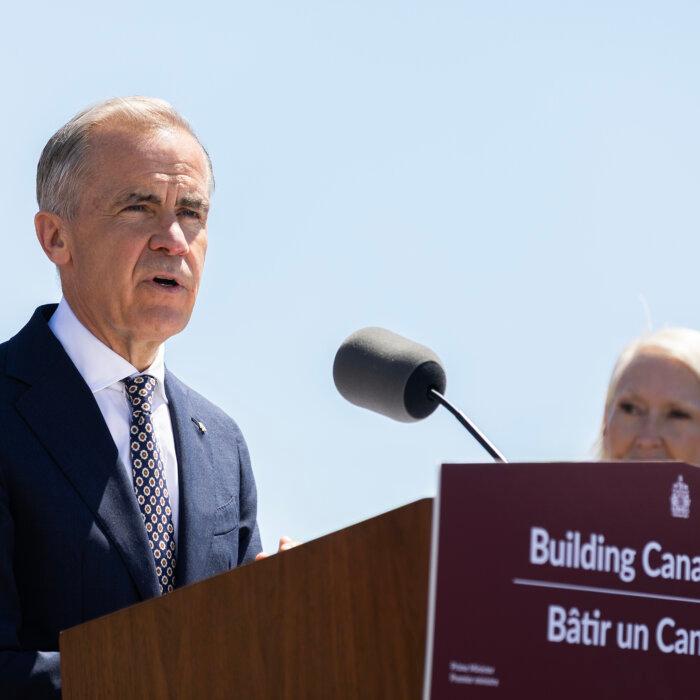
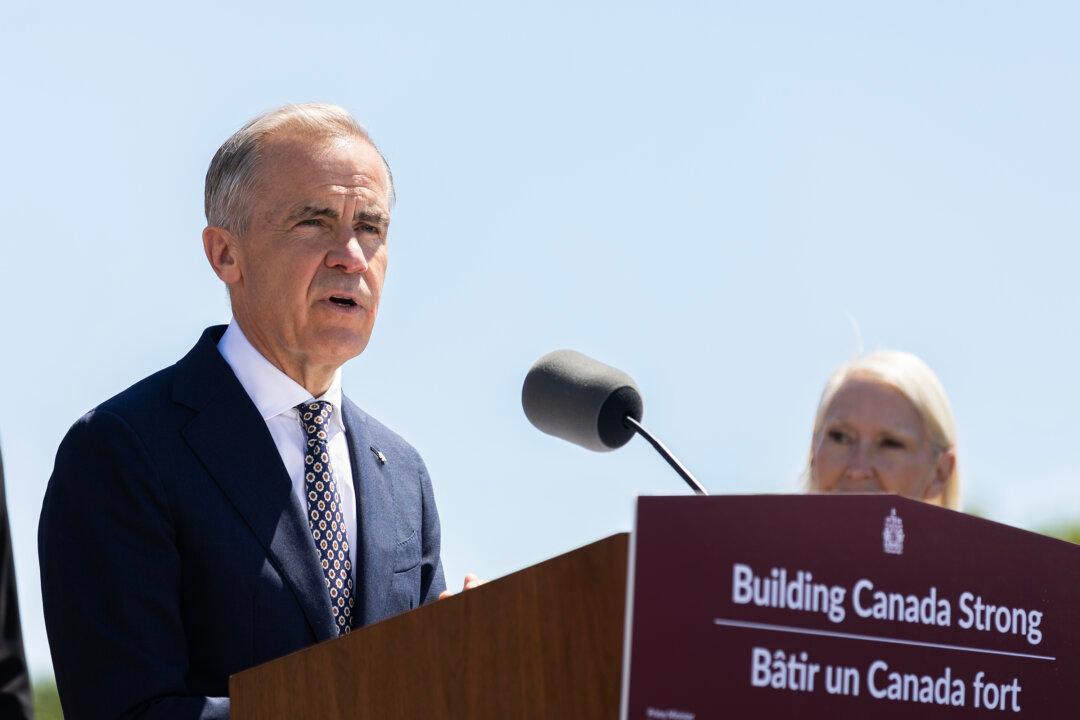
Prime Minister Mark Carney and Alberta Premier Danielle Smith announce a proposed pipeline from Alberta to the B.C. coast in Calgary on July 2, 2026. The Canadian Press/Todd Korol
Prime Minister Mark Carney and Alberta Premier Danielle Smith have been maintaining delicate balancing acts with factions within their support bases. Carney needs to spur economic development while keeping those advocating for climate policies in his party content. Smith must show some progress in negotiating a pipeline to the coast with the federal government, while keeping secessionist elements in her party satisfied. The dog’s breakfast of a pipeline proposal announced by the leaders in Calgary on July 2 reflects the effort to find compromises.
Opponents to the expansion of coastal oil pipeline infrastructure have long pointed to the lack of private interest in participating in a new line as a reason to drop the concept. Supporters of pipeline construction have noted that private companies want in, but only if the regulatory regime is reformed.
To address this with the new proposal, Smith’s government has managed to pull in Pembina Pipelines as a partner in the project so they can call it a public-private partnership. The move feels almost token, as the role is as a consultant rather than a full participant, and Pembina will only hold a 10 percent interest. The other 90 percent will be held by the Crown-owned Trans Mountain Corporation and potentially some indigenous interests backed by provincial loan guarantees from Alberta. Cobbled together as it may be, it is a plan, and it came in just a day shy of the July 1 deadline for a pipeline proposal per the MOU signed between the prime minister and the Alberta premier.
The Alberta government had been promoting a northern pipeline route until as recently as mid-June this year. The route is more direct, which shortens the pipeline requirement and would shave days from the transport time for tankers to bring the oil to Asian markets. With Carney’s refusal to remove the tanker ban imposed by the Trudeau government, though, the Alberta government was forced to shift to the less desirable southern route, which will predominantly follow the route of the existing Trans Mountain Pipeline.
The compromise is surely frustrating for Albertan proponents but appears to have satiated B.C. Premier David Eby, who had been steadfastly opposing all proposals of pipeline expansion. Eby isn’t supporting the new pipeline, but has grudgingly committed not to try to oppose it.
Carney has already taken hits for his support of pipeline expansion from within his party. Longtime Liberal MP and cabinet minister Steven Guilbeault resigned from cabinet and has committed to resigning as a member of Parliament due to the agreement being made between Alberta and the federal government. Guilbeault’s roots are as an anti-oil activist, and his resignation isn’t surprising as he has always been uncompromisingly opposed to any expansion of oil or gas production in Canada. There are many other climate policy advocates in Carney’s caucus who may not be as intractable as Guilbeault is on the issue, but they are uncomfortable with the pipeline, and in holding a slim majority, the prime minister must be careful not to push them too far.
The compromise being touted by both Smith and Carney as a reduced-emissions selling point for the pipeline is the Pathways carbon capture and storage project. The project offers tax incentives and subsidies to oilsands producers to capture carbon dioxide emissions at production sites, then to transport the CO2 through a network of pipelines to Cold Lake, Alberta, where it will be pumped deep underground for storage through injection wells. The sequestration of CO2 gives producers a way to meet their emission-reduction targets, and the gas may be used later to facilitate enhanced oil recovery. It’s an ambitious project expected to cost over $16 billion in capital investment, and critics warn it could add some high costs to Alberta’s already expensive oil.
Trying to construct a new pipeline to the West Coast without removing the regulatory hurdles in place in Canada will be a huge gamble for Carney and Smith. The Trans Mountain expansion was projected to cost $5.4 billion and take a couple of years to construct when Kinder Morgan pitched it in 2013. Once the government took over the project, the costs skyrocketed to over $34 billion, and it was constructed years behind schedule. The new pipeline proposed by Smith and Carney is expected to cost nearly $40 billion and be operational by 2034. It’s a high price and a long timeline with little room for delays if the pipeline is to be profitable.
If the federal government doesn’t declare the pipeline to be in the national interest this fall, it likely will not be constructed, as activist groups will swamp the project with legal challenges and protests. Carney has invested political capital already and presumably intends to stay on course.
If the pipeline isn’t fully approved and if construction doesn’t begin relatively soon, the independence movement in Alberta will likely expand, as it will appear futile for the province to try economic expansion within the federation. Carney’s political strength would take a hit too, as he will have alienated the pro-climate policy wing of his party with no tangible benefits of his actions to point to.
Prime Minister Carney and Premier Smith have staked their political fortunes on a mishmash of compromises and tax investments to build what likely will be the last large pipeline project in Canada. But citizens will expect progress beyond more MOUs and idea balloons soon, as skeptics cast doubt over whether ground will ever be broken on the project.
Views expressed in this article are opinions of the author and do not necessarily reflect the views of The Epoch Times.