While the traditional prime ministerial home at 24 Sussex Drive in Ottawa has fallen into disrepair and hasn’t had a resident in over a decade, the government remains paralyzed about what to do.
A creative effort to crowdfund renovations managed by the Rideau Foundation and endorsed by Prime Minister Carney last June has only managed to raise 1.4 percent of the $50 million goal. And proposed renovations may reach a cost of $100 million by some estimates.
Putting funds into the prime minister’s residence has always been a sticky issue, as it can be viewed as tax funds being directed toward personal benefit of the office holder.
Former Prime Minister Justin Trudeau chose to move into Rideau Cottage in 2015 rather than get mired in the issue of bringing 24 Sussex into liveable conditions, as it had been found to be mouse-ridden among other serious issues making it uninhabitable.
The mansion’s condition has since gone into sharp decline. It has been gutted to deal with the mould, rodent, and asbestos issues. It will need major expenditure to bring it back to a state where somebody could reside in it.
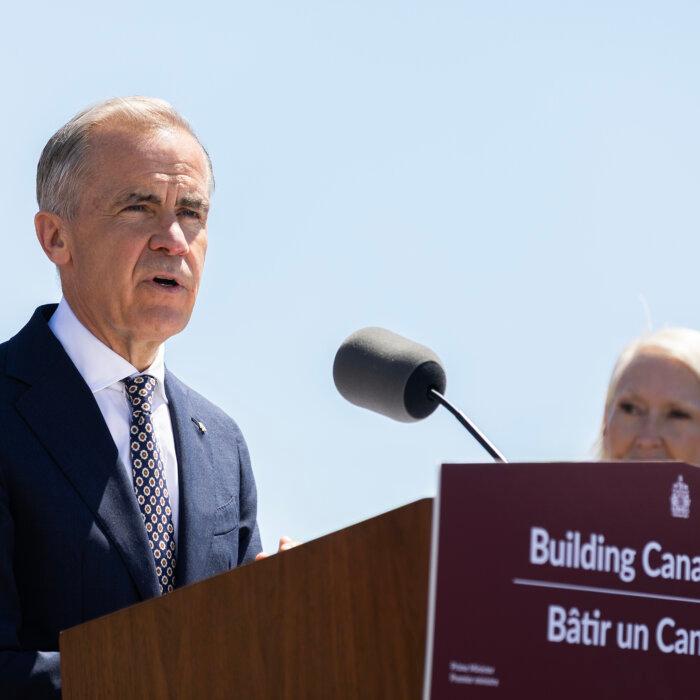
Perhaps it’s time to take a different approach to the prime minister’s official residence. Rather than trying to turn the building on 24 Sussex into accommodation for Canada’s leader again, a brand-new, purpose-built residence for the prime minister should be constructed elsewhere.
Most can agree that the prime minister should be provided with an official residence. Modern security and diplomatic needs mean a prime minister can’t reside safely or effectively in a private residence. While Canadians don’t care to see leaders embracing opulence while in office, they also understand the prime minister can’t live in modest accommodation while in office. They wouldn’t be opposed to a reasonable investment in new quarters.
In England, 10 Downing Street has housed prime ministers for almost 300 years, and in the United States, the White House has been the residence for presidents for over 200 years. It’s understandable why tradition dictates these buildings be maintained and kept in their roles.
The mansion at 24 Sussex was never designed to house the prime minister. It was built by a lumber baron in 1868 and was never used by a prime minister until 1951, when it was expropriated by the Crown under the National Capital Commission. It has only hosted prime ministers in residence for a cumulative 64 years.
Restoring historic buildings is often more expensive than new builds. Heritage rules would prevent major design changes to 24 Sussex, which would mean even if the home were to be renovated, the shortcomings in layout for contemporary needs would remain.
A clean-sheet design allows Canada to build a secure, accessible, sustainable, and appropriately scaled residence and working venue from the ground up. Family living space can be separated from the event, meeting, and administration sections of a new residence so privacy and functionality can be combined.
Security features can be integrated into a purpose-built design, allowing for more effective protection of the prime minister and his or her family while potentially costing less than adapting an older mansion that was not designed with security needs in mind. The longer-term operating costs could be reduced with a modern building too. Even if 24 Sussex were rehabilitated, it would require constant repair and maintenance to avoid falling into disuse again.
The old property can be sold to offset costs for a new home or repurposed for public use.
Tangible symbols of tradition and historical preservation are important. The governor general is the representative of the head of state of the nation, and people in the office have resided in Rideau Hall since 1867. The pomp and circumstance can be maintained there while prime ministers reside in a more functional accommodation.
It’s hard to maintain national pride in Canada’s governing institutions when the country is incapable of effectively housing the person with the top elected role in the country. Having a purpose-built space for the prime minister would end this rather embarrassing situation and give the office holder a space for diplomatic meetings and personal space alike. It could allow them to better do their job and we all want that.
It would take proper political framing, but Prime Carney could have an opportunity in front of him to end the ongoing issue of having an official prime ministerial residence. Constructing such a facility would likely take longer than the prime minister remains in office, so it wouldn’t look self-serving on the part of Carney. But it would leave him a legacy he could lay claim to.
Sometimes it’s better to start from scratch rather than try to tweak and repair an aging structure.