As the conflict between Iran, Israel, and the United States deepens, a more complex and consequential dynamic is emerging that points to the quiet but increasingly consequential role of China.
Covert Supply Lines, Strategic Calculus, and the High Stakes for Washington
The evidence of Beijing’s hand in supplying a wide range of arms to Iran may be fragmentary and indirect, but it is consistent. It’s not Cold War-style arms dumping, but something subtler and arguably more effective, that belies a layered support strategy designed to sustain Iran without triggering open confrontation with Washington.The Caspian Corridor: A Sanctions-Proof Lifeline
But it’s occurring not around the Strait of Hormuz or anywhere near it, but via another critical body of water. Far from the world’s major naval choke points, the Caspian Sea has become one of the most strategically important—and least understood—arteries in this conflict.This enormous inland sea, bordered by Russia and Iran, provides a logistics corridor largely immune to Western surveillance and interdiction. Reporting indicates that it has already been used to move military materiel, including drones and related systems, between aligned states.
Supplying the Means, Not Just the Weapons
For Beijing, the Caspian channel is diplomatically important. It offers a pathway to support Iran indirectly via Russia, reducing attribution risk while maintaining strategic leverage. Additionally, its approach favors supplying the “inputs of war” rather than fully assembled weapons systems—a distinction that matters both legally and strategically.For example, investigations have identified shipments of sodium perchlorate, a key component in solid-fuel ballistic missiles, moving from Chinese-linked ports to Iran. These materials are not weapons per se, but without them, missiles do not fly. At the same time, Tehran has reportedly sought advanced anti-ship missile systems from China—capabilities that would directly threaten U.S. naval forces and global energy flows.

The Shadow Network: Iraq, Pakistan, and the Belt and Road
Of course, direct weapons shipments from China to Iran via the Strait of Hormuz or the Persian Gulf would be easy to track and prove to be politically explosive. Instead, U.S. officials believe that China may be preparing to move military-related supplies through intermediaries to obscure origin and intent. Intelligence suggests a more complex architecture of multilayered routing through various third-party countries.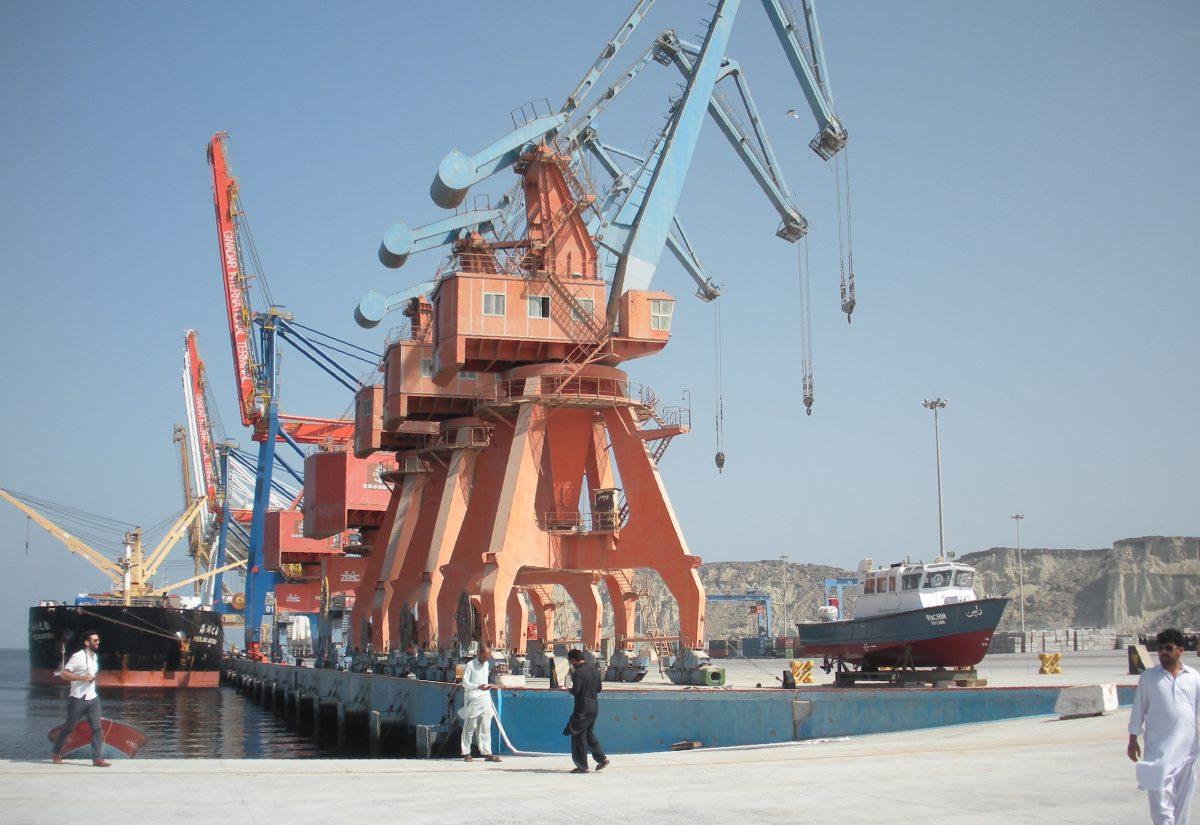
This approach leverages geography and provides some diplomatic cover for Beijing. For instance, Iraq’s porous borders and deep Iranian influence make it a natural land bridge. Pakistan, meanwhile, offers both logistical connectivity and diplomatic cover. What’s more, China’s Belt and Road further integrates these routes into a broader network linking Central Asia, Russia, and the Middle East.
Beyond Hardware: Intelligence and Electronic Warfare
Perhaps the most consequential support China can provide is not physical at all. Reports indicate that Beijing is supplying satellite intelligence, navigation support via its highly accurate BeiDou navigation system, and electronic warfare capabilities to Iran.Iran’s Strategy: Not Victory, but Duration
Iran is unlikely to defeat either Israel or the United States outright. It is simply militarily outclassed. Its strategy is therefore asymmetric and political. The objective is to prolong the conflict, raise its cost, and expand its scope. The longer the war lasts, the more leverage Tehran gains—not on the battlefield, but in the global system.Trade and Tension: Washington’s China Dilemma
For the United States, the implications extend well beyond the Middle East. Washington has warned Beijing that supplying weapons to Iran would carry serious consequences, including potential tariffs and economic retaliation.China’s geopolitical calculus is complicated. On the one hand, it relies heavily on Iranian oil, while Iran relies on China’s oil purchases, which make up about 90 percent of its exported oil sales. On the other hand, Beijing maintains far larger trade relationships with Gulf Arab states than with Iran, and depends also on stable energy flows from the region outside Iran.
The Political Clock: War and the US Midterm Elections
Time is not a neutral factor in this conflict, but a weapon. Both Tehran and Beijing know that a prolonged war would have direct consequences for the United States. The disruption and uncertainty in the Strait of Hormuz have already caused gas prices to spike in the United States and have contributed to rising inflation, putting additional strain on American consumers’ finances.Then there’s the war fatigue factor. Some polls suggest that a growing number—although still a minority—of President Donald Trump’s political base is against the war and that the longer it goes on, the more Trump’s political support could erode. As midterm elections approach, these pressures could become politically decisive.
From Tehran’s perspective, the goal is not simply to outlast the Trump administration’s political ability to wage the war. From Beijing’s perspective, a prolonged conflict that strains U.S. resources and attention may serve communist China’s broader strategic objectives, which include increasing its dominance in the Western Pacific.