The most important thing to understand about China’s surveillance state is that it isn’t built around a single breakthrough sensor. It’s built around an operating system.
Facial recognition makes for compelling headlines because it feels like a superpower: a camera sees you, the state knows you. But the real advantage is architectural. China has spent two decades building the conduit that turns identification into governance: identity registries, dense sensor coverage, and data-fusion platforms that generate alerts, lists, and actions at scale.
Identity as the Primary Key
Every surveillance regime begins with identity resolution: the ability to tie an observation to a person who can be located, pressured, sanctioned, or coerced. Facial recognition is one path to that end, but China’s governance ecosystem increasingly treats facial data as a credential—an authentication layer linked to state databases.

Sensors Are Everywhere—the Question Is What They Feed
China’s camera networks are frequently described through brand names—Skynet, Sharp Eyes. The more important issue is function: coverage and integration. AP reporting has described the progression of projects aimed at expanding surveillance across China, including Sharp Eyes, as part of a broader high-tech effort to stand watch over public space.Intense coverage does two things. It increases the chance of capturing a face or a behavioral cue. It also enables “before and after” logic: patterns over time, deviations from routine, and association mapping. In the West, similar logics exist in pockets. In China, the ambition is systemic. What we are talking about is profiling.
The Fusion Layer: From Data to Action
If you want one case study for how the Chinese model works, Xinjiang remains the clearest window—because the system has been documented with unusual specificity by rights groups and researchers.Human Rights Watch’s reverse-engineering of a Xinjiang police mobile app connected to IJOP describes a platform that aggregates data about people and flags individuals it deems “potentially threatening,” prompting police attention. Australia’s ASPI Xinjiang Data Project summarizes the same basic dynamic: a policing app feeding into IJOP as part of mass surveillance.
The key issue isn’t whether the system is perfectly accurate. It’s how it’s used. A data-fusion platform turns small, ordinary signals—such as a checkpoint scan, a new phone, a changed travel route, or contact with the “wrong” person—into flags inside a machine built to suspect first and ask questions later. It doesn’t have to be right every time, just produce enough “hits” to keep the system constantly intervening.
Police Cloud: Platform Policing With Chinese Characteristics
Outside Xinjiang, China’s public security modernization is increasingly described in terms of platformization—building modular systems that integrate surveillance components while preserving state control.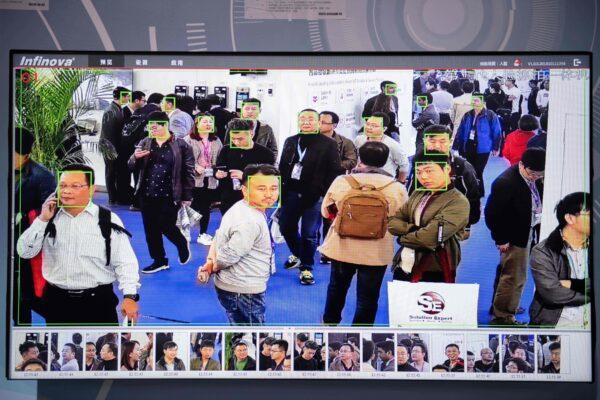
A 2026 peer-reviewed paper on Police Cloud argues that the Ministry of Public Security’s shift toward “platformization” triggered a broader change in public security governance, and Police Cloud enabled functional modularity across surveillance elements—an architecture that helps the state retain autonomy and control.
Emotion and Affect: Why Contested Signals Still Matter
Seen in this light, emotion recognition is best understood as an optional analytic layer that can be plugged into an existing action pipeline.China’s emotion recognition market has been described as a “burgeoning” sector, with public security and education use cases in mind, according to ARTICLE 19’s reporting. Reuters’ summary of that report described applications ranging from interrogation-oriented monitoring to classroom attention tracking.
The ethical problem is often framed as “accuracy.” The operational problem is escalation. In settings where authorities have power over you (interrogations, detention, border screening, “stability maintenance,” school discipline, workplace monitoring), an emotion/affect score doesn’t have to be scientifically reliable to change what happens next. That score becomes a reason to push harder, detain longer, surveil more, or classify a cohort as “high risk.”
This is where collective inference becomes strategically useful. China does not need perfect reads on individuals to benefit from analytics at scale. It can operate on cohort-level patterns: the average response of a demographic slice; a neighborhood’s “temperature”; a campus cluster’s reactions to enforcement; and the emotional intensity of crowd scenes in user-generated video. Group-level emotion is a recognized research direction in the computer vision literature, aimed at estimating collective affect from many partial cues.
The Regulatory Paradox: Privacy Rules’ Alongside Expansive State Capability
A reader might reasonably ask: If China is building such powerful systems, why is it also issuing “protective” rules around facial recognition?Because the Chinese state often pursues two objectives at once: expand capability while standardizing control. China’s 2025 facial recognition measures were reported by the U.S. Library of Congress as aiming to regulate use and protect personal information, including limiting installation in public spaces to what is necessary for public security and emphasizing governance requirements. CSET’s translation and analysis of the measures help show how they shape the ecosystem while preserving pathways for state-linked identity verification.
What the Model Means Beyond China
China hasn’t just built a surveillance architecture; it has assembled a coercive operating system for governance, one that stitches together flawed technologies and turns them into a single, fast‑learning instrument of state power. The design is intentionally elastic. Once the fusion layer is in place, Beijing can bolt on new identifiers—gait, voice, “emotion,” micro‑pattern anomaly detection—without touching the core logic. The result is a machine that never stops training on its population, tightening the loop between what it sees and how it acts, and doing so with a confidence that comes from sheer volume rather than precision.And Beijing doesn’t keep this machinery at home. The regime’s safe‑city exports double as political technology and data‑extraction infrastructure, feeding sensor streams and operational metrics back into Chinese ecosystems while nudging client states toward China’s definition of “order.” That’s the hinge to TikTok and other recommender platforms, which operate as global distribution engines with real‑time measurement baked in.
China’s domestic model shows what happens when identification, fusion, and behavioral steering become routine. When those systems meet—identity, segmentation, and attention control—the question is no longer whether any classifier is perfect. It becomes how fast a state can learn what moves a population, and how casually it can turn that knowledge into leverage.