The Chinese Communist Party (CCP) wants the world to believe China’s rise is unstoppable. Beijing projects confidence at every opportunity—threatening Taiwan, expanding its navy, intimidating neighbors, and openly declaring its ambition to dominate the Indo-Pacific. But beneath the displays of power sits a strategic vulnerability the CCP has never been able to escape.
China’s economy and military expansion remain dangerously dependent on maritime lifelines Beijing does not fully control. That weakness runs directly through the Bay of Bengal. And sitting astride it is India’s Andaman and Nicobar island chain.
For years, Western policymakers treated the Bay of Bengal as secondary terrain compared with Taiwan or the South China Sea. Beijing never made that mistake. Chinese strategists understood long ago that the Bay of Bengal forms the western gateway to the Strait of Malacca, one of the world’s most important maritime choke points. It is also a corridor through which much of China’s imported energy and commercial trade must pass before reaching mainland China.
The Nicobars Threaten China’s Maritime Security
The Andaman and Nicobar Islands turn China’s maritime vulnerability from theory into geography.
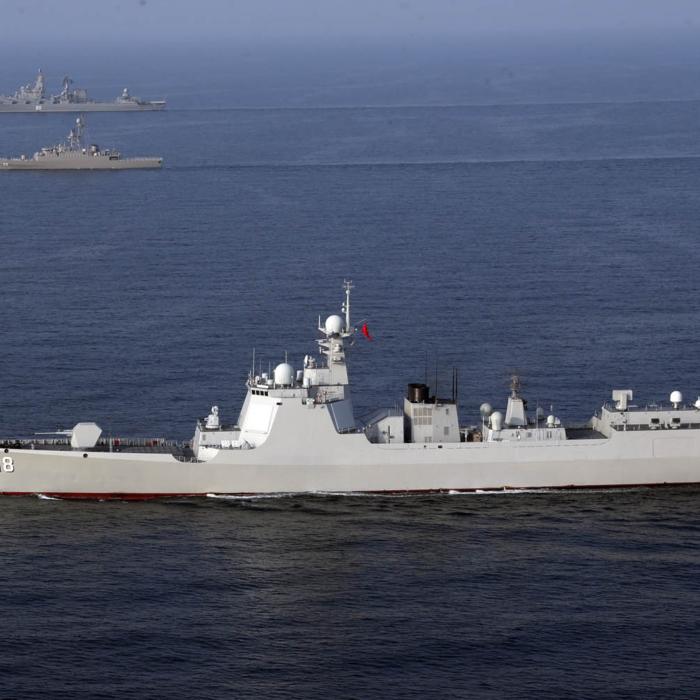
Positioned near the western approaches to the Malacca Strait, the island chain gives India enormous strategic leverage over one of the CCP’s most important economic lifelines. From these islands, India can monitor Chinese naval deployments, track commercial shipping, conduct signals intelligence, and pose a potential threat to Chinese sea lines of communication during wartime.
In strategic terms, the islands function as an unsinkable surveillance and military platform overlooking China’s primary maritime access route to the Indian Ocean.
Beijing understands exactly what that means.
This is why China’s increasingly aggressive behavior across the Bay of Bengal should not be dismissed as routine regional competition. It is a coercive campaign designed to weaken India’s geographic advantage before New Delhi can fully integrate its advantage into a wider Indo-Pacific coalition alongside the United States and its allies.
India’s development of the island of Great Nicobar has clearly unsettled Beijing. The project includes expanded runways, surveillance systems, logistics infrastructure, military support facilities, and plans for a deep-water transshipment port.
A stronger Indian military presence in the Nicobars complicates Chinese Navy operations throughout the eastern Indian Ocean. It increases pressure on Chinese shipping routes and threatens Beijing’s wartime logistics calculations. Most importantly, it raises the possibility that Chinese maritime traffic through the Malacca corridor can be monitored, constrained, or disrupted during a regional crisis involving Taiwan or the South China Sea.
That possibility cuts directly against the CCP’s ambitions for regional dominance.

Beijing’s ‘String of Pearls’ Is About Vulnerability
China’s actions across the Bay of Bengal are often described as commercial outreach or infrastructure diplomacy. That description ignores the larger strategic pattern.The CCP is systematically constructing a network of influence and access points designed to reduce China’s dependence on vulnerable maritime choke points while eroding India’s traditional dominance in the east Indian Ocean.
Bangladesh has become another critical target of Chinese strategic penetration. Beijing is now Bangladesh’s largest defense supplier while financing transportation systems, energy infrastructure, industrial projects, and port development throughout the country. These investments create long-term dependency, political influence, and potential dual-use infrastructure directly adjacent to India’s eastern maritime flank.
Sri Lanka provides the clearest example of how this model evolves over time. China’s involvement in the Hambantota Port project eventually produced a 99-year lease agreement after Sri Lanka’s debt crisis spiraled out of control. Beijing continues to insist these projects are commercial. But ports become logistics hubs, which become strategic footholds. Strategic footholds eventually facilitate military access.
China’s Pressure Campaign Is Already Underway
The Bay of Bengal pressure campaign extends far beyond infrastructure financing.Chinese surveillance ships, submarine deployments, and so-called research vessels now operate regularly near India’s maritime sphere. Indian officials have repeatedly warned that Chinese “research” operations involve seabed mapping and intelligence collection with direct military applications.
At the same time, Chinese state-linked narratives increasingly portray India’s Nicobar expansion as provocative or destabilizing. This is standard CCP information warfare: frame defensive counterbalancing as aggression while portraying China’s own economic penetration and military expansion as normal regional development.
The pressure campaign itself reveals the insecurity driving Beijing’s behavior.
The Bay of Bengal Is Becoming a Front Line
The Bay of Bengal is no longer a secondary maritime theater. It is rapidly emerging as one of the central battlegrounds in the contest for Indo-Pacific dominance.The Nicobar Islands sit directly in the middle of that struggle.
For Beijing, the islands represent an obstacle to Chinese power projection and a reminder that geography still constrains the CCP’s ambitions. For India and its partners, the islands represent strategic leverage capable of shaping the balance of power across the east Indian Ocean.
That is why China is pressuring the region so aggressively.
The CCP understands that its ambitions for regional dominance remain vulnerable so long as rival powers retain the ability to monitor, pressure, or potentially disrupt China’s maritime lifelines. The Bay of Bengal exposes one of Beijing’s greatest geopolitical weaknesses: China’s rise still depends on sea lanes it cannot fully secure and does not fully control.
And the Nicobar island chain sits directly across that vulnerability like a gate Beijing cannot afford to leave in someone else’s hands.