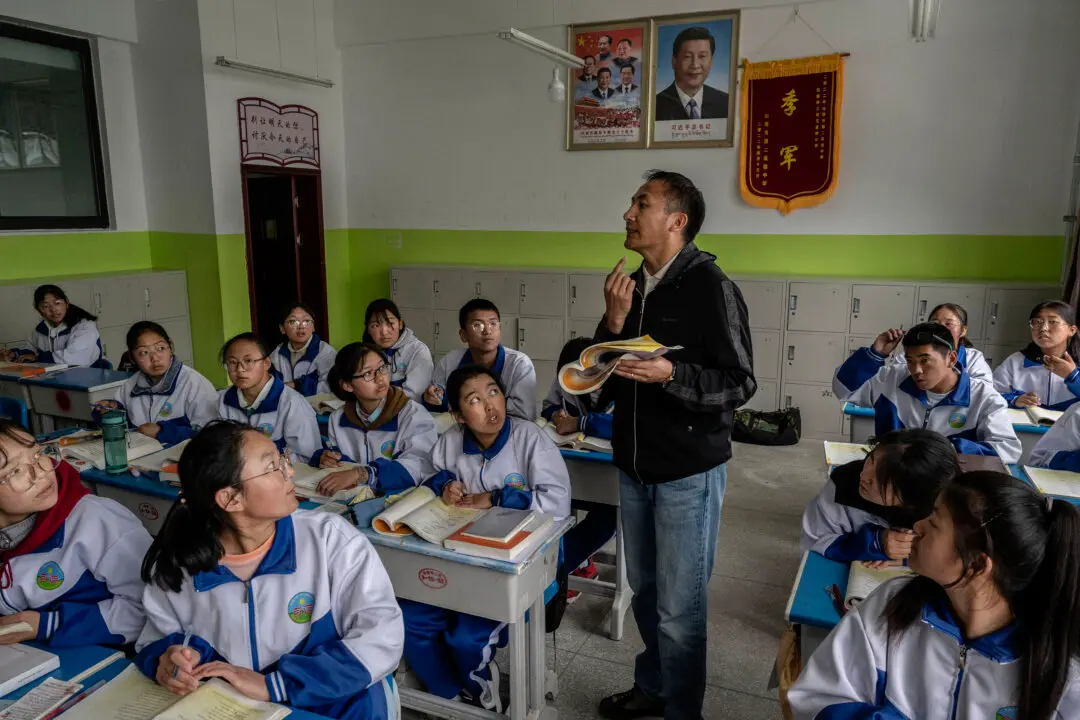
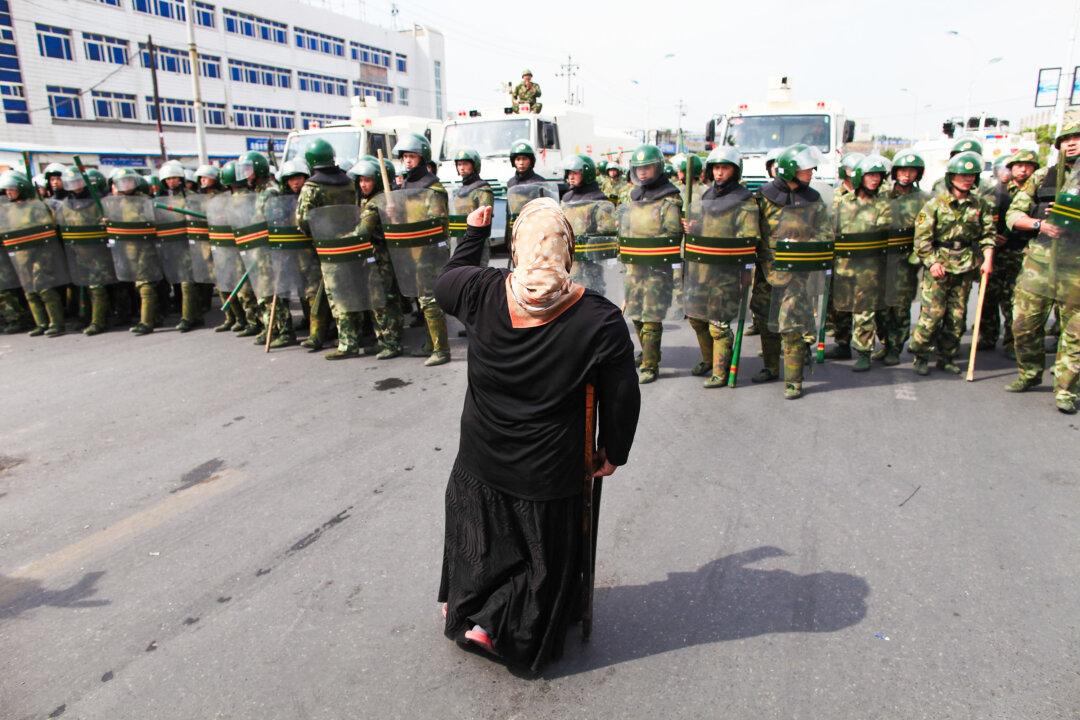
Taiwan’s president did not treat China’s new ethnic unity law as a distant human rights issue.
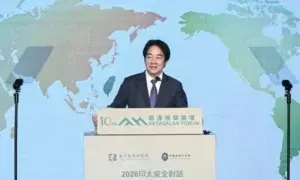
At a July party gathering, President Lai Ching-te warned that democratic Taiwan must not become “China’s Taiwan” and pointed to Beijing’s new law as part of China’s expanding legal warfare. According to Reuters, Lai said the statute gives Beijing a basis to act against people outside China’s borders. That is the right way to read it.
The law is not just about Tibetans, Uyghurs, Mongols, Hui Muslims, or other minority communities inside the People’s Republic of China. It is also about who gets to define Chinese identity beyond China’s reach.
That makes part three of this series the natural conclusion. Part one examined how Beijing wrote assimilation into statute. Part two looked at the domestic machinery: schools, language, religion, public space, and childhood itself. Part three turns to the overseas clause, because the same law that disciplines identity at home now claims a right to police dissenting identity abroad.
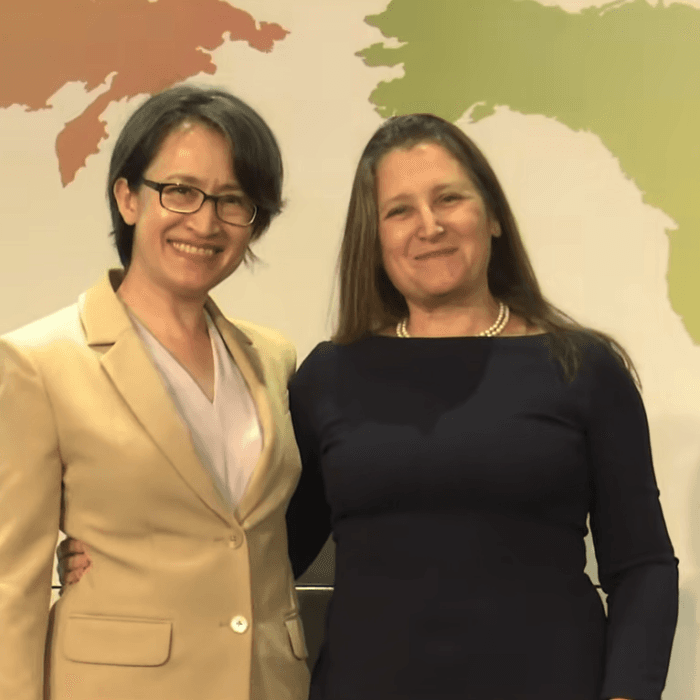
The Overseas Clause Is the Warning
Article 63 is brief, but it carries weight. According to China Law Translate’s English rendering, organizations and individuals outside mainland China who commit acts “aimed at the P.R.C.” that undermine ethnic unity or create ethnic division may be pursued for legal responsibility.
Beijing’s wording is intentionally broad. It does not require violence. It does not require a direct security threat. It leaves room for speech, advocacy, research, testimony, cultural organizing, and political identity to be treated as hostile acts when they challenge Beijing’s preferred national story.
Chinese officials have already defended that reach. On June 24, China’s vice minister of justice said Beijing has the right to target people overseas who violate the law and described the provision as legal and necessary.
An official account of the same briefing said the provision was justified and rejected criticism that it amounted to long-arm jurisdiction. That denial is revealing. Beijing is not backing away from the overseas claim. It is normalizing it.
The concern is no longer limited to activists. After the law took effect on July 1, the United States and European Union expressed concern that it gives China a legal basis to act against people beyond its borders, according to a July 2 Reuters report. That matters.
Democratic governments are beginning to see Article 63 for what it is: another tool in China’s campaign of extraterritorial pressure.
Beijing Turns Criticism Into “Division”
The Chinese text sharpens the danger. Article 10 does not simply reject foreign interference. It opposes outside forces that use ethnicity, religion, or human rights to slander and smear, contain and suppress, as well as infiltrate and undermine China. A smooth English translation can make that sound like standard anti-interference language. In Chinese political usage, it is heavier. It accuses critics of smearing China, blackening its reputation, containing and suppressing it, infiltrating it, and undermining it.
That framing matters because it turns human rights scrutiny into hostile action. A Uyghur advocate testifying before Congress can be cast as part of a foreign campaign. A Tibetan exile preserving religious identity can be labeled a separatist. A Southern Mongolian language-rights defender can be accused of damaging ethnic unity. A Taiwanese official can be portrayed not simply as supporting democracy, but as rejecting the one national identity Beijing insists must prevail.
This is why Lai’s warning is useful as a lead. Taiwan is not an ethnic minority region under the statute. It does not need to be. Beijing’s broader logic is that identity is not something communities may freely define. It is an obligation to be performed. Once identity becomes a legal duty, International support can become interference.
The Law Fits a Larger Pattern
Congress has already documented the wider machinery. A June 2026 Congressional-Executive Commission on China report found that the Chinese regime targets Hongkongers, Uyghurs, Tibetans, former Chinese officials, and others through a global coercive toolkit that includes physical attacks, harassment, threats to family members in China, pressure to return, and lawfare.
Article 63 has a placeholder in that toolkit. It gives Beijing another legal phrase to attach to the same behavior.
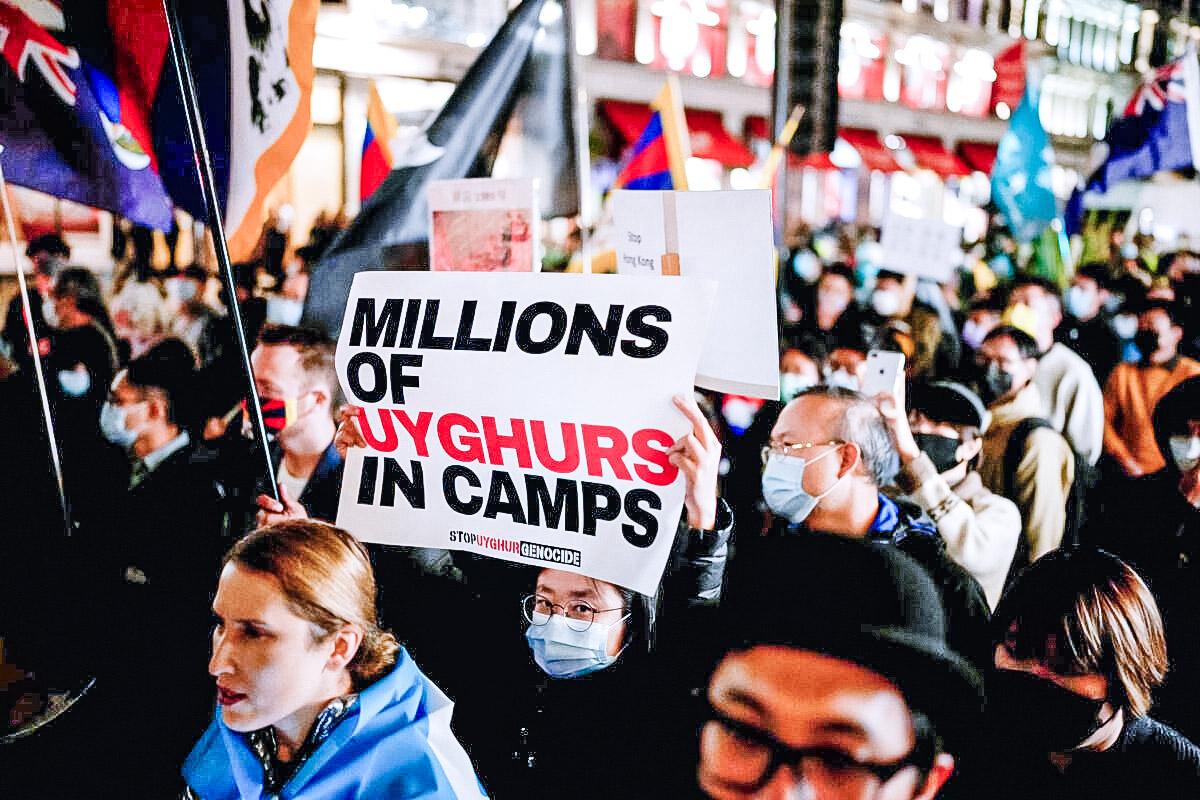
The threat does not have to result in prosecutions to be effective. That is the point, which is often missed. A student may skip a campus event. A scholar may soften testimony. A diaspora group may avoid language Beijing could frame as separatist. A local official in a democratic country may decide that hosting a Uyghur, Tibetan, Mongolian, Hong Kong, or Taiwanese speaker is not worth the diplomatic trouble.
Coercion often works by changing the calculation before anyone is charged.
China’s domestic messaging also shows how quickly the law is being operationalized. In July, senior leader Wang Huning toured Tibet, urging enforcement of the new ethnic unity law. Stressing the need for stability, he called for Tibetan Buddhism to align more closely with socialist society and Communist Party priorities.
That domestic signal has an overseas echo. Tibetan exile communities are often targeted because they preserve precisely the religious and cultural identity Beijing is trying to subordinate inside Tibet.
The same logic applies to Uyghurs, Mongols, Hui Muslims, Hongkongers, and Taiwanese. Beijing does not separate internal control from external narrative management. It governs both as one problem: who has the right to speak for China, for its minorities, for its history, and for its borders.
The Counterargument Fails
Beijing will say every country protects national unity. Sure, but democracies protect sovereignty without claiming the right to define the identity of people living under other jurisdictions. Foreign citizens, permanent residents, refugees, journalists, professors, clergy, students, or activists don’t become targets if they reject a ruling party’s story of nationhood.
It’s not about opposing separatism inside its borders. The issue is whether Beijing may turn peaceful speech abroad into a legal target because that speech challenges forced assimilation, religious control, or Taiwan’s democratic identity. No democratic government should concede that premise.
The phrase “ethnic unity” does a great deal of work here. It makes command sound like consensus, and assimilation sound like harmony. That is why the translation gap matters. The English-facing language appears administrative.
The Chinese political language reveals something harder: a state campaign to forge consciousness, punish dissenting memory, and export the pressure beyond China’s borders.
Democracies Should Answer Clearly
The United States and its partners should treat Article 63 as a warning of transnational repression. Congressional committees should ask federal agencies, the intelligence community, and campus security officials how they are tracking potential uses of the law against diaspora communities, researchers, students, and civil society groups.
Universities must be prepared for pressure around events involving Tibet, Xinjiang, Inner Mongolia, Hong Kong, and Taiwan. Local law enforcement should understand that threats against diaspora communities may be the result of foreign state coercion, not ordinary community disputes.
The response should also be public. Beijing benefits when intimidation is quiet. Democracies should say plainly that testimony, scholarship, religious practice, cultural preservation, and peaceful advocacy are protected activities. If Chinese officials or proxies threaten people for exercising those rights, the issue is not ethnic unity—it is foreign repression.
China’s new ethnic unity law begins as a domestic assimilation statute. It reaches into classrooms, temples, mosques, textbooks, families, and public spaces. Then, it turns outward, warning people beyond China that they, too, may be judged by Beijing’s identity code.
Lai’s warning should not be dismissed as Taiwanese politics. It was a reading of the law’s logic. The Chinese regime says it can act against people overseas who violate its ethnic unity regime. Democracies should answer with the same clarity: not here.