This is the first in a three-part series examining China’s new Law on Promoting Ethnic Unity and Progress. Read part one here.
Commentary
Part one of this series examined the central danger in China’s new Law on Promoting Ethnic Unity and Progress: the Chinese Communist Party (CCP) is not merely calling for harmony among ethnic groups. It is writing a state-directed identity project into national law.Part two focuses on vulnerable systems. The law points toward the institutions every authoritarian system eventually tries to control: schools, language, religion, culture, housing, employment, media, and public space. Beijing’s intent is to shape a narrative that its use of control is for unity, development, and progress.
Article 12 is the place to start. According to China Law Translate’s English rendering of the statute, the state must provide education that guides people of all ethnic groups to adopt the state’s “correct” views on history, ethnicity, culture, and religion.
That word—“correct”—is not filler. In democratic societies, history, culture, and religion are argued over by families, scholars, clergy, communities, journalists, and citizens. In Xi Jinping’s China, the state claims the power to determine the right interpretation in advance.
The state does not ask students to be broadly educated. It instructs them to absorb the CCP’s approved views of nation, history, ethnicity, culture, and religion. Once the state controls those categories, minority identity is pushed to the periphery. Language, clothing, and local culture can be promoted for tourism. But the meaning of that identity belongs to the Party.
That is why education sits at the center of the law. Article 16 directs schools to place “forging a strong sense of the community of the Chinese people” throughout the education process and to use nationally unified textbooks.
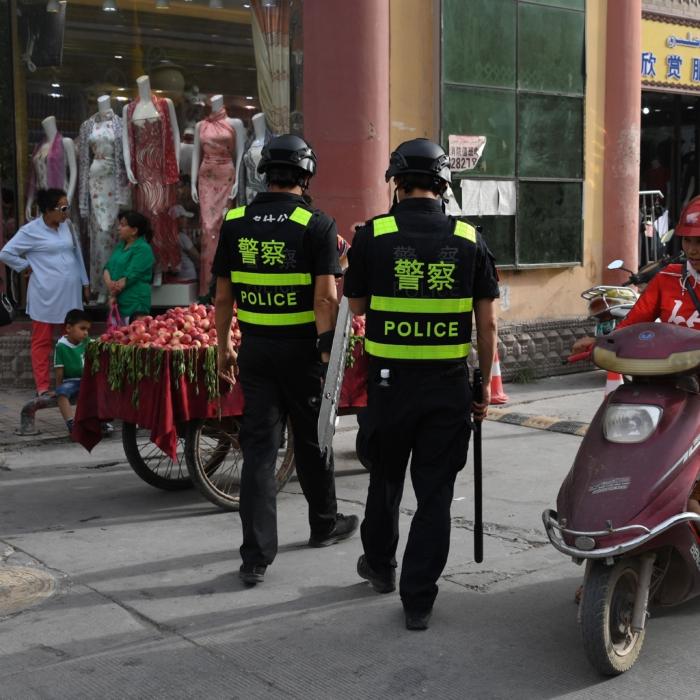
Article 15 makes the national common language and script—Mandarin—the basic language of education and official use, while requiring Mandarin to appear prominently when used alongside minority languages. Reuters reported that the law prioritizes Mandarin in schools and official settings and requires it to be given prominence over minority languages where they appear together.
Beijing will describe this as integration. Families living under it are more likely to experience it as a hierarchy.
The law says minority languages are respected and protected, but the operational mandate points the other way. Mandarin becomes the language of schooling, government, employment, advancement, and official legitimacy. Minority languages may remain as heritage markers, but Mandarin carries power.
That is how assimilation often works in a modern bureaucracy. It does not have to begin with an outright ban. It can make a language less useful to the child, less visible in public life, less relevant to opportunities, and less central to education until parents begin to calculate that cultural survival comes at a cost.
That warning was not speculative. It described a framework already visible in Tibet, Inner Mongolia, Xinjiang, and Hui Muslim communities.
Tibet showcases how early the state is willing to begin. Human Rights Watch’s 2026 report, “Start with the Youngest Children,” found that Chinese authorities are using preschool and kindergarten policies to integrate Tibetan children into Mandarin-medium education and ideological instruction.
The report also describes a 2021 Ministry of Education directive requiring kindergartens in ethnic minority areas to use standard Mandarin for instruction and care. Assimilation, in this model, begins before a child can read and long before a child can understand what is being taken.

The effect extends beyond vocabulary. The Guardian, reporting on the Human Rights Watch findings, described Tibetan parents and researchers saying that children returned from preschool reluctant or unable to speak Tibetan, with some children identifying themselves as Chinese rather than Tibetan.
The point is not simple language substitution. It is an emotional and cultural relocation. A child who struggles to speak with grandparents cannot fully inherit memories. A child taught that Mandarin is the language of advancement and Tibetan is a language of the home learns hierarchy before politics and can begin to look down on parents who are not fluent in Mandarin.
Congressional reporting reinforces that concern. A Congressional Research Service (CRS) report on human rights in China states that Beijing continues to replace Tibetan-language instruction and textbooks with Chinese-language materials and has reportedly placed nearly 1 million Tibetan children in state-run boarding schools that teach in Chinese and promote Han culture.
This is not ordinary bilingual education; it’s indoctrination of one culture and the excision of another. It is a system that weakens the institutions that carry a people forward.
Religion receives similar treatment. Article 46 of the new law requires religious groups, religious schools, and religious venues to adhere to the “Sinicization” of religion. The phrase can sound cultural, almost harmless. It is not.
In practice, Sinicization means religious life must conform to CCP-defined national identity, socialist society, and state security. Independent religious authority becomes suspicious because it offers meaning beyond the Party.
Hui Muslims have already felt that pressure. The CECC’s 2025 Annual Report described repression of Islamic expression through sinicization campaigns, mosque pressure, imam detentions, and state control over religious interpretation.
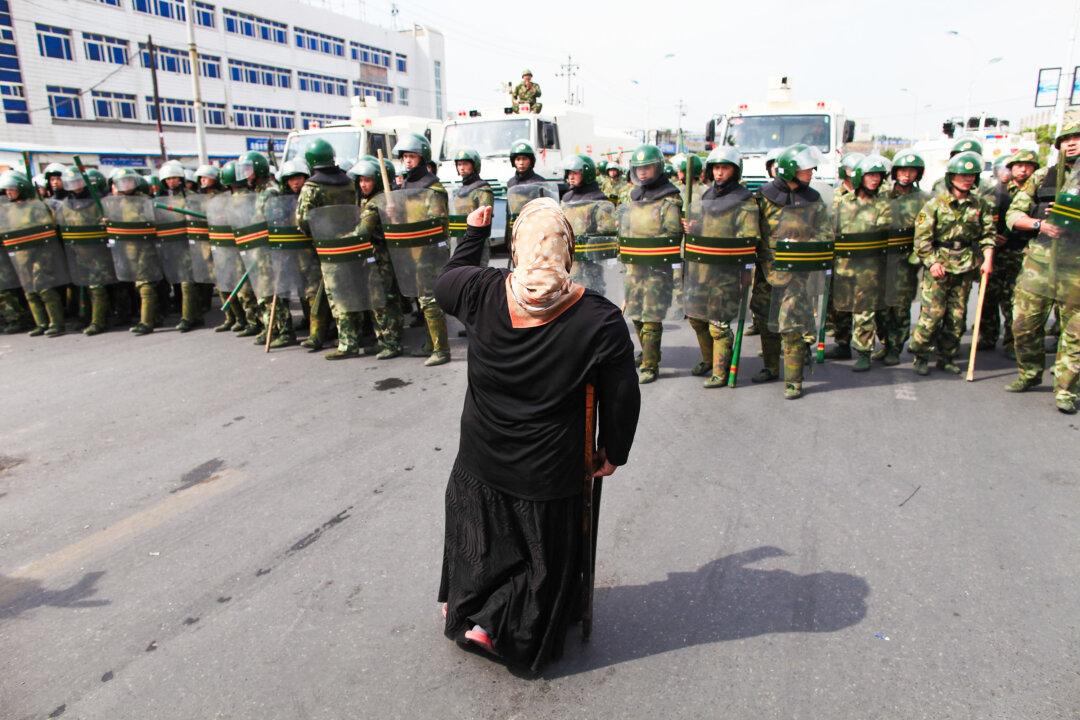
The report also describes the December 2024 detention of Hui imam Ma Yuwei in Yunnan, followed by public protests and a security response involving police, military personnel, checkpoints, communication jammers, and questioning of Hui Muslims. Under the new law, this type of religious coercion can be recast as the CCP’s ethnic unity work.
Xinjiang remains the clearest warning of how far the logic can go. CRS reporting describes severe restrictions on Uyghur religious and cultural life, mass detention, political indoctrination, forced labor, and coercive transfers. Beijing insists these policies protect stability and combat extremism.
The ethnic unity law gives that same framework a broader national vocabulary: independent culture becomes a risk, religious autonomy becomes a vulnerability, criticism becomes division, and assimilation becomes progress.
The public square is part of the machinery, too. Article 14 instructs local governments to highlight shared Chinese cultural symbols in public facilities, architecture, scenic displays, place names, and public activities. This may sound cosmetic. It is not. Public space teaches whose history is official, whose symbols are elevated, and whose identity gets to define the national story.
That is why the law’s language about a “shared spiritual home” should be treated with caution. A home is not shared when one authority decides what parts of a culture end up on the cutting room floor. While the CCP wants the world to see an integration law, the text points to an assimilation system.
A state that can legally reorganize language, religion, memory, and childhood in the name of unity is revealing how it understands power. It is also showing how it may treat any population, at home or abroad, that refuses the identity Beijing assigns to it.
Part three will examine that external danger. Article 63 extends the law’s logic beyond China’s borders, threatening legal responsibility for organizations and individuals outside the country who allegedly undermine ethnic unity or create ethnic division.