A floating structure appears at Scarborough Shoal.
It is small—reportedly about 6 meters by 6 meters, with an antenna and personnel aboard—but the strategic question is not small at all. Philippine forces detect it. Manila investigates. Satellite imagery confirms its presence and later suggests it was removed. Beijing insists its activities are lawful.
Analysts debate whether the platform was scientific, temporary, operational, symbolic, or probing. The public waits for certainty while the more important question takes shape: How long can a democracy afford to verify before ambiguity becomes a fact on the water?
In fact, Reuters reported that the Philippines took diplomatic action earlier in June after spotting a structure at Scarborough Shoal, a disputed feature China has controlled since the 2012 standoff, despite a 2016 historic ruling by the Permanent Court of Arbitration in The Hague that rejected key parts of Beijing’s South China Sea claims.

The answer is not to become less open, less accountable, or less democratic. It is to build faster decision space inside the uncertainty window: the ability to detect coercion, create a public record, share information with partners, align messages, and impose costs before ambiguity hardens into a strategic fact.
The Uncertainty Window
The danger is not uncertainty itself. Democracies can handle uncertainty. The danger is unmanaged ambiguity: when evidence stays classified too long, partners compare notes too slowly, public messaging lags behind events, and Beijing gets the first opportunity to define what happened.The uncertainty window is the period between a coercive act and a coordinated democratic response. China tries to widen that window. Democracies must learn to shrink it.
Beijing’s gray-zone advantage lies in plausible ambiguity. Fishing fleets, coast guard patrols, research vessels, cyber probes, and state-media narratives can all be presented as routine, defensive, scientific, or lawful. Taken together, they create a coercive operating environment in which China incrementally changes conditions while democracies are left to prove intent after the fact.
Faster Decision Space
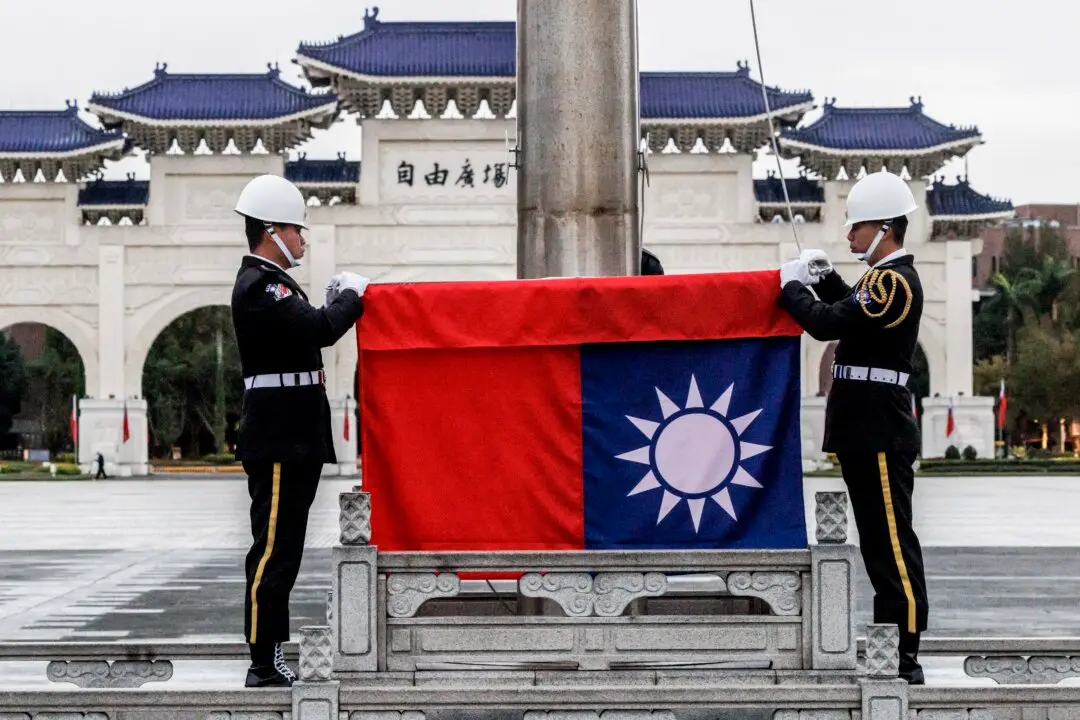
Taiwan recently demonstrated the countermodel: move quickly, create a record, and deny Beijing the benefit of a slow public response.When Chinese ships entered restricted waters southwest of Taiwan’s southern tip earlier in June, Taiwan’s coast guard dispatched vessels, challenged the ships by radio, released audio of the exchange, publicly rejected Beijing’s jurisdictional claims, and created immediate visibility around the incident. Reuters reported that three of the four Chinese ships were coast guard vessels, underscoring China’s dual-use narrative: official enough to assert state power, ambiguous enough to avoid the appearance of open military escalation.
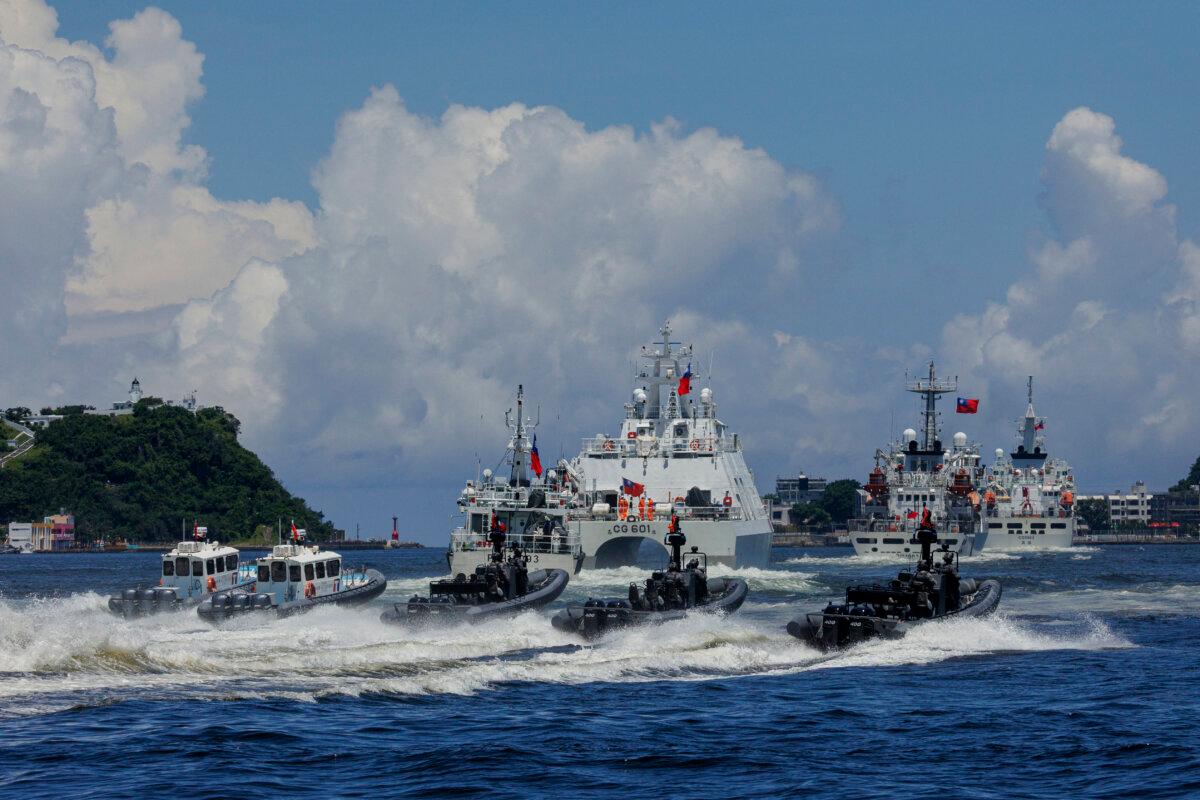
That sequence matters: detect, challenge, record, publicize, reject.
This is a faster decision space. It is not reckless escalation, and it is not propaganda with democratic branding. It is the disciplined compression of time between the coercive act and the public record.
A similar pattern emerged near the Taiwan-controlled Pratas Islands, where Reuters reported in the first week of June that a Chinese coast guard vessel and an oceanographic survey ship conducted what Taiwan described as the first coordinated operation of its kind in the area. Taiwan responded with coast guard vessels and accused Beijing of trying to falsely assert jurisdiction.
Shared Information Shrinks the Window
Information sharing among partners is one of the greatest threats to Beijing’s strategy because it collapses the uncertainty window and forces Chinese behavior into the light.A Chinese coast guard maneuver near Scarborough, a survey vessel near Pratas, a cyber probe against a port authority, and a narrative campaign against Indian “militarization” in the Bay of Bengal may look separate when viewed alone. Shared intelligence turns isolated incidents into recognizable campaigns. That is why Beijing expends so much energy stoking division. It is not merely trying to make democracies argue. It is trying to divide perceptions.
This is where resilience before crisis matters. Reuters reported in late May that Japan and the Philippines agreed to begin talks on a classified information-sharing pact as both countries deepen defense cooperation in response to China’s assertiveness. Cooperative efforts like these build the common operating picture before a crisis, so partners are not left trying to establish trust, classification rules, and communication channels after the first provocation.
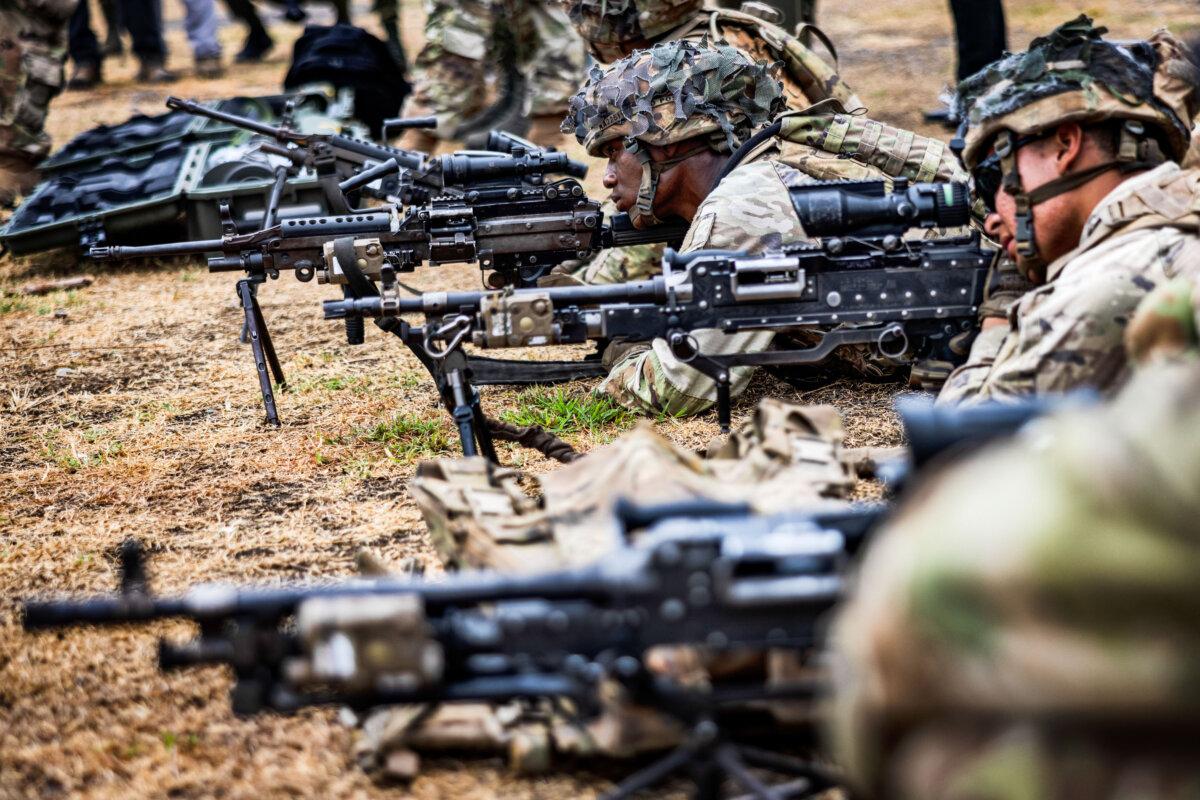
The same logic is visible at sea. The U.S. Navy reported that Japan, the Philippines, and the United States conducted a multilateral maritime cooperative activity inside the Philippines’ exclusive economic zone in February. These exercises matter because the Chinese regime’s ambiguity strategy works best when each democracy is forced to interpret events on its own. Shared operating pictures turn scattered incidents into recognizable pressure.
The Battlefield Is Moving West
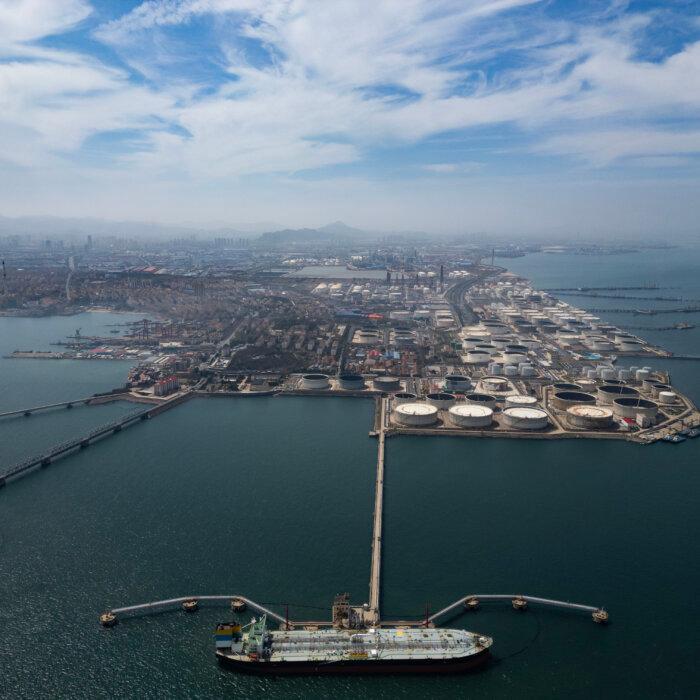
This logic will not stay in the South China Sea.The Indian Ocean is the next test because geography, energy, and alliance politics converge there. The Andaman and Nicobar Islands sit near the western approaches to the Strait of Malacca, one of the world’s most important chokepoints and a persistent vulnerability for China’s trade and energy flows.
Reuters recently noted that the Malacca Strait carries nearly 22 percent of global maritime trade and 29 percent of maritime oil, while roughly 75 percent of China’s crude oil imports transit the strait.
Make Ambiguity Expensive
The 2026 U.S. Annual Threat Assessment warns that China remains the most active and persistent cyber threat to U.S. government, private-sector, and critical infrastructure networks and can pre-position for disruptive or destructive attacks in a future crisis. That warning should be read alongside maritime coercion, lawfare, influence operations, and economic pressure.The next crisis will not unfold in one domain. It will move in choreographed fashion across ports, cables, platforms, markets, institutions, and public trust.
Exposure alone is not enough. Democracies need consequences calibrated to the gray zone: public attribution when evidence is sufficient, sanctions on operators and enabling firms, visa restrictions on responsible officials and proxies, financial scrutiny of front organizations, diplomatic penalties for repeated coercion, cyber defenses against pre-positioning, and coordinated allied responses when one partner is targeted.
Beijing’s advantage grows when ambiguity is free, allies are divided, and democracies hesitate while facts change around them. The Chinese regime’s war before the war can be beaten when democracies treat truth, trust, and shared visibility as instruments of national power.