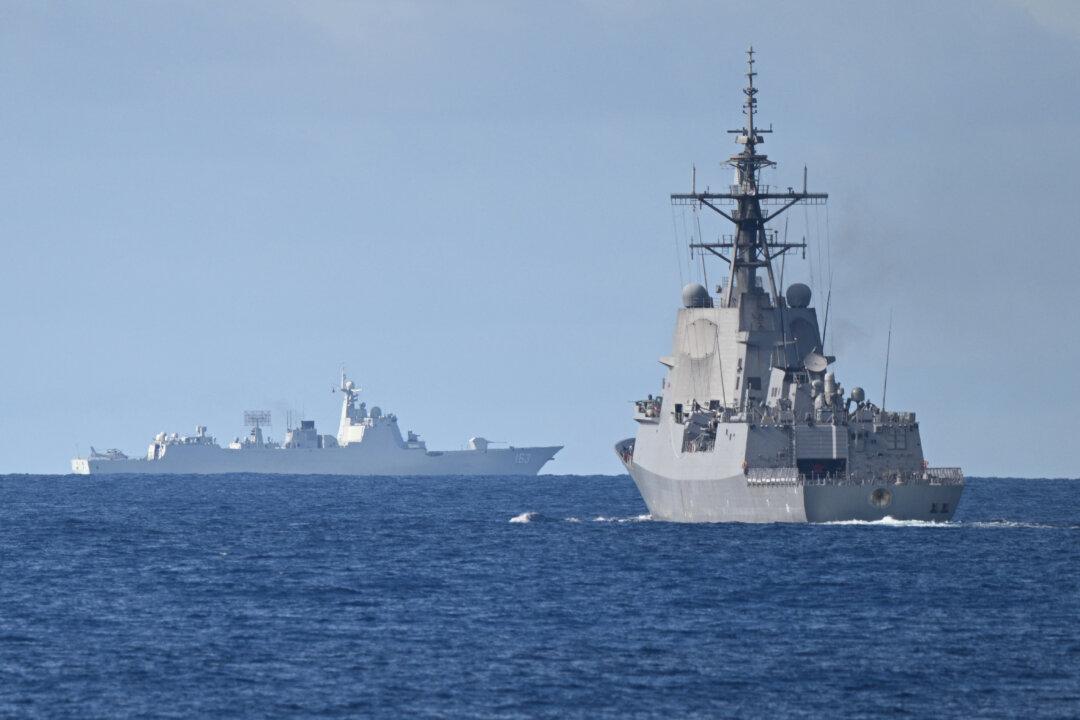
For a long time, episodes such as the Galápagos crisis were treated as conservation crises with geopolitical overtones. A new majority staff report for the House Select Committee on the Chinese Communist Party and the House Homeland Security Committee’s Subcommittee on Transportation and Maritime Security takes the opposite view.
A Fleet Run Like a Weapon
The report pulls together work that nongovernmental organizations and analysts have been doing for years. Drawing heavily on a 2025 Oceana analysis, investigators have determined that Chinese-linked industrial vessels dominated 44 percent of the world’s visible fishing activity between 2022 and 2024, logging more than 110 million hours at sea in the waters of roughly 90 countries.Depending on how you count militia-linked and foreign-flagged craft, the joint committee report estimates that Beijing commands between 2,000 and 16,000 distant-water fishing vessels—more than triple the combined fleets of Taiwan, Japan, South Korea, and Spain.
Those ships have a dual-use capability. The House report and the National Oceanic and Atmospheric Administration’s own biennial review both highlight patterns of illegal, unreported, and unregulated (IUU) fishing, forced labor and abuse aboard Chinese vessels, and the use of fuel subsidies to sustain trips that would otherwise make no commercial sense. They describe a “closed-loop” system in which Chinese boats, Chinese-owned or Chinese-financed overseas ports, and Chinese processing plants feed each other—and, in the process, pull coastal states into long-term dependence on Chinese buyers.
From Galápagos to West Africa
Nowhere is that asymmetry more visible than in Latin America and West Africa. Around the Galápagos Islands, Oceana and Global Fishing Watch tracked Chinese vessels for a month in 2020 and documented more than 73,000 hours of apparent fishing near the boundary of Ecuador’s exclusive economic zone (EEZ), mostly for squid. At key points, dozens of ships went “dark,” switching off their public tracking despite warnings that such behavior is often associated with incursions into protected waters. It’s like turning off the alarms at the bank before breaking in and stealing everything.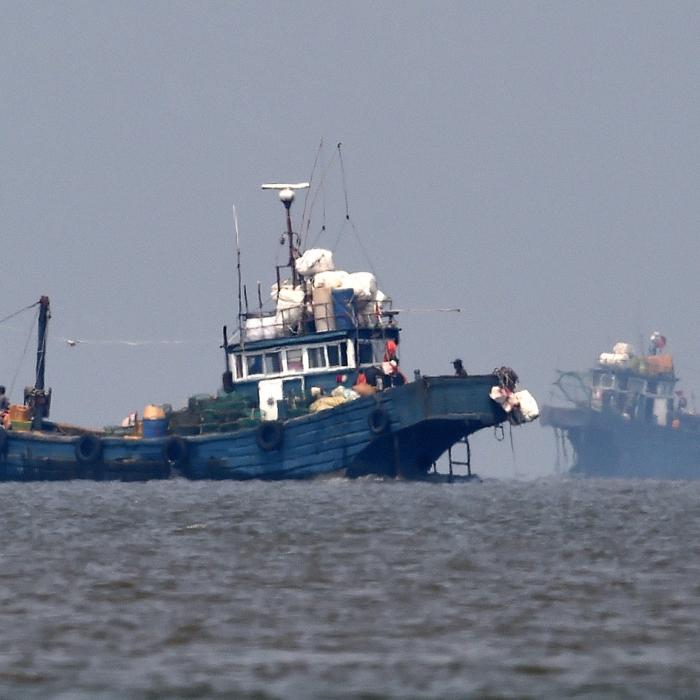
The pattern has since spread down the Pacific coast. Chinese fleets regularly cluster off Peru, Chile, and Argentina, working shared migratory stocks without bearing any of the political cost if those stocks collapse. A significant share of the squid and fish then passes through Chinese processing hubs before being re-exported, often to markets that have little knowledge of how it was caught.
In West Africa, the economic damage is even more pronounced. A Stimson Center-linked analysis and investigations by the Financial Transparency Coalition suggest that the region loses about $9.4 billion per year to IUU fishing, much of it driven by Chinese-controlled industrial trawlers working illegally in inshore waters reserved for small-scale fishers.
Bottom trawls shred fragile ecosystems, local crews are pushed farther offshore in smaller boats, coastal economies built on protein from the sea are hollowed out, and these small countries find it difficult to feed a population that has relied on this resource for hundreds of years.
Hard Power in the West Philippine Sea
If the Galápagos Islands and West Africa show how China’s fishing offensive works on the margins of geography and governance, the West Philippine Sea shows what happens when it collides with a U.S. treaty ally.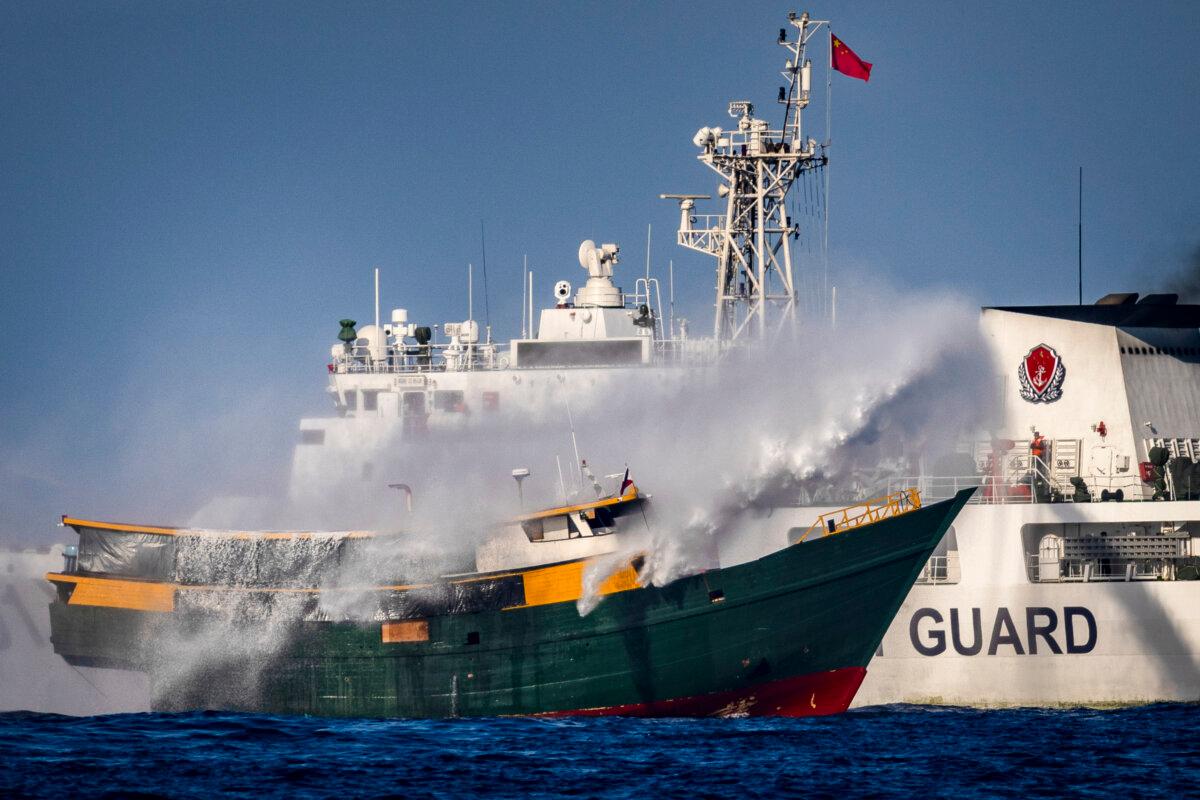
At Scarborough Shoal and nearby Sabina Shoal—well inside the Philippine EEZ—Chinese coast guard and auxiliary vessels have spent years blocking Filipino fishermen from a traditional ground, which the Permanent Court of Arbitration in The Hague, Netherlands, has ruled that Beijing has no legal basis to control.
In recent incidents, Chinese ships have used powerful water cannons against Philippine coast guard and fisheries vessels, shattering windows, mangling superstructures, and injuring sailors and fishermen on humanitarian resupply missions.
Manila’s reports, backed by video footage and independent media, describe Chinese personnel cutting anchor lines and driving off entire clusters of small boats, while Beijing defends its actions as “normal law enforcement” inside its claimed waters.
When China recently declared part of Scarborough a “national nature reserve” and then moved to enforce that status with water cannons and blocking maneuvers, Filipino officials saw the same logic that now worries South Korea in the Yellow Sea: civilian and environmental language on paper, compulsion and bullying in practice.
The System Behind the Boats
The U.S. House report is careful to emphasize that what makes China’s fishing offensive dangerous is not just the number of ships but the way they are plugged into a broader apparatus. Subsidies from Beijing make it rational to chase ever diminishing returns in far-off waters. Loans and joint ventures tie coastal elites into Chinese-backed fishmeal plants and cold-storage facilities. Port investments and so-called logistics hubs offer shelter, fuel, and political cover to trawlers that would otherwise be vulnerable to interdiction.Oceana’s Galápagos work and the National Oceanic and Atmospheric Administration’s IUU designations add another layer: the use of opaque corporate structures and flag-of-convenience registries to mask who ultimately controls a given vessel. That opacity makes it difficult for port states or importers to know whether the squid in their supply chains comes from legal, sustainable operations or from a ship that spent half its time “dark” in someone else’s EEZ.
Treating Fish as a Security Issue
The House investigation has put a different lens on things. Rather than treating IUU fishing as a niche conservation issue, it argues that the United States and its partners should approach China’s fishing offensive as a security challenge—and build a coalition to match.Among its recommendations are enhanced U.S. Coast Guard deployments to assist partners in policing their EEZs, mandatory unique identifiers for industrial fishing vessels, tighter port-state controls, and a “Fish for Security” initiative that links access to lucrative markets to basic transparency and labor standards.