As U.S. President Donald Trump has said, he and European Commission President Ursula von der Leyen agreed on a May 7 call regarding Iran that “a regime that kills its own people cannot control a bomb that can kill millions.”
Judging by the diplomatic and economic support provided by the regime in China for Iran, Beijing does not seem to agree. Perhaps this is because the Chinese Communist Party (CCP) also kills its own people in places such as the Xinjiang region and Tibet. And it has control of numerous nuclear weapons capable of reaching the United States. This and the U.S.–China clash over democratic values, free market systems, the deadly fentanyl epidemic, and who has predominant influence over international politics is playing out over Iran and dueling extraterritorial laws and regulations issued by both Washington and Beijing.
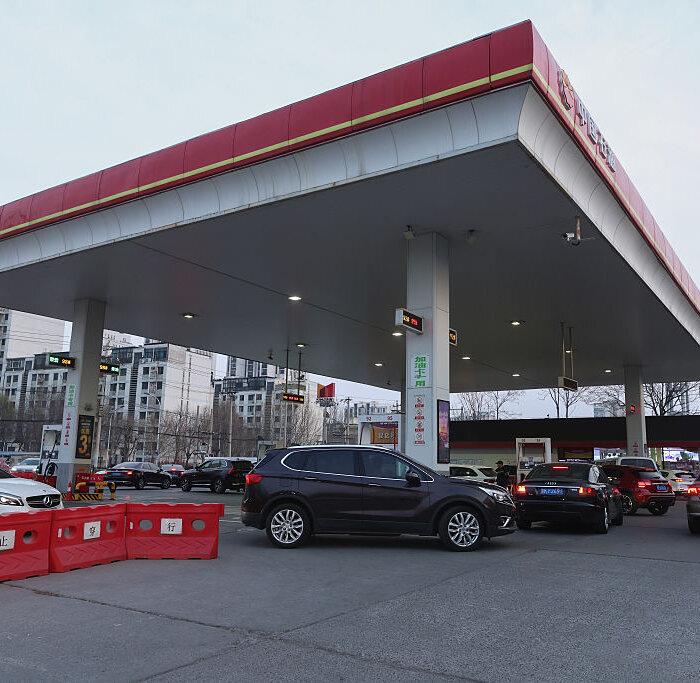
The U.S. approach to Iran’s attempt at nuclear proliferation has been to sanction the country economically and militarily target its nuclear weapons and missile development sites. The CCP objects, as more than 80 percent of Iran’s oil exports go to China, and at a discount to global market prices.
To stop China’s bankrolling of the Iranian regime through oil imports, U.S. economic sanctions extend internationally to non-Iranian companies that facilitate the Iranian oil trade. Since last year, the United States has sanctioned multiple private Chinese refineries linked to imports from Iran and warned Chinese banks not to facilitate that trade or risk secondary sanctions.
In response to this and other sanctions against Chinese entities, China’s State Council issued a regulation on April 13 against extraterritorial jurisdiction by foreign countries that allows for property seizures, fines, and other penalties against any person or company, foreign or domestic, that facilitates such extraterritorial jurisdiction.
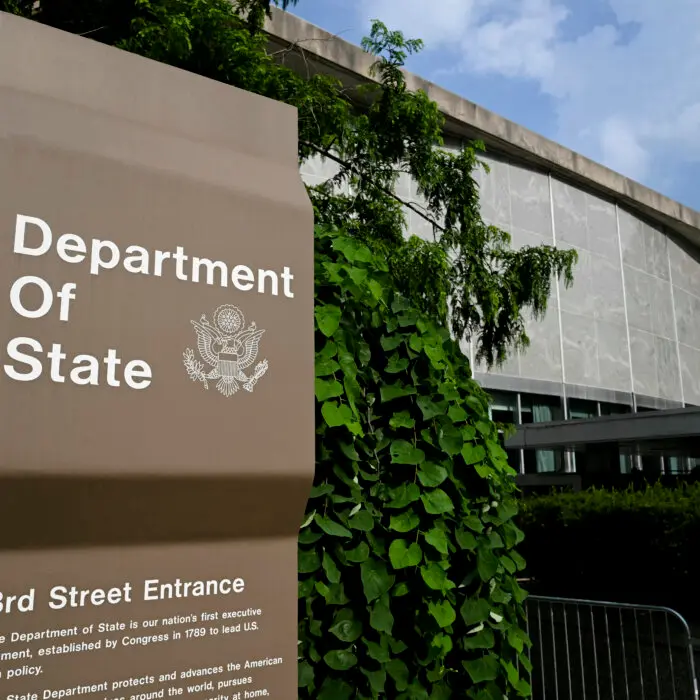
Beijing’s strongest complaints about extraterritoriality have typically been against U.S. sanctions, for example, on issues such as Russia, Hong Kong, semiconductors, the Uyghur genocide, the South China Sea, and measures to contain the Chinese regime’s broader military threat.
In the past, China used small Chinese companies that are relatively impervious to U.S. sanctions for activities that attract sanctions, and quietly allowed its large companies, including banks, to follow U.S. sanctions. This allowed Beijing to have its cake and eat it too by simultaneously importing Iranian oil through small “teapot” refiners while preserving China’s access to the U.S. financial system. But Hengli got larger than a teapot, and the United States sanctioned Hengli.
For the first time on May 2, China used a 2021 blocking measure to order that U.S. sanctions on five private refineries, including Hengli, be ignored. The contradictory U.S. and Chinese orders put all companies that operate in China and could have reason to do business with the five sanctioned companies in legal jeopardy.
The risk of the sanctioned refiners bringing other companies to court in China over the order extends to foreign firms, including U.S.-based companies that do business in China. Although this is not widely recognized, the broad wording of the order, combined with the State Council regulation, may also apply to foreign firms without significant China-based operations. This could be one of the first shots in a war of extraterritorial measures between Washington and Beijing.
The public spotlight is on the Chinese banks that currently do business with the refiners. If they continue doing business with the refiners, for example, by facilitating credit facilities or trades with Iranian oil suppliers, then the United States could extend secondary sanctions to these banks. If they do not, then it appears that they have complied with the U.S. sanctions, and so the sanctioned refiners could bring them to court in China by using the 2021 measure and the State Council regulation.
The sanctioned companies could appeal to the Chinese Commerce Ministry’s guidance to support their position, which is prompting the banks to ask for more guidance. It will be difficult for banks already doing business with the refineries to have it both ways by complying with U.S. sanctions while appearing not to do so. Other companies can more easily attempt that strategy.
The sums at issue are significant. Hengli’s parent company said last month that it envisages $34 billion in total banking credit in 2026. Some of this will likely come from China’s biggest state-owned lenders, putting them in jeopardy of secondary U.S. sanctions. Most of the banks that have dealt with the refineries to this point are Chinese banks focused on domestic banking in yuan. So, they are not as vulnerable to U.S. sanctions.
However, extending U.S. sanctions to China’s major banks would make doing international business with China in the U.S. dollar much more difficult. It could force Chinese companies to settle international trade in currencies other than the U.S. dollar (including the yuan), which would impede global trade with China but also put downward pressure on the dollar’s value.
It is crucial for the future of democracy and free markets that, when negotiating with China, the priority be national security rather than increased U.S. exports to China, especially when those exports are raw materials such as soybeans and oil. Beijing seeks to divert the U.S. economy from its historic industrial, scientific, and technological strengths toward raw materials such as agricultural products and hydrocarbons. Conceding to this would be a strategic mistake, as it would accelerate China’s industrial, technical, and, ultimately, military supremacy.