The risk that China’s internet-connected cars could invade U.S. markets and create security vulnerabilities is well-known on both sides of the aisle.
Bipartisan legislation is under consideration to codify an existing ban on such vehicles in the United States, in part because of surveillance risks. Although proposed legislation would ban Chinese safety parts, it would not ban other imports from China, including transmissions and steering columns.
Aren’t steering and brakes just as important for passenger safety? And doesn’t empowering China with tens of billions of dollars in annual auto parts purchases endanger U.S. national security?
Such purchases not only empower America’s adversary, but also make America dependent on that adversary. To the extent that the U.S. auto industry becomes dependent on China for parts, Beijing can at any time cut us off, bringing many U.S. assembly lines to a halt. That would pummel the U.S. economy and hurt jobs.
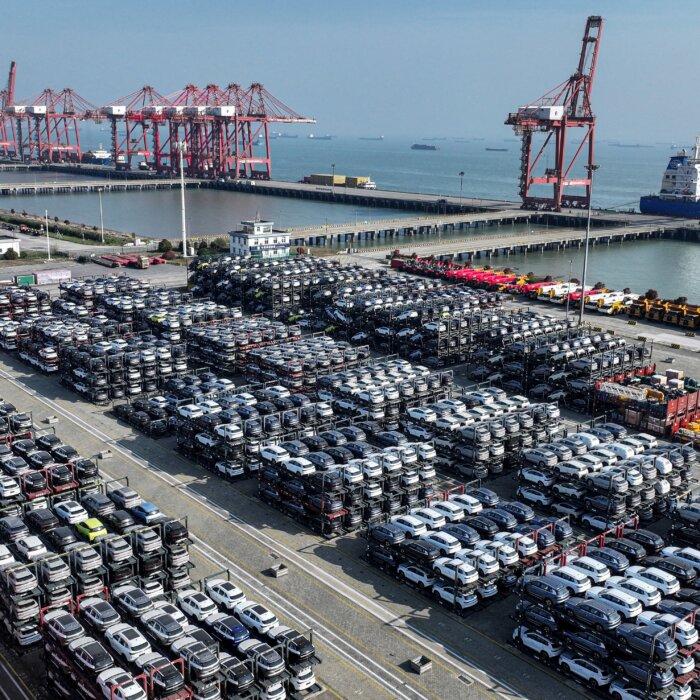
China’s biggest auto parts companies often have U.S. federal and state government-subsidized factories in the United States. They supply the top U.S. car companies, purchase U.S. parts suppliers, and export auto technologies back to China. Many of the deals were approved by a too lenient U.S. Treasury-led committee that reviews foreign acquisitions for national security implications.
Wanxiang Group, which allegedly has ties to the Chinese Communist Party (CCP), has been described as one of China’s largest auto parts manufacturers. Its subsidiary Wanxiang America settled for $53 million in December for allegedly misclassifying imports from China over five years.
“Although it was aware of [an] antidumping duty order, Wanxiang falsely classified its imported wheel hub assemblies and failed to disclose that those importations were covered by the antidumping duty order,” the U.S. Justice Department said.
Dumping is the sale of goods at below-market prices to defeat competition and later raise prices. Wanxiang’s acquisitions in the United States include the purchase of assets from bankrupt U.S. companies relevant to electric vehicle (EV) technologies, including the 2013 purchase of A123 battery assets and the 2014 purchase of Fisker Automotive assets.
Wanxiang changed Fisker’s name to Karma Automotive, which describes itself as an American car company because it is manufactured in California. The car has a connected vehicle system, which raises security concerns, given the links to China. Both A123 and Fisker received subsidies and loans from federal and state programs in excess of what Wanxiang paid for their assets.
CATL is a Chinese company that builds almost 40 percent of the world’s EV batteries and leads the world in battery tech. CATL is licensing its lithium iron phosphate battery chemistry to Ford for both EVs and utility energy storage.
The batteries will be produced at Ford’s new Michigan plant, which is planned to open within months. The plant will cost about $3 billion, given Ford’s EV losses, which it is trying to recoup by retooling its battery business for industrial, residential, and data center energy storage. CATL will send Chinese engineers to help train Ford employees who operate the technology.
Although CATL argues that no government holds a “golden share” in the company, the CCP controls almost all business and other elites in China. In 2023, then-Sen. Marco Rubio (R-Fla.) noted that the CATL-enabled plant would deepen the United States’ dependence on China for battery technology.
The infiltration of Chinese parts extends to iconic American brands. The Mustang GT has a Chinese manual transmission. Some General Motors cars have almost 20 percent Chinese-made parts.
Although some argue that Chinese parts lack quality, the rise of the Chinese auto parts export industry is proof in the pudding that they are globally competitive. This includes aftermarket racing parts that cost less than half the price of their competitors and have been used to win races.
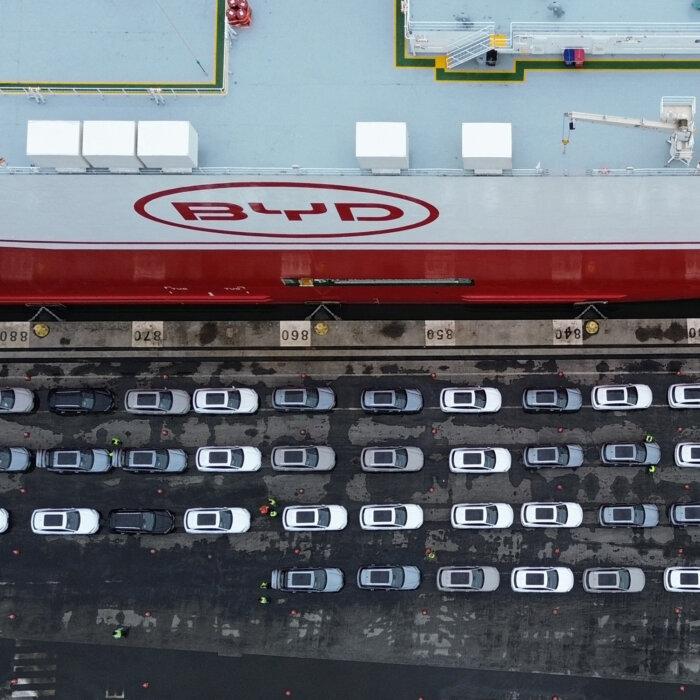
China’s auto parts manufacturers in the United States are in addition to China’s Geely and BYD, which build entire vehicles in the United States. BYD builds electric buses and Geely gets involved in the U.S. and European auto industries by purchasing equity stakes in other brand names. All of this is useful not only for the expansion of parts exports from China, but also for the acquisition or theft of U.S. automotive technologies for operations in China aimed at eventually outcompeting the entire U.S. auto industry.
Geely has major stakes in Volvo and Polestar, both of which are assembled at a South Carolina factory. Volvo’s CEO has said the plant’s massive excess capacity could be put to work making Chinese cars.
“The government saw this as a path to acquire technological know-how, management know-how and other core competencies that Chinese firms lacked.”
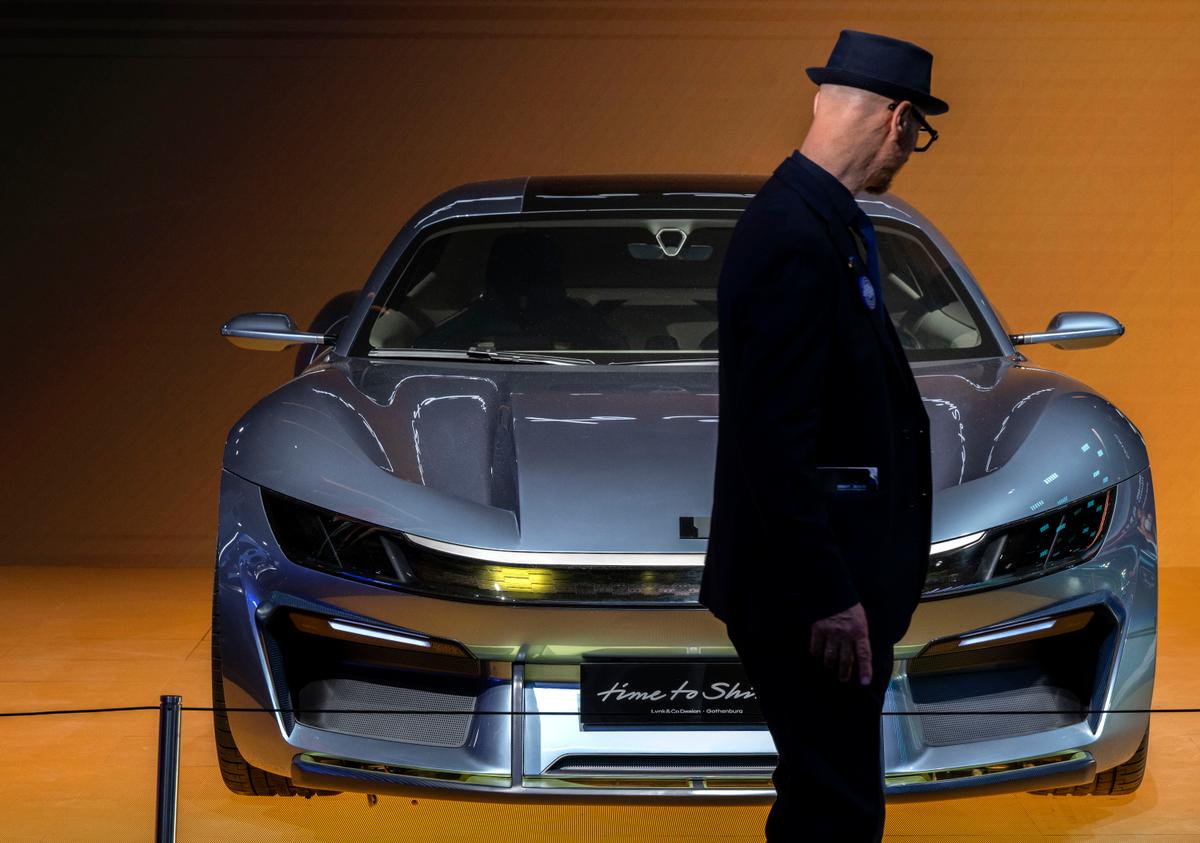
China’s ownership stakes in U.S. companies and imports of Chinese auto parts pose a risk to the U.S. economy because they are controlled by the CCP. The more auto parts the United States imports from China, the more the United States depends on China and the more leverage the regime in Beijing has in impeding the flow of key parts to the United States, for example, during a war over Taiwan or to exert trade pressure. The CCP has already done this to the United States with rare-earth elements, which has shut down assembly lines.
The solution will not be easy, given the CCP’s control of the world’s second-largest economy and what is arguably its second-most-powerful military. The U.S. government and allies should begin by making greater efforts to reduce China’s global exports, including auto parts. This will be difficult, as most countries are more concerned with getting imports as cheaply as possible than with the long-term effects on geopolitics.