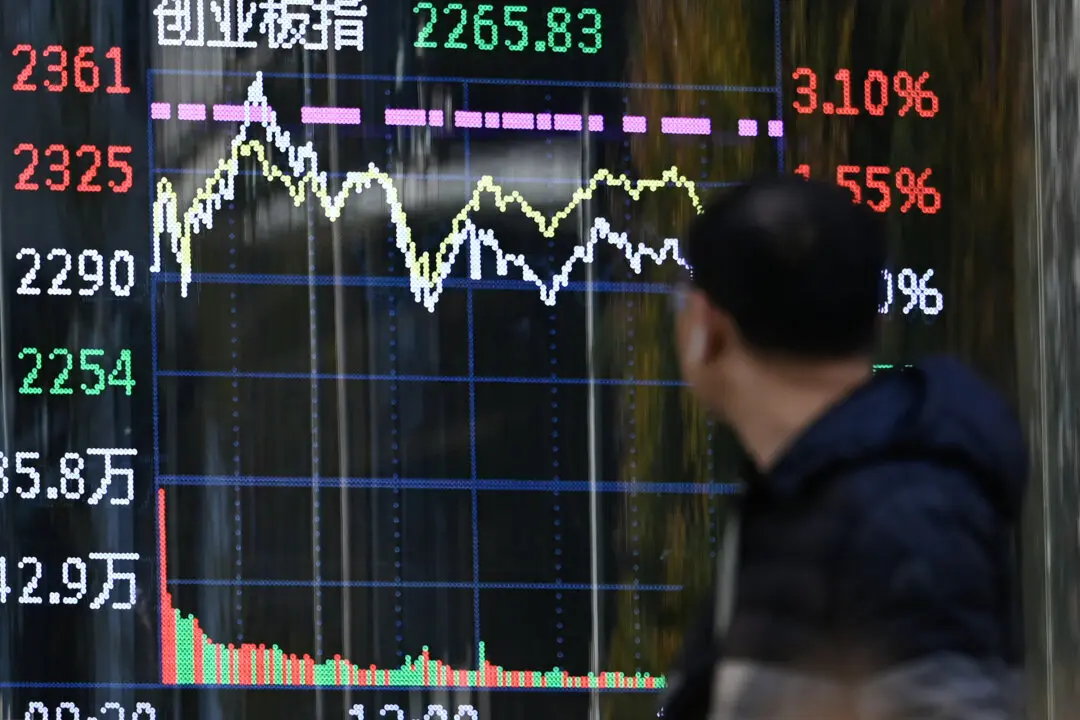
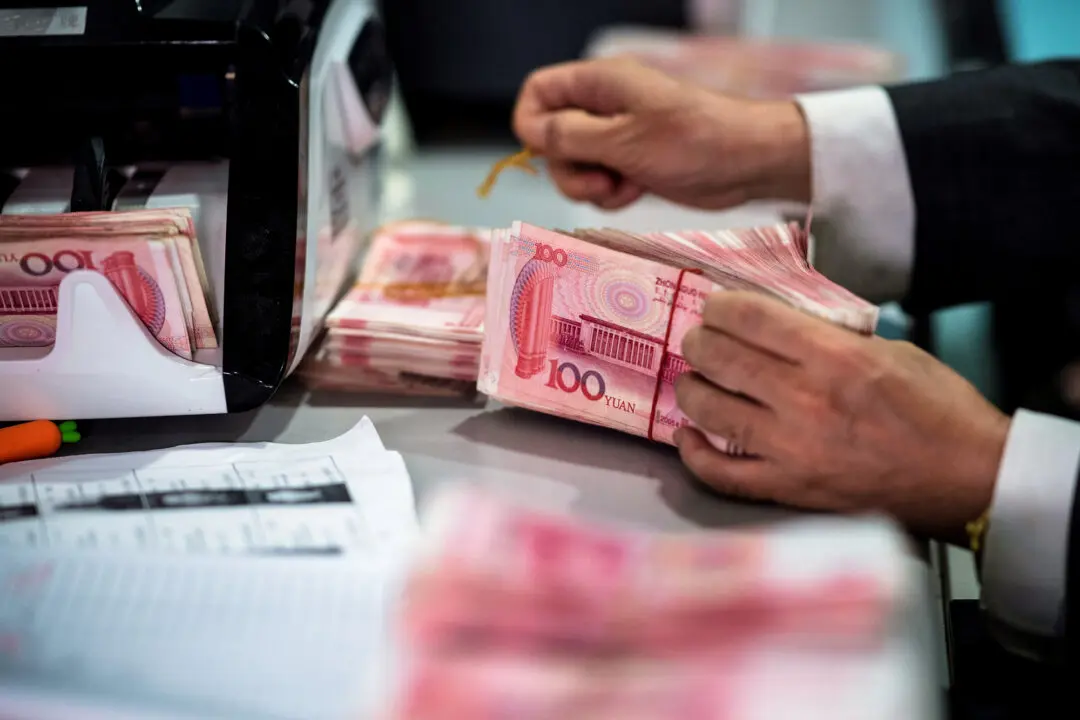
Beijing continues to roll out one “stabilize foreign investment” policy after another, but none of them has stopped the sharp decline in foreign direct investment (FDI).
The Chinese Communist Party (CCP) has recently adopted several policies, including the “24 measures” in 2024 and the “20 measures” in February. In August, it even revived tax perks that it had scrapped seven years ago.
Despite its efforts, FDI in China continues to fall, and the reasons cut far deeper than policy tweaks can reach.
According to China’s National Bureau of Statistics (NBS), actual foreign investment in 2024 fell to $116.2 billion—the lowest level since 2018, a decrease of 28.8 percent from $163.25 billion in 2023. In the first seven months of 2025, it came in at just $65.52 billion, or about 467.34 billion yuan, down by 13.4 percent year on year, according to the Ministry of Commerce.
Why FDI Has Been Collapsing in China
Several deep-seated factors are driving this decline.Economic Fundamentals
Profitability for foreign companies in China has declined in recent years, according to NBS data. In 2021, large foreign-invested companies, including those from Hong Kong, Macau, and Taiwan, reported a record profit of $320.3 billion (about 2.28 trillion yuan). However, by November 2024, their profits had dropped to $247 billion, down from $252 billion in 2023 and $281 billion in 2022. The current profit level is nearly equivalent to what it was in 2016, which was $242 billion.Policy Concerns
Foreign investors are uneasy about Beijing’s ever-changing policies. Three issues stand out.

Rising Anti-Foreign Sentiment
Recent years have seen an increase in assaults on foreigners, creating unease among foreign businesses.Geopolitics
U.S.–China tensions are fueling decoupling and supply-chain shifts. Beijing’s global ambitions and “wolf warrior” diplomacy leave little room for anything but “strategic competition.” A survey by Bain & Company found that 69 percent of the chief executives of top global companies were actively moving production out of China in 2024—up from 55 percent in 2022.Why Beijing Still Needs Foreign Capital
For decades, China’s rapid growth has been inseparable from FDI. By the end of 2024, foreign investors had set up more than 1.23 million enterprises in China, with cumulative inflows exceeding $2.88 trillion, according to Ling Ji, China’s vice commerce minister and deputy international trade representative.He said at a news conference on Feb. 20 that these companies account for nearly 7 percent of all jobs (more than 30 million positions), one-seventh of China’s tax revenue, about one-third of imports and exports, and half of all machinery and high-tech exports.
Why CCP Policies Aren’t Working
With the continuous decrease of FDI, the CCP has been rolling out a flurry of new policies as discussed above. The problem is that none of these measures addresses the core issues. Foreign investors are questioning not just China’s policies but also the reliability of the CCP itself. In short, their confidence is waning.- Let the market, not the state, play the decisive role in allocating resources, ensuring fair competition among the state, and private and foreign companies.
- Establish judicial independence, protect property rights and fundamental human rights, and allow peaceful political reform.
- Integrate with international norms—coexist peacefully with the United States and the West, and rejoin the global economic community.