As New York prepares to implement its Medical Aid in Dying Act, allowing certain terminally ill adults with a prognosis of six months or less to live to obtain medication to end their lives, I’ve found myself thinking less about politics and more about suffering.
Have we reached the point where we believe suffering itself is the enemy?
I understand why many people support laws like this. Watching someone you love die is one of the hardest experiences imaginable, and the desire to spare another human being pain comes from a place of compassion.
But compassion can ask different things of us, and I wonder if, in our desire to eliminate suffering, we are also eliminating something essential about what it means to be human.
I’ve had multiple friends die of cancer. I have watched them suffer, and I would never wish that suffering on anyone. I cried in my car after leaving hospitals and homes more times than I can count. There were days I didn’t want to visit because I didn’t want to watch someone I loved disappear a little more.
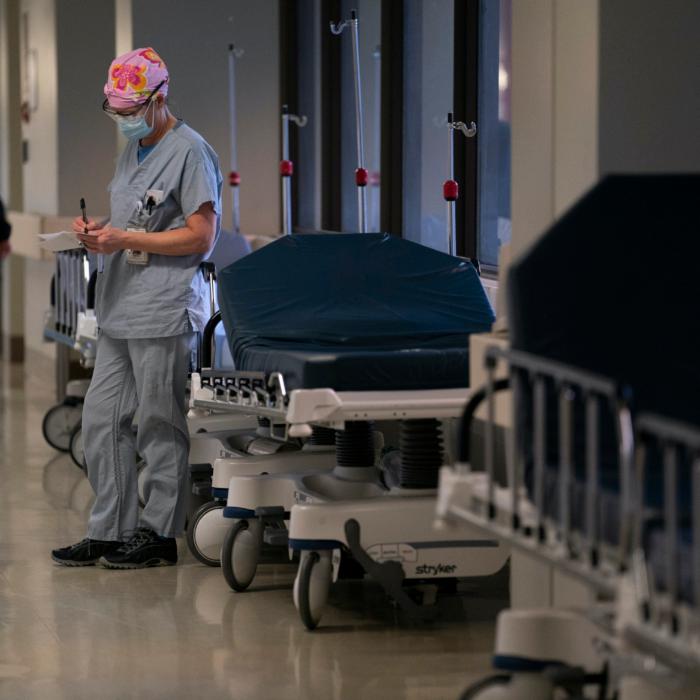
But I also witnessed things that I don’t believe would have happened any other way. I watched people come to God who had spent years avoiding Him. I watched estranged family members ask for forgiveness and offer it. I watched people begin to notice beauty in simple things they had overlooked their entire lives. The suffering was real, but so was the transformation.
My best friend, Mimi, died of cancer on May 2, 2018, at just 37 years old. She left behind her 9-year-old daughter, Bowie. Some of those final weeks were heartbreaking, but they were also filled with moments that remain among the most meaningful of my life.
A few days before Mimi died, several of us who had become Bowie’s unofficial aunties took her for a walk while others stayed with her mom. I was holding Bowie’s hand when she looked up at me and said: “We should do this more often. It’s so nice to have everyone together.”
She was right. None of us would have taken a random weekday afternoon off to walk through the neighborhood together. We all had jobs, children, responsibilities, and busy lives. We were together because someone we loved was dying.
I would never say the cancer was good, but I also can’t deny that it gathered us together in a way ordinary life never would have. Love showed up because suffering demanded it, and that afternoon reminded me that even in the shadow of death, life was still unfolding around us.
Watching Mimi die changed me. The things I used to worry about suddenly seemed so small: a wrinkle, a few extra pounds, and a bad hair day. Those things lose their importance when your best friend dies before her 40th birthday.
I realized that growing old is not something to fear but a privilege denied to many people. That perspective didn’t come from reading a book or listening to a podcast. It came from walking beside someone through the last chapter of her life.
Just over a month after Mimi died, Kate Spade died by suicide. Three days later, Anthony Bourdain did as well. I remember struggling to make sense of it. We had fought so hard for every extra day with Mimi. Every conversation mattered. Every visit mattered. Every birthday she reached felt like a victory. Then suddenly the news was filled with stories of two people who had chosen to end their lives.
At first, I viewed those deaths with frustration. How could someone voluntarily give up what my friend had fought so desperately to keep? Over time, though, that frustration gave way to compassion. Anyone who dies by suicide is almost certainly trying to escape suffering. The suffering may be emotional instead of physical. It may be depression instead of cancer. But the desire is often the same. The pain feels unbearable, and death appears to offer relief.
That realization raises difficult questions for me. If we understand suicide born of despair as a tragedy because someone believed suffering was no longer bearable, why do we see physician-assisted suicide so differently? Is it because the suffering is physical instead of emotional? Because a doctor writes the prescription? Because the state has declared it legal? Or is it simply easier for us to accept when it is wrapped in medical language?
During a press conference after signing New York’s law, Governor Kathy Hochul reflected on attending a funeral where a priest spoke about someone being called home to God. She suggested the law was not about ending life so much as allowing death to come sooner. I found myself wrestling with that distinction. Does changing the language change the act, or does it simply make us more comfortable with it?
I also wonder how much confidence we should place in the certainty of a prognosis. The law applies to people believed to have six months or less to live, but medicine has never been perfect at predicting the future. I have known people diagnosed with terminal illnesses, including pulmonary fibrosis, who were told they had only months remaining. Three and four years later, they were still here. A prognosis is an educated estimate, not a promise, and that gives me pause when life and death decisions depend on it.
If Mimi had received the news that her cancer had spread and immediately chosen to end her life, she would have missed some of the most profound moments of her journey. She found a deeper closeness to God. She had conversations that healed relationships. She spent precious time with Bowie. She discovered gratitude in places where she might once have found only fear.
But it wasn’t only Mimi who would have lost something.
The rest of us would have been robbed of something, too. We would have missed the opportunity to care for her, to love her, to serve her, and in doing so to become better versions of ourselves. The friendships that formed among those caring for her continue to this day. My relationship with her mother has outlasted Mimi’s life. Bowie is still surrounded by people who love her because we walked through those final months together.
Death belongs not only to the dying but also to those who love them, and the final chapter of one person’s life often becomes a season of profound growth for everyone gathered around them.
Nearly everything in my own life that has shaped me for the better has involved hardship. Raising children, building businesses, losing businesses, miscarriages, moving across the country, farming through droughts, and saying goodbye to people I loved all taught me lessons that comfort never could. That doesn’t mean suffering is good or that we should seek it out. It means that some of life’s greatest gifts are found on the other side of enduring what we never would have chosen.
Ultimately, my hesitation about this law is rooted in the belief that we are more than our physical bodies. Christians believe our souls continue to grow even in our final days, but they are hardly alone. Jews, Muslims, Hindus, Buddhists, and many other faith traditions also teach, in different ways, that human life has a spiritual dimension and that suffering, while never something to seek out, can become a place of growth, reconciliation, wisdom, or preparation for what comes next.
Even many people with no formal religious faith recognize that life’s deepest moments often come not when everything is easy but when we are called to love someone through extraordinary difficulty. If we are more than flesh and bone, then our final days may hold lessons that cannot be measured by physical comfort alone.
As New York’s law takes effect, I hope we ask ourselves a deeper question than whether we can shorten suffering. I hope we ask what suffering itself may still have to teach us. Some of the hardest days of my life became the days that most transformed me. They taught me that growing old is a gift, that showing up matters, that love often asks us to stay when every instinct tells us to leave, and that even at the end of life there is still room for forgiveness, gratitude, grace, and growth.
Before we rush death, perhaps we should make sure we understand everything life still has to offer.