The B.C. government and the Musqueam First Nation have both appealed the Cowichan decision. A retrial would have prevented those appeals from moving forward. If there’s a silver lining to the retrial rejection, it’s that those appeals could now be heard sooner. Until then, uncertainty about the security of property title in B.C. lingers.
Indeed, the Cowichan Tribes v. Canada decision last year caught Richmond landholders by surprise. Justice Barbara Young—the same judge who just denied Montrose Properties’ application for retrial—determined that aboriginal title is “a senior interest in land vis-à-vis the fee simple titles which derive from the Crown grants.” Fee simple is the most common form of private property ownership in Canada.
The court’s 2025 decision effectively invalidated the title to the property Montrose believed it owned in Richmond. The resulting title uncertainty has cost the company millions of dollars. According to Montrose, it was not invited to participate in the trial even though the case affected them as landowners in the area claimed by the Cowichan First Nations.
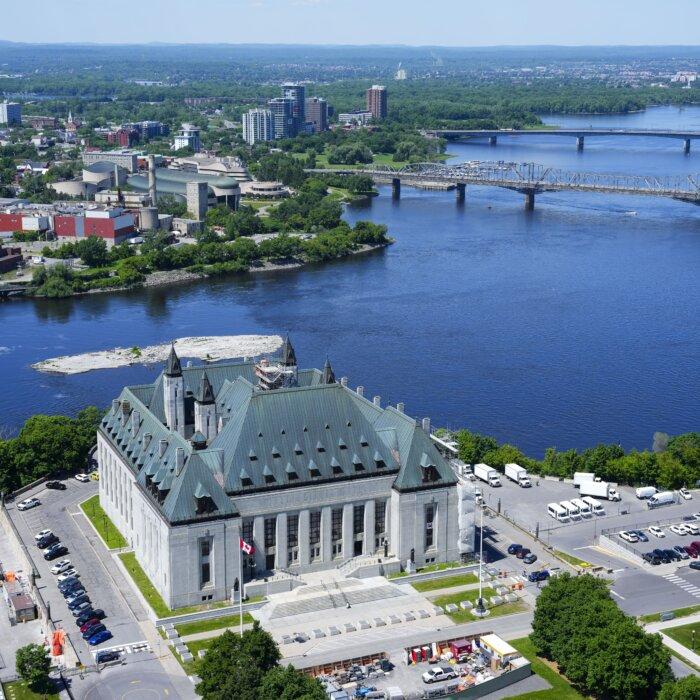

It’s precisely under such circumstances—when courts in different provinces arrive at very different conclusions about the same important issue—that the Supreme Court should get involved. As Canada’s final court of appeal, its role is to provide consistency in the law. Consistent and predictable law is crucial for a free society and properly functioning economy.
But, other than choosing not to hear the appeal, the Supreme Court had not decided anything. True, by not hearing the appeal, the New Brunswick appeal court’s ruling is allowed to stand for now. But the Supreme Court is not obligated to provide reasons for denying a request for appeal. We don’t know why it denied the appeal, but we do know the court didn’t “decide” the mater of property rights with finality—not yet anyway.
The Supreme Court may have waited to see if the B.C. court would retry the Cowichan Tribes case before “deciding” anything.
Retrying the Cowichan Tribes case would have tied up the issue in the B.C. trial court again, thereby slowing the appeal process considerably and leaving the whole question of private property unresolved.
Again, by denying Montrose Properties’ request to retry the Cowichan case, Justice Young may have paved the way for the Supreme Court to hear the issue on appeal sooner and to provide clarity about the status of private property rights in Canada.
But whether the Supreme Court of Canada will provide that clarity anytime soon, and whether it will side with the B.C. ruling invalidating private property in favour of aboriginal title, is anyone’s guess.