I was exploring ideas for a new skin care product when I typed a simple Google search:
“Night creams with comfrey.”
At the top of the screen, Google’s artificial intelligence (AI) summary returned a bold warning:
“Comfrey may cause liver failure and cancer.”
That stopped me—not because it frightened me, but because it felt so out of place.
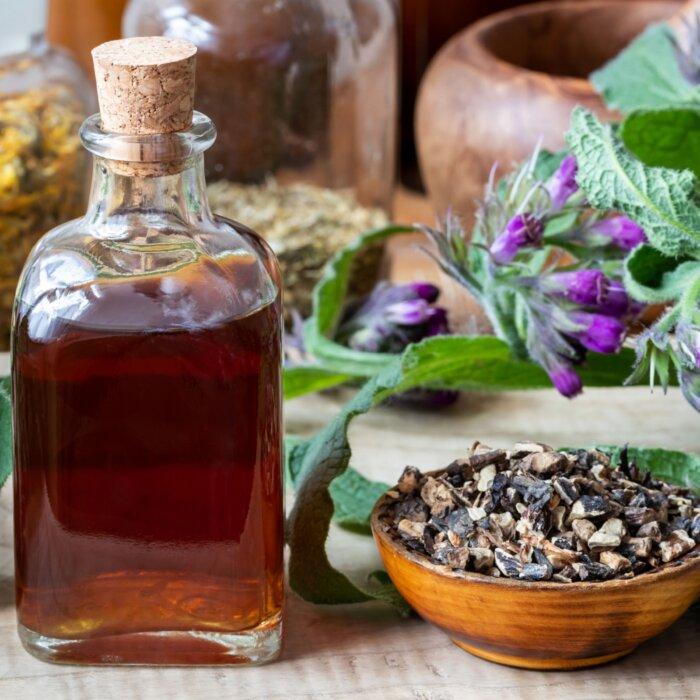
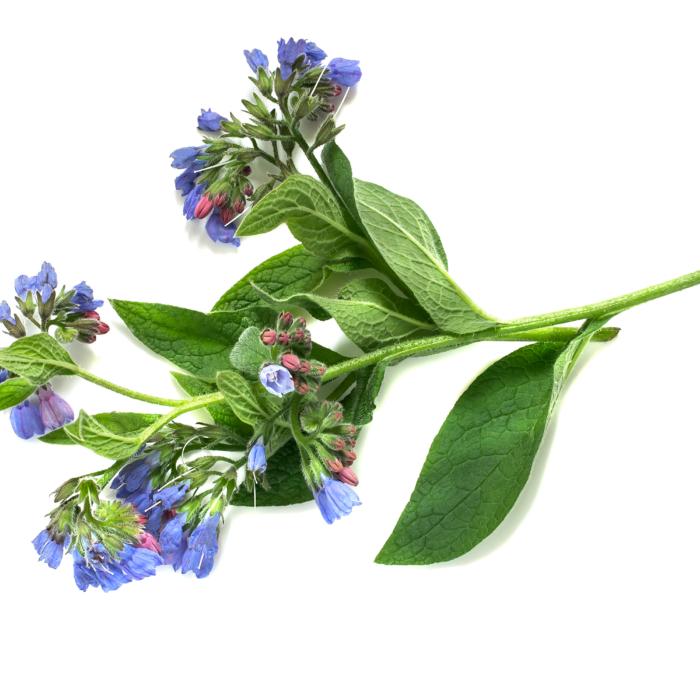
I’ve worked with comfrey my entire life. We grow it all around the farm. We feed it to pigs and chickens. We use it as fertilizer. I propagate cuttings and sell the plants. I sell the roots. I make salves, rash creams, and poison ivy ointments from it. It’s one of the most versatile, generous, and abundant plants I’ve ever grown.
Curiosity got the better of me, so I ran a test. I searched next:
“Where can I find alcohol near me?” No AI warning.
“How can I get SSRIs?” No AI warning.
“Where is the closest place to buy Tylenol?” It pointed me to CVS and Dollar General—again, no warning.
So I went back to the AI bar and asked it for a chain of data:
“How many people die from alcohol each year?” It answered: 2.6 million globally per year.
“How many people go to the ER for liver toxicity from Tylenol each year?” It answered: 56,000 annually in the United States.
Then I asked: “How many people have had liver toxicity from ingesting comfrey?” It could only return four or five total cases ever recorded.
Then it told me, “It’s likely under-reported.” And I thought, well, it would have to be very under-reported for that to be a real problem.
Because the math just doesn’t compare.
But the story doesn’t stop at math. It goes back to the moments that shaped me.
I remember getting chickenpox as a child, and my aunt blending batch after batch of comfrey leaves in the Vitamix—blender after blender—until the bathtub was thick with a green, slippery comfrey slurry. My brother and I sat in it as if it were the most normal healing ritual in the world.
Every scrape or cut I had growing up got a little homemade olive oil, beeswax, and comfrey salve rubbed into it. We didn’t call it “alternative medicine.” We called it what works.
And it wasn’t just us.
The Greeks recorded the use of comfrey as early as 400 B.C. The Latin name Symphytum means “to grow together,” referring to its long-trusted use in repairing bones and tissues. Romans used it as a poultice for wounds, bleeding, and inflammation. Medieval Europeans called it knitbone. Farmers across continents grew it for livestock feed, mulch, and green manure. Mothers applied it to childhood injuries without hesitation.
- Honey from bees that collect nectar from PA-containing wildflowers
- Milk and dairy from animals grazing diverse pastures
- Borage leaves and teas that are used in culinary and herbal blends
- Coltsfoot preparations that are sold in some tea mixtures
- Grains that are occasionally harvested with PA-producing weeds
- Echium species that are common in pollinator seed mixes that enter honey and forage chains
Modern research has also explored comfrey as a supplemental feed ingredient in pigs and poultry. In controlled agricultural trials, moderate inclusion of comfrey leaves in pig diets was feasible without obvious health harm, and small additions in poultry feed showed no impairment of liver or tissue integrity while delivering meaningful protein and minerals.
Veterinary literature still notes that excessive, long-term ingestion at high PA concentrations could be problematic—but this concern applies to the alkaloid class broadly, not comfrey alone, and does not reflect topical or occasional use in mixed forage systems.
Most importantly, there are no documented clinical cases of liver toxicity from the topical use of comfrey in humans. None.
So I began asking a bigger question.
This evidence more strongly suggests that you can overdose on anything, not that comfrey is bad. Yet here we are, getting warnings for a comfrey salve recipe.
This isn’t about dangerous science. It’s about how AI risk systems are built to steer us toward what is already normalized, regulated, patented, or profitable. We are entering a future in which people increasingly trust conclusions handed to them by AI, often without the instinct to ask why, compare sources, or apply nuance.
Most people see a warning such as “Comfrey causes cancer and liver failure” and think: “AI is far smarter than me. I should avoid it.”
But what happens when historical knowledge fades, and the machine becomes the default voice of authority?
How easy will it be for this system to tell us to believe anything, especially when it ignores the things that are actually harming us?
Many pharmaceuticals are derived from plants, yet the system warns against the plant itself while encouraging dependence on its synthetic derivative. The result is a culture conditioned to distrust nature, outsource intelligence, and remain dependent on pharmaceuticals and industrial soil inputs.
But comfrey isn’t extraction. It’s about building—building feed systems, building biomass, building soil health, building fertilizer you can ferment yourself, and building abundance you can propagate and share.
Real-world skills and ancestral knowledge must still matter. They must still be taught. They must still be practiced. Otherwise, future generations will inherit a warning label, but none of the lived wisdom that once balanced it.
I trust the plant. I trust the land. What I don’t trust is a conclusion designed to protect liability more than truth—and built inside a system that often ignores the things actually harming us.