As President Obama, the Democrats, the Republicans, and political pundits of all stripes bicker about taxing and not taxing, stimulating and not stimulating, and Keynesian and non-Keynesian economics, I find myself a bit disenchanted with all the economic mumbo-jumbo.
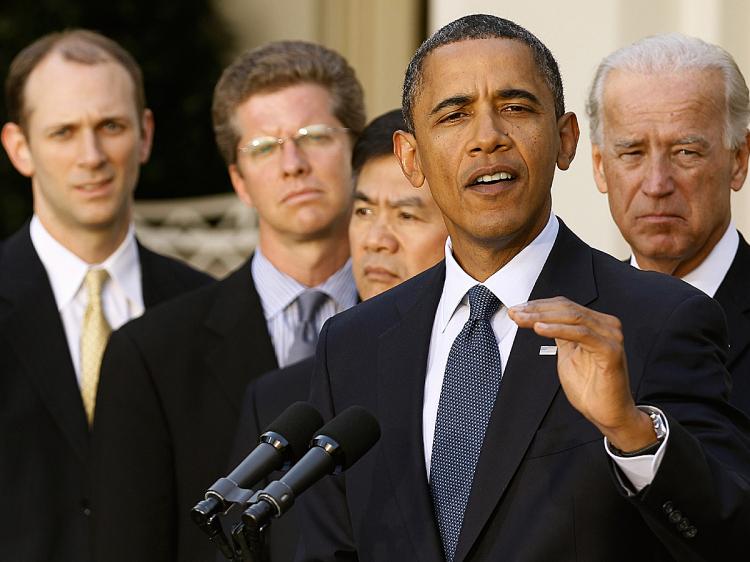
Last week, Obama announced his latest economic initiative, which includes letting Bush-era tax cuts expire and investing $50 billion in infrastructure. These latest measures are meant to bring in new income by reinstating some old taxes on America’s upper crust and borrowing yet more money (I hope not from communist China again!) to stimulate our own economy with improvements to roads and railroads.
The latest news is that some agreement may be reached between Republicans and Democrats allowing some of the tax cuts to remain for another few years. Should we be applauding?
Personally, I’m booing. Not because I care about the tax cuts one way or the other, but because our national discourse is so petty and trivial.
The plain fact is that fewer taxes can be good because they let you keep your hard earned money from being spent haplessly. More taxes can also be good because they can pay for all the services that the government we elected provides. There is no right or wrong answer; it’s really an issue of accounting and budgeting.
The same goes for stimulating the economy. It would be better if our country didn’t have to go further into the hole financially, but if the right circumstances present themselves to our leaders, to really make our country better, then we should give our support. Again, no right or wrong answer; but really a policy issue that should be analyzed by experts, who at least attempt to be impartial.
The constant hyping of economic issues on both sides of the aisle seems increasingly meaningless. One team swings with a big government bat and the other with a free market bat. And we play along saying: “Let’s see who scores more runs!”
Our leaders like to swing these bats because we like to watch them. And a vicious cycle of self-centered mediocrity lasts inning after inning.
What is going on outside the stadium? What national discourse should Americans be engaged in if not the economic one, which is now in its 9 billionth inning.
There are big national questions that regular Americans, who aren’t accountants, budget makers, or analysts, can meaningfully engage in a national discourse about. In fact, the questions are so big that they will at first strike you as innocuous and almost banal. One such meaningful question is: “How to support our troops in Afghanistan and Iraq?” Not burning a Koran would be a good start. Sending care packages is another great idea too.
Other questions include: “How to be more energy efficient in our transportation and way of life?” “How to take care of our environment and water supply?” “How to reasonably buy and support American-made goods over goods from China?” “How to genuinely improve quality of life?” and “How to broaden our perspective in an increasingly international world?”
Big questions like these involve many facets and factors that touch every American in one way or another. They are constantly being influenced by technology and the ever-unfolding circumstances of international affairs. Unlike the economic games our politicians and media are playing with us, they require meaningful discussion and attention from regular Americans, who like me are sick of playing games.
Last week, Obama announced his latest economic initiative, which includes letting Bush-era tax cuts expire and investing $50 billion in infrastructure. These latest measures are meant to bring in new income by reinstating some old taxes on America’s upper crust and borrowing yet more money (I hope not from communist China again!) to stimulate our own economy with improvements to roads and railroads.
The latest news is that some agreement may be reached between Republicans and Democrats allowing some of the tax cuts to remain for another few years. Should we be applauding?
Personally, I’m booing. Not because I care about the tax cuts one way or the other, but because our national discourse is so petty and trivial.
The plain fact is that fewer taxes can be good because they let you keep your hard earned money from being spent haplessly. More taxes can also be good because they can pay for all the services that the government we elected provides. There is no right or wrong answer; it’s really an issue of accounting and budgeting.
The same goes for stimulating the economy. It would be better if our country didn’t have to go further into the hole financially, but if the right circumstances present themselves to our leaders, to really make our country better, then we should give our support. Again, no right or wrong answer; but really a policy issue that should be analyzed by experts, who at least attempt to be impartial.
The constant hyping of economic issues on both sides of the aisle seems increasingly meaningless. One team swings with a big government bat and the other with a free market bat. And we play along saying: “Let’s see who scores more runs!”
Our leaders like to swing these bats because we like to watch them. And a vicious cycle of self-centered mediocrity lasts inning after inning.
What is going on outside the stadium? What national discourse should Americans be engaged in if not the economic one, which is now in its 9 billionth inning.
There are big national questions that regular Americans, who aren’t accountants, budget makers, or analysts, can meaningfully engage in a national discourse about. In fact, the questions are so big that they will at first strike you as innocuous and almost banal. One such meaningful question is: “How to support our troops in Afghanistan and Iraq?” Not burning a Koran would be a good start. Sending care packages is another great idea too.
Other questions include: “How to be more energy efficient in our transportation and way of life?” “How to take care of our environment and water supply?” “How to reasonably buy and support American-made goods over goods from China?” “How to genuinely improve quality of life?” and “How to broaden our perspective in an increasingly international world?”
Big questions like these involve many facets and factors that touch every American in one way or another. They are constantly being influenced by technology and the ever-unfolding circumstances of international affairs. Unlike the economic games our politicians and media are playing with us, they require meaningful discussion and attention from regular Americans, who like me are sick of playing games.