TAIPEI, Taiwan—Taiwanese President Lai Ching-te said on May 20 that if given the chance, he would tell U.S. President Donald Trump that China is the “destroyer” of peace and stability across the Taiwan Strait.
Speaking at the presidential office, Lai delivered a speech marking two years in office, at the halfway point of his presidency, amid growing military pressure and escalating coercion from the Chinese communist regime.
Trump told reporters on May 20 that he would speak to Lai before he made a decision on an arms deal with the nation.
“I'll speak to him. I speak to everybody. We have that situation very well in hand,” he said.
“We'll work on that Taiwan problem.”
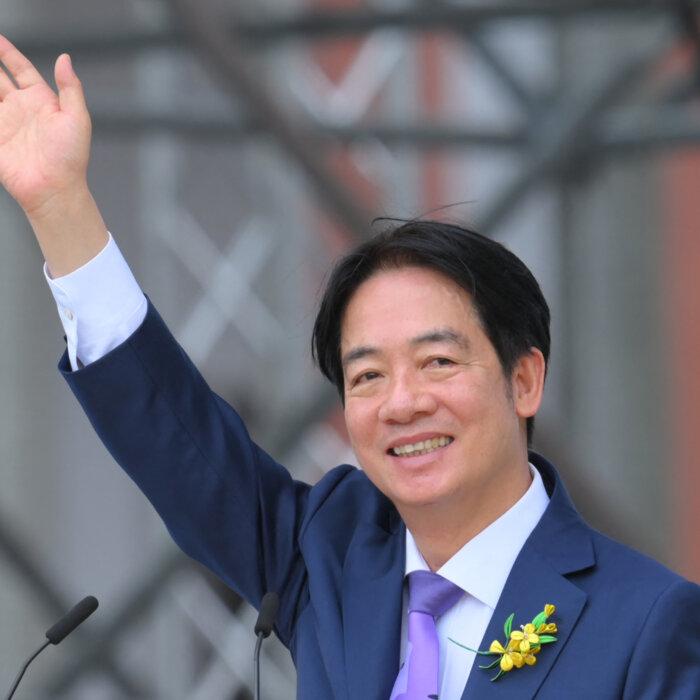
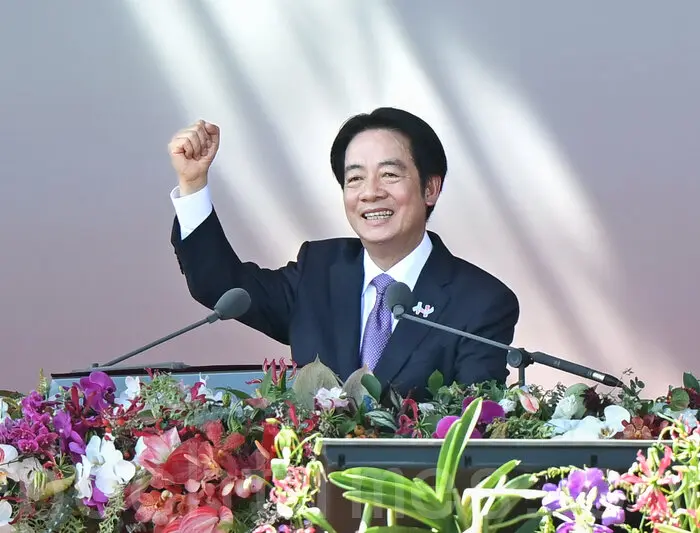
When asked about Trump’s remarks after the speech, Lai said communication channels between Taiwan and the United States have always remained open. If given the opportunity to speak with Trump, he said, he had a “responsibility to convey the voice of Taiwanese society.”
Lai said that he would emphasize several points.
“Peace and stability across the Taiwan Strait are essential elements of global security and prosperity. My government is committed to maintaining the status quo with confidence and composure, and Taiwan is also a guardian of peace and stability in the Taiwan Strait,” Lai stated.
“Second, China is the destroyer of peace and stability across the Taiwan Strait,” he said, pointing to Beijing’s expanding military presence and exercises that have extended into the Western Pacific, raising tensions across the Indo-Pacific region.
The Chinese Communist Party views Taiwan as its own territory and has repeatedly threatened to seize the island by force. Taiwan is a de facto independent country with a democratically elected government, a constitution, and a military.
“The Republic of China, Taiwan, is a sovereign and independent country,” Lai said, referring to Taiwan’s formal name.
China’s official name is the People’s Republic of China.
“No country has the right to annex Taiwan,” he said. “The people of Taiwan pursue a democratic and free way of life, and democracy and freedom should not be regarded as provocation.”
Lai also said that he hoped U.S. arms sales to Taiwan would continue, calling such purchases “necessary to maintain peace and stability.”
Despite the lack of formal diplomatic relations, Washington has been Taiwan’s biggest arms supplier under the Taiwan Relations Act.
President’s Speech
During his speech, Lai said that Taiwan’s future can only be determined by its 23 million people, not by external forces.“Taiwan’s future cannot be decided by forces outside our borders, nor can it be held hostage by fear, division, or short-term gain,” Lai stated, according to a translation from the presidential office.
Lai said Taiwan was willing to engage with China “under the principles of parity and dignity.”
“We firmly reject united front tactics that package unification as peace,” he said.
The Chinese Communist Party has refused to engage with the Lai administration, calling the Taiwanese president a “separatist” for his outspoken defense of the island’s sovereignty. The regime opposes any words or actions that could be seen as legitimizing Taiwanese sovereignty.
Lai said the parliament’s failure to pass his defense spending proposal “will inevitably have a severe impact” on regional peace and stability.
“To rectify this, the government will introduce an alternative special act and utilize additional budgets alongside increases to our annual budget to pursue commercial procurement, commissioned projects, and international cooperation,” he said.
He stressed the importance of self-sufficiency, noting that it would enable the domestic defense industry to produce unmanned aerial, maritime, and ground systems, thereby strengthening smart and sustainable defense capabilities.
“My commitment to the people of Taiwan is to ensure that we are a nation with the strength to defend ourselves, as well as to maintain peace and stability across the Taiwan Strait,” Lai said. “This is also the very resolve that we must demonstrate to the international community.”
In China, Chen Binhua, spokesperson for the Chinese regime’s Taiwan Affairs Office, criticized Lai for what he described as a “secessionist” stance, according to a press release reported by Xinhua News Agency on May 20.
The incident prompted a bipartisan group of more than 20 U.S. House lawmakers to send a letter dated May 14 to WTO Director General Ngozi Okonjo-Iweala. They called Cameroon’s decision “improper infringement of Taiwan’s right as a full WTO Member.”
The lawmakers—including Reps. Linda T. Sánchez (D-Calif.) and Adrian Smith (R-Neb.)—called on Okonjo-Iweala to ensure that the incident “does not set a precedent” for future WTO ministerial conferences.