Taiwan’s Cabinet approved a draft special act on June 18 to fund up to NT$210 billion (about US$6.7 billion) in drone and unmanned-vessel procurement, moving to build domestic production capacity after lawmakers excluded several defense-production items from a broader military spending plan.
The Executive Yuan said the proposed National Defense Self-Reliant Unmanned Vehicle Procurement Special Act would be sent to the Legislative Yuan for review. The bill would fund purchases from August 2026 through the end of 2031.
Huang Wen-chi, head of the Ministry of National Defense’s Department of Strategic Planning, said the plan would cover 1,446 coastal reconnaissance drones, 208,200 coastal attack drones, and 1,320 unmanned surface vessels, according to Taiwan’s Central News Agency (CNA).
The draft law says recent battlefields have used large numbers of unmanned systems for reconnaissance, surveillance, target location, and precision-strike missions, reducing personnel casualties and demonstrating their value in asymmetric warfare.
In wartime, the draft law says Taiwan could deploy large numbers of unmanned attack vehicles alongside precision missiles and direct-fire systems to create saturation attack capability against enemy vessels, landing vehicles, command nodes, and logistics systems.
Weng Yu-heng, an official with the Defense Ministry’s Department of Strategic Planning, said the Russia–Ukraine war has made unmanned systems and high-technology warfare an important part of modern war, according to Taiwan’s Military News Agency.
During any large-scale amphibious landing, Weng said, Taiwan would deploy large numbers of attack unmanned vehicles together with other firepower against enemy vessels, landing vehicles, and logistics.
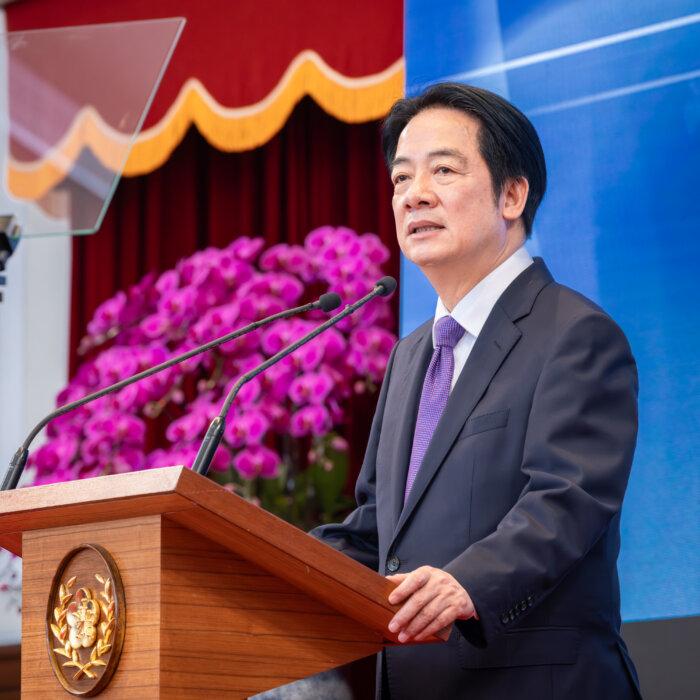
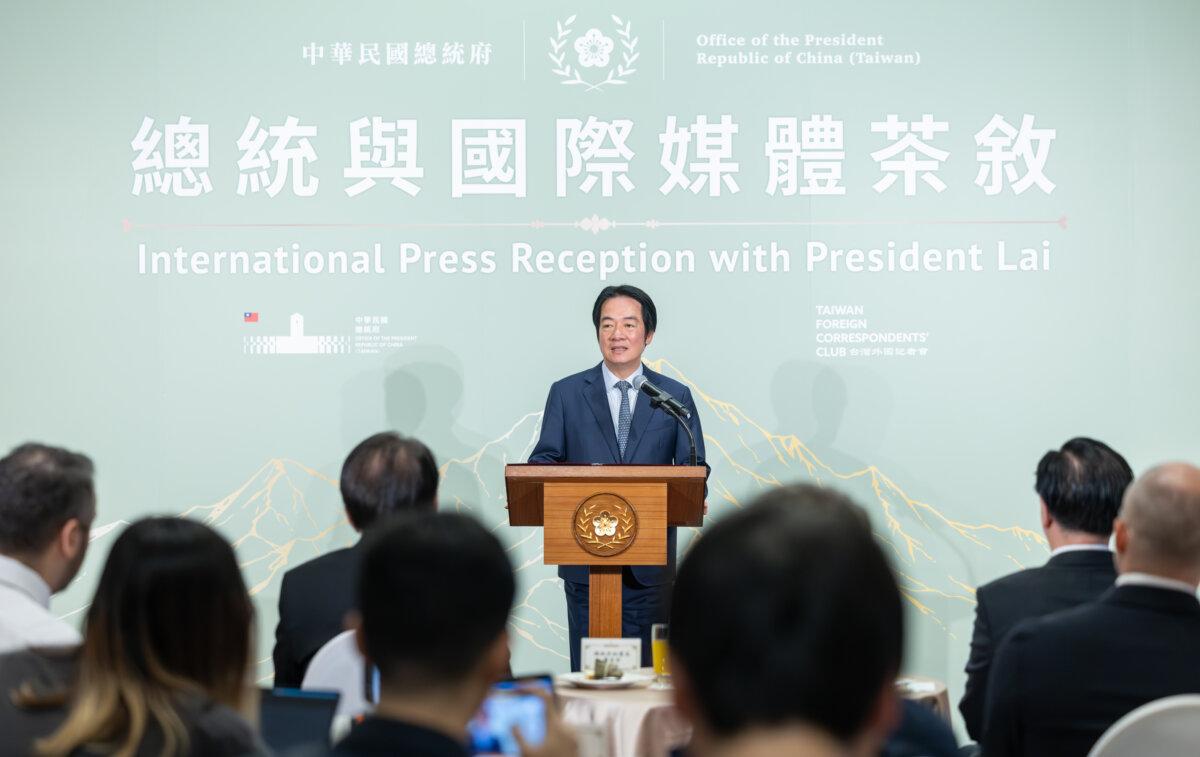
The Cabinet action came the same day President Lai Ching-te addressed international reporters at the Taipei Guest House, one day after G7 leaders reaffirmed opposition to unilateral attempts to change the status quo by force or coercion across the Taiwan Strait and in the East and South China Seas.
“We also call upon China to halt its military expansion in the South China Sea, East China Sea, and Taiwan Strait, and to renounce the use of force against Taiwan,” Lai said.
Supply Chain and Defense Funding Gap
The draft law says Taiwan needs a stable and self-reliant unmanned-vehicle industry chain as a matter of national security.It uses the term “non-red supply chain,” meaning a supply chain excluding Chinese Communist Party-controlled or China-linked components, to reduce cybersecurity risks involving communications and control modules and strengthen Taiwan’s domestic production of key components.
The Defense Ministry said the unmanned-vehicle plan is intended to build local supply, domestic production, and maintenance capacity so Taiwan can expand production quickly during a transition from peacetime to wartime.
The Executive Yuan said the unmanned-vehicle industry includes vehicle manufacturing, battery systems, optical sensors, artificial intelligence, communications equipment, software development, and maintenance.
The Executive Yuan said the measure follows the legislature’s May 8 passage of a separate defense special act that authorized up to NT$780 billion (about US$24.86 billion) in military procurement.
Premier Cho Jung-tai said the government’s earlier NT$1.25 trillion (about US$39.81 billion) defense proposal included military purchases, commercial procurement, commissioned production, and U.S.–Taiwan joint procurement and research. He said the legislature approved only the military-purchase items and excluded commissioned production, commercial procurement, and U.S.–Taiwan joint procurement and research.
Cho said those exclusions damaged the completeness of Taiwan’s defense buildup and created a combat power gap.
Arms Sales Under Review
During Lai’s event with foreign media, he was asked about pending U.S. arms sales to Taiwan.Lai said the cases are still moving forward and that the U.S. security commitment to Taiwan has not changed, according to CNA. He said Taiwan and the United States share the goal of strengthening Taiwan’s self-defense capabilities.
Foreign arms purchases are one path, and Taiwan’s domestic defense production is another, Lai said, adding that both are important.
“The key is that Taiwan must not change course in strengthening its own defense capabilities, nor can it slow its pace,” Lai said “We will continue to maintain close communication with the U.S. government, and we also hope the arms purchases can be approved as soon as possible.”
Lai also said Taiwan’s protection of its own security, democratic way of life, and refusal to accept Chinese Communist Party rule should not be seen as provocation against China.
G7 Statement and Democracy Anniversary
The G7 leaders’ statement, issued June 17, said the group supports a free and open Indo-Pacific based on the rule of law and reaffirmed opposition to unilateral attempts to change the status quo by force or coercion across the Taiwan Strait, saying such issues should be resolved peacefully through dialogue.Lai said Taiwan welcomed the statement and would work with the international community to maintain peace and stability across the strait. He also said Taiwan remains willing to engage China under the principles of “parity and dignity” to promote peace and mutual prosperity.
Lai also marked the 30th anniversary of Taiwan’s first direct presidential election, saying Taiwan’s people had emerged from 38 years of martial law and voted amid missile threats from China, with turnout above 76 percent.
That election, Lai said, sent a message that Taiwan’s sovereignty rests with its 23 million people and that Taiwan’s future can only be decided by them.
“Neither the Republic of China nor the People’s Republic of China is subordinate to the other, and Taiwan is not a part of the PRC,” Lai said.