Lam Wing-kee, the Hong Kong bookseller who said Chinese authorities held him for months, forced him to record scripted confessions, and sent him back to retrieve customer records from Causeway Bay Books, has died in Taiwan. He was 70.
Lam died Thursday evening at MacKay Memorial Hospital in Taipei after a cancer relapse, Taiwan’s Central News Agency reported.
Taiwan’s Mainland Affairs Council expressed condolences and said it would help Lam’s family and Pastor Huang Chun-sheng handle funeral arrangements, according to Taiwanese reports.
“Lam Wing-kee’s departure is saddening, but the courage he left behind will not disappear,” Lai wrote.
Lam became known outside Hong Kong in June 2016, when he returned from mainland China after being released from custody, and publicly contradicted Beijing’s account of the Causeway Bay Books case. The case involved the disappearance of Lam and four others linked to the independent bookstore in Hong Kong’s Causeway Bay district that sold politically sensitive titles banned in mainland China.
Lam founded Causeway Bay Books in 1994. The upstairs shop sold books on politics, society, economics, art, and literature, according to Taiwan’s Ministry of Culture. Its best-known titles were political books, magazines, and insider accounts about Chinese Communist Party (CCP) elites—materials that mainland readers could buy in Hong Kong but not freely at home.
The business operated within one of the central promises made in the 1997 handover of Hong Kong from the UK to the CCP: Chinese sovereignty, but with separate courts, civil liberties, and freedom of the press.
The Causeway Bay Books case put that arrangement under strain.
Lam and the other four associated with Causeway Bay Books disappeared in 2015. Publisher Gui Minhai was taken from Thailand and later sentenced in China to 10 years in prison. Lee Bo disappeared from Hong Kong, raising fears that mainland agents had crossed into the city’s separate legal system. Lui Bo and Cheung Chi-ping, likewise associated with the bookstore, also disappeared.
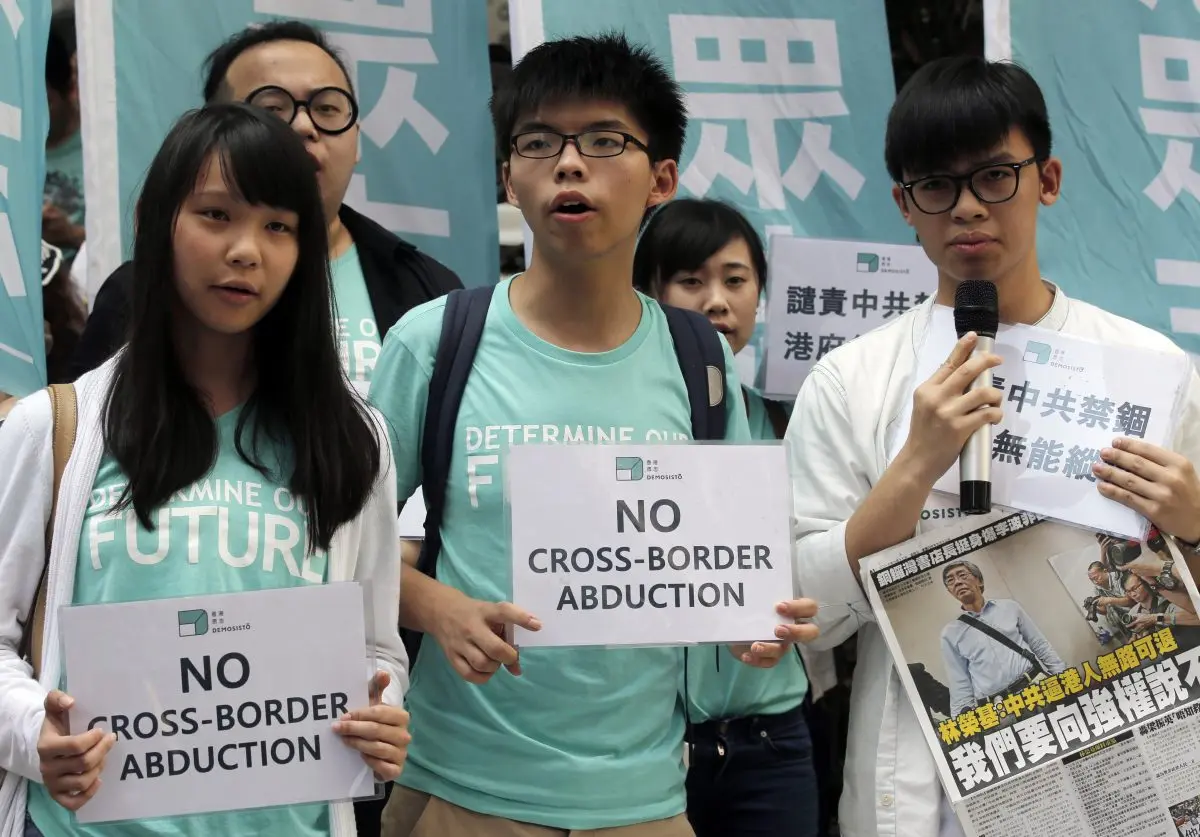
Lam said an interrogator accused him of trying to “overthrow the Chinese government” through the sale and distribution of books, and he identified the group handling him as the “Central Task Force,” an investigative unit dating back to the Mao era that handles sensitive political cases involving perceived threats to the CCP.
Lam said he was also told to sign statements giving up his right to notify his family and to hire a lawyer.
He said interrogators asked about Causeway Bay Books, its owner Mighty Current, other booksellers, and the shop’s mail-order records.
In mid-December 2015, he said, an interrogator showed him postal-purchase records from September 2013 to October 2015. The records listed names, phone numbers, addresses, books ordered, and postal record numbers for customers in mainland China and overseas.
In June 2016, mainland police allowed him to return to Hong Kong on the condition that he bring back a hard disk containing subscriber records.
Lam said mainland authorities wanted records identifying both readers and publishers.
He did not return to mainland.
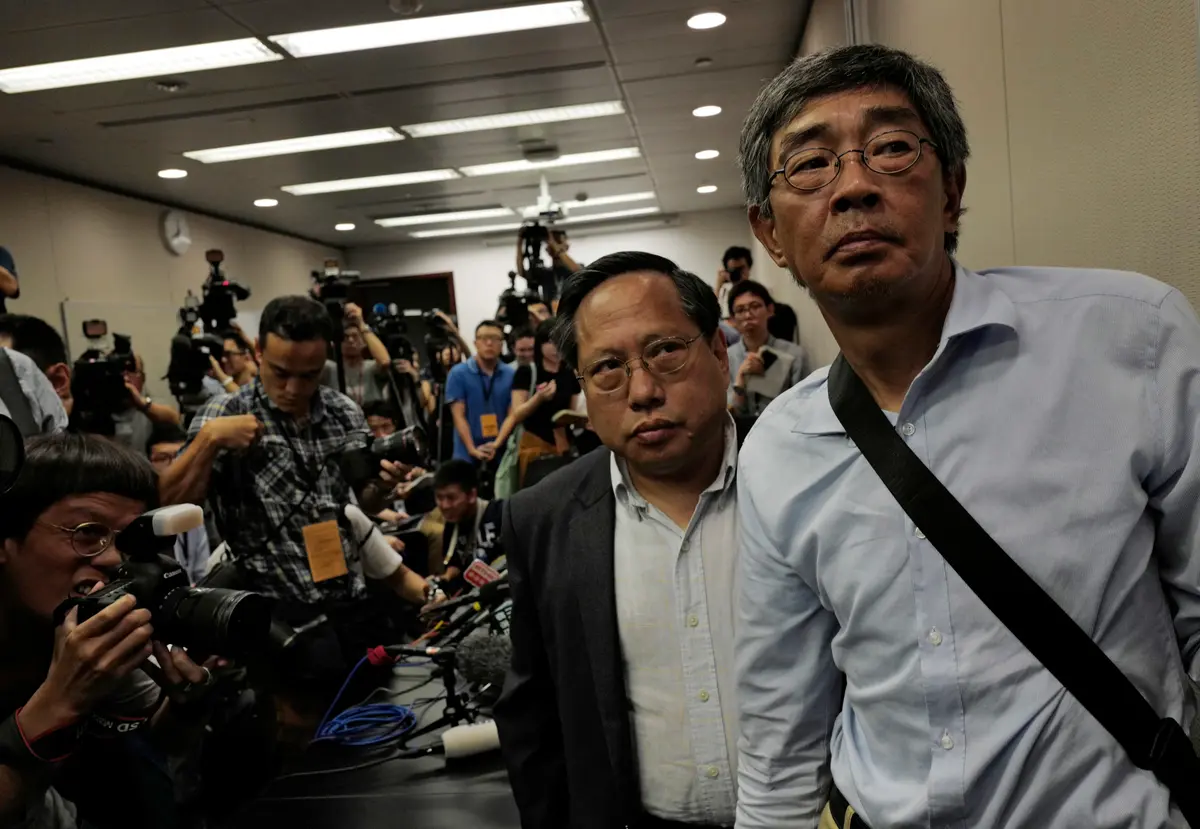
Chinese state media aired confession-style footage involving the booksellers, presenting the matter as a mainland criminal-law case. Lam said the videos were scripted.
He told the CECC that confession videos were recorded several times and that the recordings followed scripts given to him. He said his chief interrogator acted as the director.
Lui, Lee, and Cheung were reportedly also subjected to forced televised confessions and, after brief releases on bail and short visits to Hong Kong, were compelled to return to mainland China, where they have reportedly remained under the control of the Chinese regime.
From Hong Kong to Taiwan
The Causeway Bay Books disappearances came before the 2019 Hong Kong protest movement and before Beijing imposed the National Security Law on the city in 2020.
Lam later said he feared legal risk in Hong Kong after the city’s government introduced an extradition bill in 2019. He moved to Taiwan that year.
In 2020, he reopened Causeway Bay Books in Taipei with help from supporters. The store became a gathering place for Hong Kong exiles and readers who saw the old shop’s name as a reminder of what had happened there.

Hong Kong After Lam
Lam died as Hong Kong authorities continue to pursue publishers and booksellers under national security and sedition laws.
In June, Hong Kong national security police arrested journalist and bookseller Leticia Wong Man-huen, as well as a 32-year-old man, under the city’s 2024 national security law on suspicion of displaying items with seditious intent, selling publications with seditious content, and receiving remittances funded by foreign political organizations.
The police department stated that “doing an act that has a seditious intention with a seditious intention” and “dealing with property known or believed to represent proceeds of [an] indictable offence” could be imprisoned for seven years and 14 years.
In a separate case in March, Hong Kong national security police arrested Pong Yat-ming, the owner of Book Punch bookstore, and three staff members over the alleged sale of seditious publications.
Those cases were brought under Hong Kong’s own security and sedition framework. Lam’s case began before that system was in place, when mainland authorities handled a bookseller tied to a Hong Kong shop.