Intruders broke into the June 4th Massacre Memorial Museum in El Monte, a city in Los Angeles County, California, and vandalized exhibits early on May 31, just days before the anniversary of the 1989 Tiananmen Square massacre.
El Monte police retrieved surveillance footage and spent that morning inside the museum collecting evidence. A preliminary investigation revealed that unidentified persons had entered the premises around 12:10 a.m.
Damaged items included a shirt worn by a participant in the 1989 pro-democracy movement, Chinese- and English-language historical newspapers, a calligraphy exhibit, and June 4-themed T-shirts. The entrance counter, parts of the walls, and many display cases and a wall were sprayed with brownish-yellow paint.
El Monte police have formally opened a case and begun the investigation, but they have not publicly identified a suspect or motive, the museum said in a statement.
May 31 Seminar Postponed
The museum had scheduled a China Forum seminar for the morning of May 31, the same day the vandalism was discovered. The seminar was postponed until the afternoon, after police had completed their preliminary investigation and the museum could confirm that the site was safe.Attendees filled the venue after the postponement.

The museum condemned the perpetrators and any others behind the incident, saying it would pursue legal responsibility. It said it had obtained “certain clues and suspicions” and would cooperate with police.
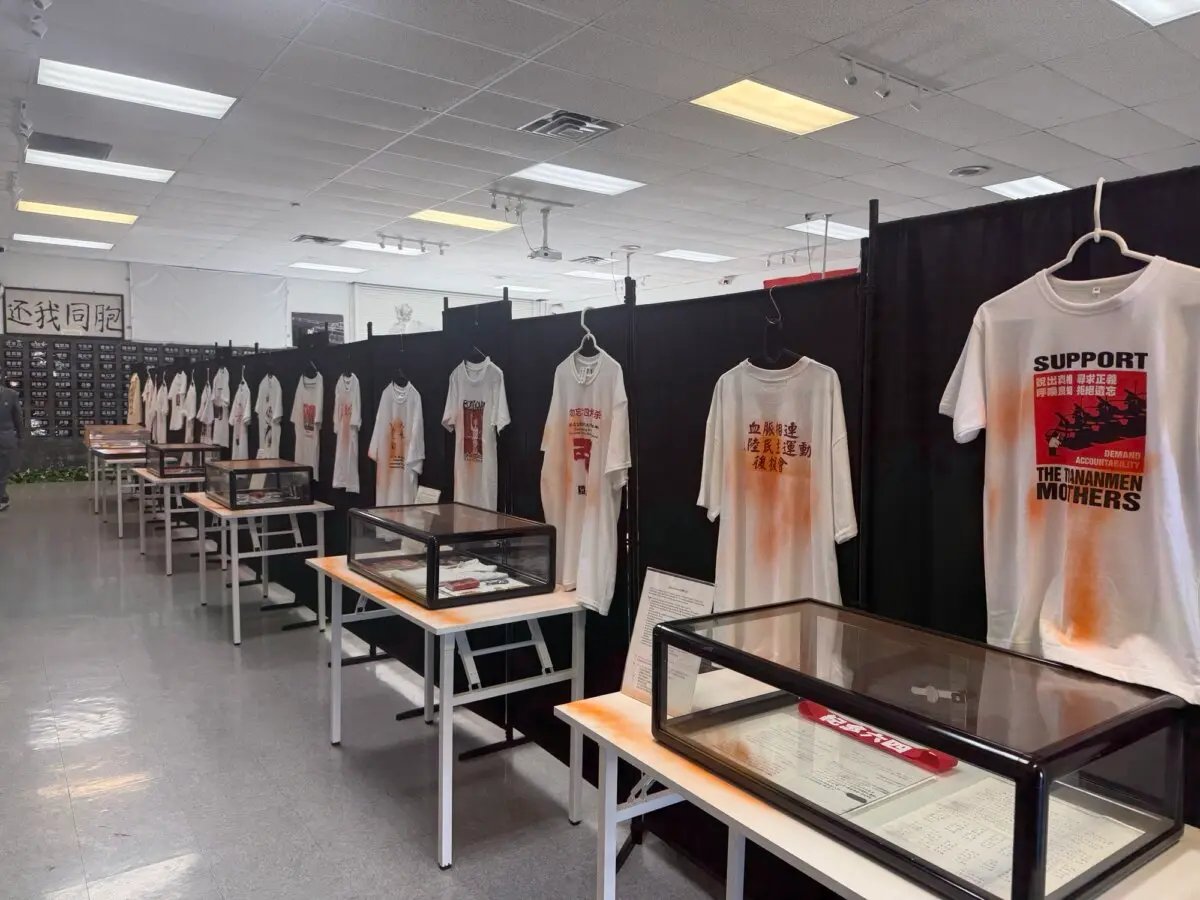
Attack Labeled ‘Transnational Repression’
The museum said it viewed the vandalism as another case of “transnational repression,” a term used to describe efforts by foreign governments to silence or intimidate dissidents and diaspora communities beyond their borders.General Manager Jin Yan told the Chinese edition of The Epoch Times that the incident left the museum feeling the reach of Chinese Communist Party (CCP) intimidation even in the United States.
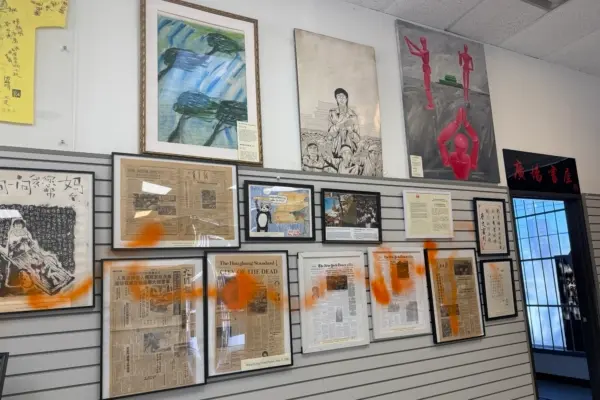
“We never imagined that after taking refuge in the free and democratic United States, we would still feel intimidation from the CCP,” Jin said.
Zheng Cunzhu, chairman of the United Headquarters of the Chinese Democratic Party, attended the event and said the timing was sensitive. He said he believed those behind the attack were linked to the CCP and wanted to show that their threats could reach dissident groups overseas.
Museum director Wang Dan, a former 1989 student leader, wrote on X that pressure would only bring the museum more support. He later told the Chinese edition of The Epoch Times that the museum “will never stop because of this kind of destruction and threat” and would seek to build the institution better with public support.
Prior Sabotage Allegations in Southern California
Sabotage targeting June 4 and anti-CCP memorial sites in Southern California has increased in recent years.Attackers targeted the “Tank Man” statue at Liberty Sculpture Park in Southern California in 2023 and 2024. Before June 4, 2025, several memorials in the park were damaged, and three guard dogs were poisoned or beaten to death, according to the park’s founder, Weiming Chen.
Federal prosecutors have previously brought a China-related transnational repression case involving alleged plans to damage anti-CCP artwork at Liberty Sculpture Park.
In March 2022, the Justice Department charged five defendants in what prosecutors described as schemes to stalk, harass, and spy on U.S. residents on behalf of China’s secret police. Prosecutors said one alleged target was a U.S. military veteran and former leader of the 1989 pro-democracy demonstrations in Beijing who was running for Congress.
June 4 Events to Proceed
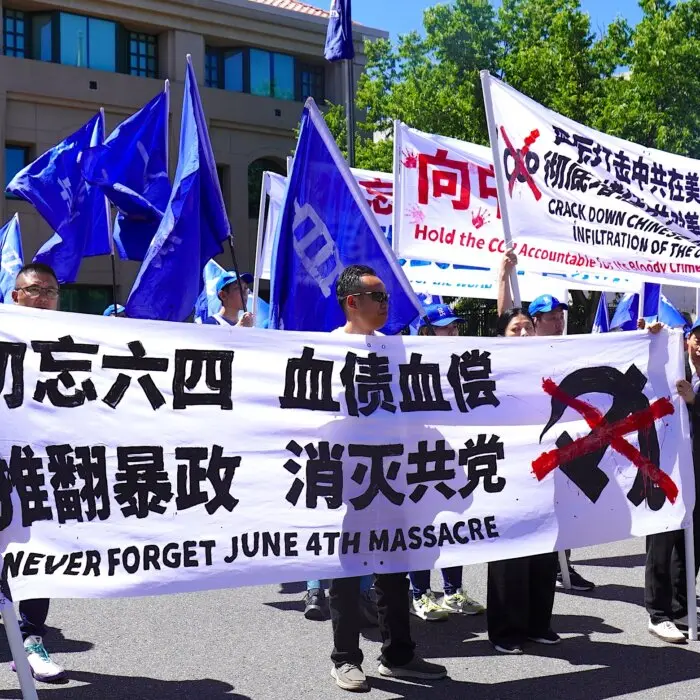
“We will forever remember that early summer in 1989, when innocent dreams were tainted by fresh blood,” it says on the museum’s homepage.The museum had announced on May 22 that it would unveil a mural created by artists Gloria Wang and Geoffrey Jin on June 4 as part of this year’s commemoration. It said the work was the first large mural created specifically for the museum’s physical space since its opening and was intended to focus on the 1989 pro-democracy movement.
The museum said it would strengthen security, begin repairs, and preserve some of the damaged items for permanent display.
“All existing event arrangements will proceed as scheduled,” including a June 4 commemoration beginning at 3 p.m., the museum said in its June 1 statement.