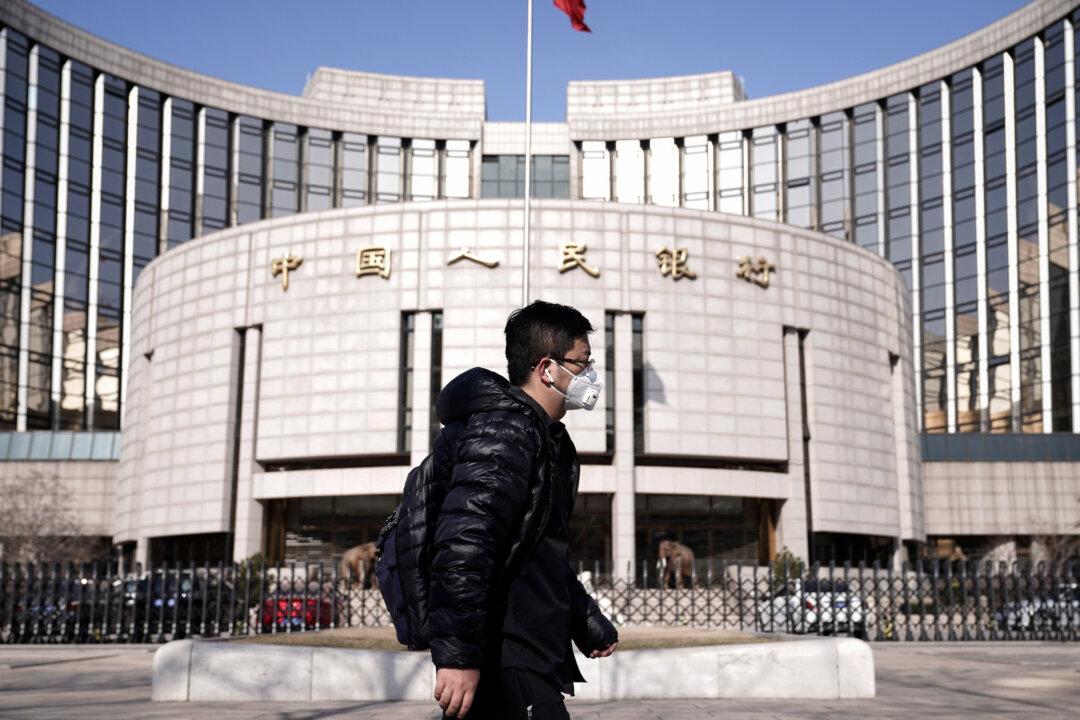
The Chinese regime announced on July 24 that Fang, 62, was under investigation for alleged “serious violations of discipline and law,” a phrase commonly used by the Chinese Communist Party (CCP) to refer to corruption investigations. The announcement ended a three-decade career that took Fang from the World Bank to the highest ranks of China’s financial regulatory system.
China analysts interviewed by The Epoch Times say Fang’s case reflects more than the downfall of one official. In their view, it illustrates Xi’s ongoing effort to dismantle rival political networks, tighten control over the financial system, and eliminate officials whose market-oriented views increasingly clash with his state-centered economic agenda.
After the announcement of the investigation against Fang, China-based commentator Li Guangman, who is aligned with the CCP and the Party’s propaganda apparatus, published an article asking whether Fang had served as a “strategic traitor” within China’s financial system.
“Strategic traitor” referred to Fang’s pro-market views that are not aligned with Xi’s increasingly state-controlled economic model. The article accused him of favoring foreign capital, enabling quantitative trading firms, and promoting market reforms that allegedly harmed China’s financial security.
From World Bank to China’s Financial Elite

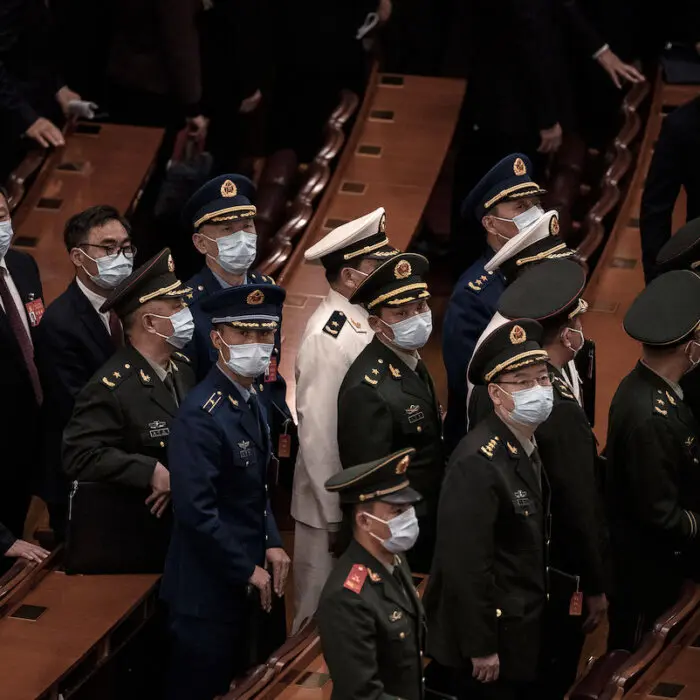
Born in Zhejiang Province in 1964, Fang graduated from Tsinghua University before studying in the United States, ultimately earning a doctorate in economics from Stanford University in 1993. He then worked at the World Bank before returning to China in 1998 at the invitation of Zhou Xiaochuan, then president of China Construction Bank.
U.S.-based Chinese political commentator and author Cai Shenkun told The Epoch Times that Zhou Xiaochuan served as Fang’s earliest political patron.
After two years at China Construction Bank, Fang became secretary-general of China Galaxy Securities before joining the Shanghai Stock Exchange, where he rose to deputy general manager.
According to Cai, Fang’s appointment to the Shanghai Stock Exchange came while Zhou Xiaochuan chaired the CSRC.
Although Fang worked within Xi’s administrative circle when he was in Shanghai, Cai said he had not yet become part of Xi’s inner political network. That changed in 2013.
During the CCP’s annual “Two Sessions” political meetings, Fang expressed to Xi his desire to contribute to China’s financial development, according to Cai.
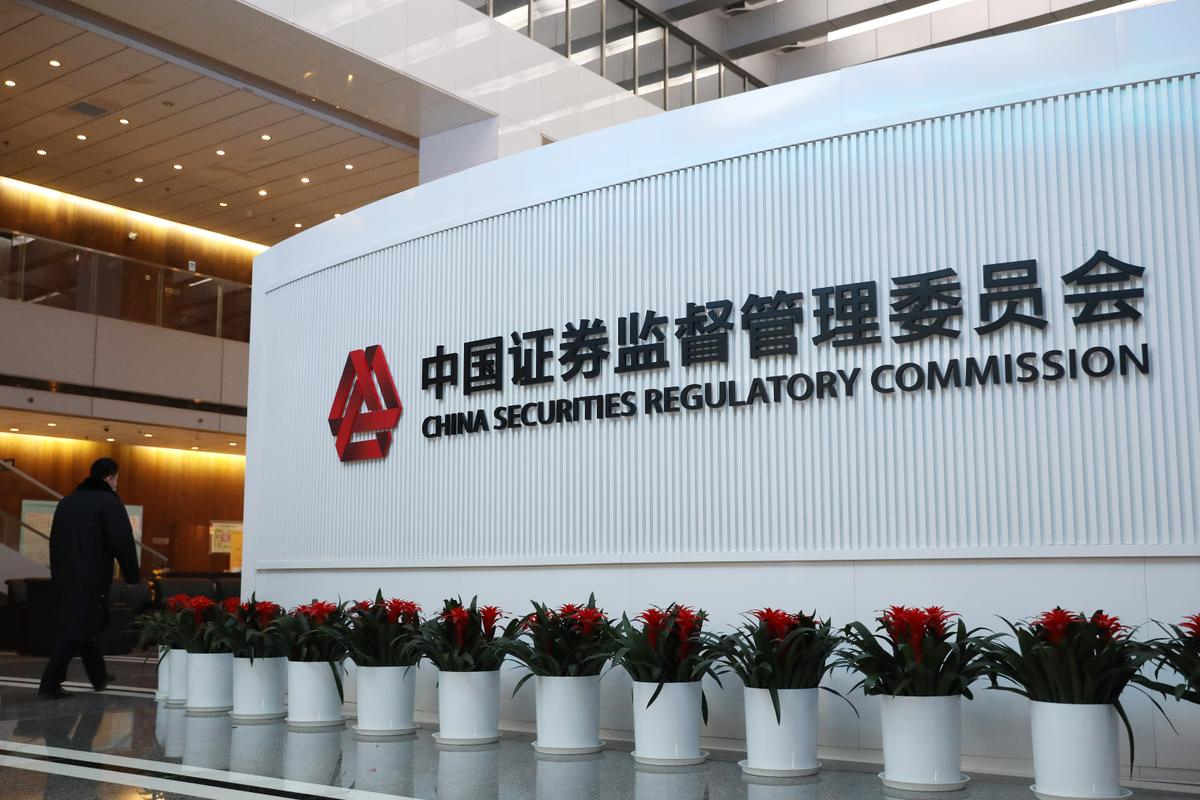
Shortly afterward, he was transferred to the CCP’s Central Financial and Economic Affairs Office, where he worked under Liu He, Xi’s longtime economic adviser and later vice premier. Liu later became one of Xi’s most trusted economic policymakers.
After China’s stock market crash in 2015, Fang was promoted to CSRC vice chairman, overseeing international affairs.
When Liu became vice premier in 2018 with responsibility for financial policy, Fang’s political standing remained secure. He stayed in office until reaching retirement age in 2024 before becoming vice chairman of the China Society for Finance and Banking the following year.
Following the investigation against Fang, Chinese netizens resurfaced remarks he made at the 2016 World Economic Forum in Davos, where he described Xi as “the best leader” in the world.
Another widely circulated clip from the 2019 Davos forum showed Fang arguing that Western democracies faced serious problems and needed political reform, prompting laughter from the audience.
Cai described Fang as a political opportunist who repeatedly aligned himself with whoever held power before concluding that Xi offered his safest political bet.
U.S.-based China affairs analyst Li Linyi offered a more nuanced assessment.
Although Fang publicly defended the CCP’s positions—as senior Chinese officials are expected to do—Li said Western observers generally viewed him as more market-oriented than many of Xi’s closest advisers like Liu He.
“They had to demonstrate loyalty to Xi while also explaining Beijing’s economic policies to Western audiences,” Li said.

Connections Across CCP Political Networks
Yuan Hongbing, the former head of the law school at Peking University and renowned Chinese dissident based in Australia, told The Epoch Times that Fang was also connected to the political network of former Vice President Wang Qishan, another influential figure in China’s financial establishment.
The investigation of Fang comes amid an expanding anti-corruption campaign that has increasingly targeted China’s financial sector.
According to Yuan, Xi’s campaign against financial officials has targeted remnants of Wang’s network.
Several former officials linked to Wang—including former China Merchants Bank President Tian Huiyu, former central bank governor Fan Yifei, and former financial regulator Zhou Liang—have all been investigated in recent years.
Earlier this month, former China Development Bank President Ouyang Weimin also came under investigation after three years in retirement. Chinese financial media Caixin reported that his case was connected to the investigation involving Zhou Liang.
Li said Wang’s influence within China’s banking system was especially deep because of his years at China Construction Bank, where many of his protégés later assumed senior positions.

Market Reformer or Political Liability?
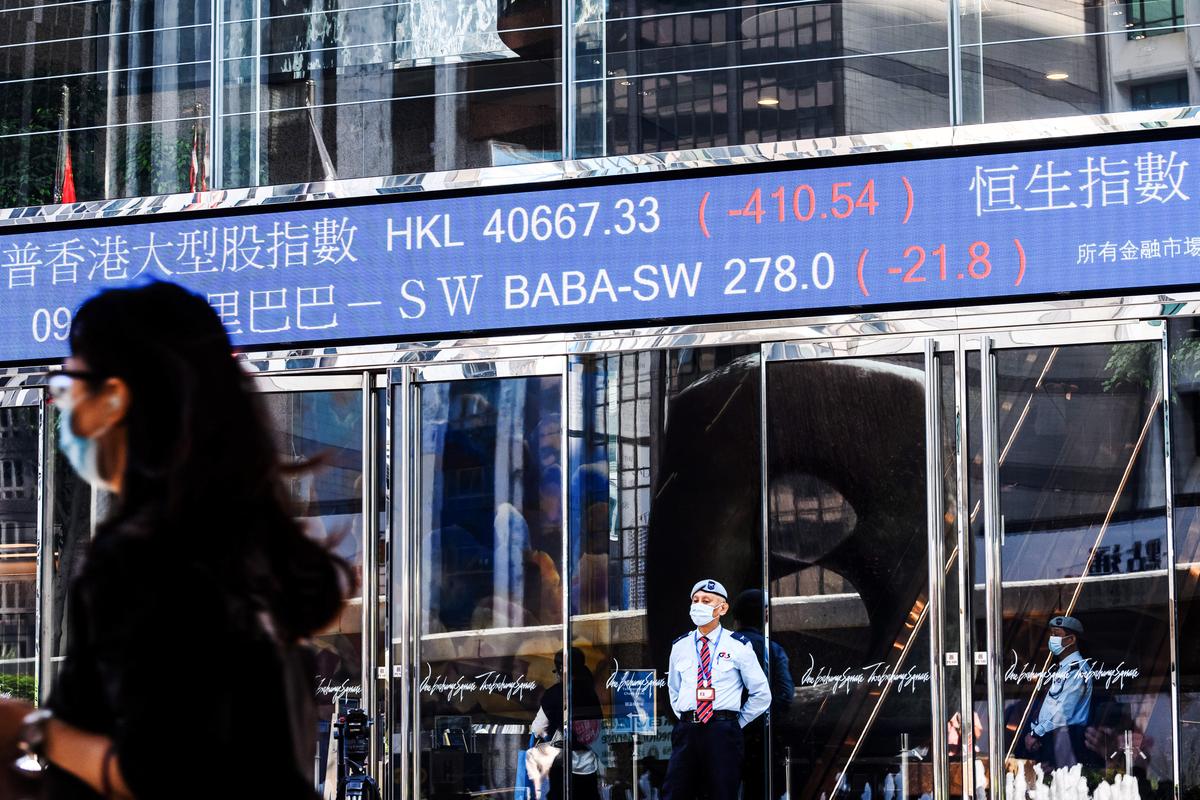
Fang became one of China’s strongest advocates of quantitative trading and modern market mechanisms, policies that later drew criticism from the ideological fundamentalists within the CCP.
Just weeks before the announcement of the investigation, Fang praised the rapid growth of China’s quantitative investment industry during the 2026 Lujiazui Forum in Shanghai.
Cai alleged that Fang cultivated close relationships with major Western financial institutions by facilitating regulatory approvals and providing insights into China’s financial policymaking. In return, both the institutions and Fang benefited financially.
Fang’s name has also resurfaced in connection with the privately-owned Ant Group’s aborted initial public offering.
According to a report on Chinese news portal Sina, Fang strongly supported what was expected to become the world’s largest IPO, working closely with Ant executives before regulators abruptly suspended the listing in November 2020.
Yuan said the episode would reinforce one of Xi’s deepest political concerns—the possibility that wealthy private entrepreneurs and senior Party officials could form political alliances capable of challenging his authority.
Xi’s Purge Continues
Cai said Xi’s economic policies have alienated nearly every political faction within the Party.
“He has offended the left, the right, and the centrists,” Cai said. “Every policy has created major risks without providing effective solutions. Few people around him are still genuinely willing to devote themselves to carrying out his agenda. Most are simply waiting to see what happens.”
Yuan argued that many financial technocrats never genuinely embraced Xi’s vision of a Party-dominated, state-directed economy.
“The conflict is not only about power,” he said. “It is also about fundamentally different ideas.”
Yuan said Xi’s focus extends beyond individual corruption cases.
He said Xi had expected opposition within the CCP to disappear after securing a third term in 2022. Instead, Yuan argued, divisions have emerged even among officials previously regarded as Xi loyalists.
Xi’s overriding political objective, Yuan said, is securing another term at the Party’s 21st National Congress, expected in 2027, while neutralizing retired senior officials whom he still views as potential threats, including former Vice President Wang Qishan, former Premier Wen Jiabao, and former Vice President Zeng Qinghong.
The CCP’s top disciplinary watchdog announced on July 25 that 74 officials at or above the provincial and ministerial level were disciplined during the first half of this year—roughly double the number during the same period last year. Investigations involving officials at those ranks also increased, while cases involving bureau-level officials rose nearly 19 percent year over year.
Cai believes Xi is unlikely to directly target retired senior leaders themselves, instead dismantling their political networks by investigating their associates.
Li said Fang’s downfall may be only the latest move in Xi’s effort to consolidate power ahead of the next Party Congress.
“The struggle beneath the surface is far from over,” he said.