A Chinese university has come under scrutiny after an alleged internal safety agreement surfaced online alongside claims from a self-identified graduate that students were required to work on farms and in food-processing factories as part of a mandatory academic program while being denied basic workplace protections.
The controversy centers on Xinjiang Agricultural University, which allegedly has for years required students to participate in a “Rural Support Labor Practice Course.”
According to the graduate, students were sent to farms, state-run agricultural settlements, and tomato-processing plants for weeks of manual labor as part of their coursework.
Documents circulated alongside the online allegations appear to show an agreement between workers and a tomato-processing company stating that workers must assume full responsibility for workplace accidents, waive the right to seek compensation from the company, and acknowledge that the employer has no obligation to provide social insurance.
Critics interviewed by The Epoch Times said the arrangement raises questions about whether educational programs are being used to supply businesses with low-cost seasonal labor while shielding employers from legal liability. They spoke on condition of anonymity out of fear of reprisal.
Safety Agreement Raises Labor Concerns

On July 25, someone claiming to be a graduate of Xinjiang Agricultural University posted on Zhihu, a Chinese question-and-answer platform, describing the university’s long-running labor practice program.
According to the post, second-year students typically suspend regular classes for about 20 days at the beginning of the academic year before being transported by the university to farms, agricultural units operated by the Xinjiang Production and Construction Corps, which has been sanctioned by the United States since 2020 because of its human rights abuses.
The Epoch Times could not independently verify the online allegations or the authenticity of the leaked documents.
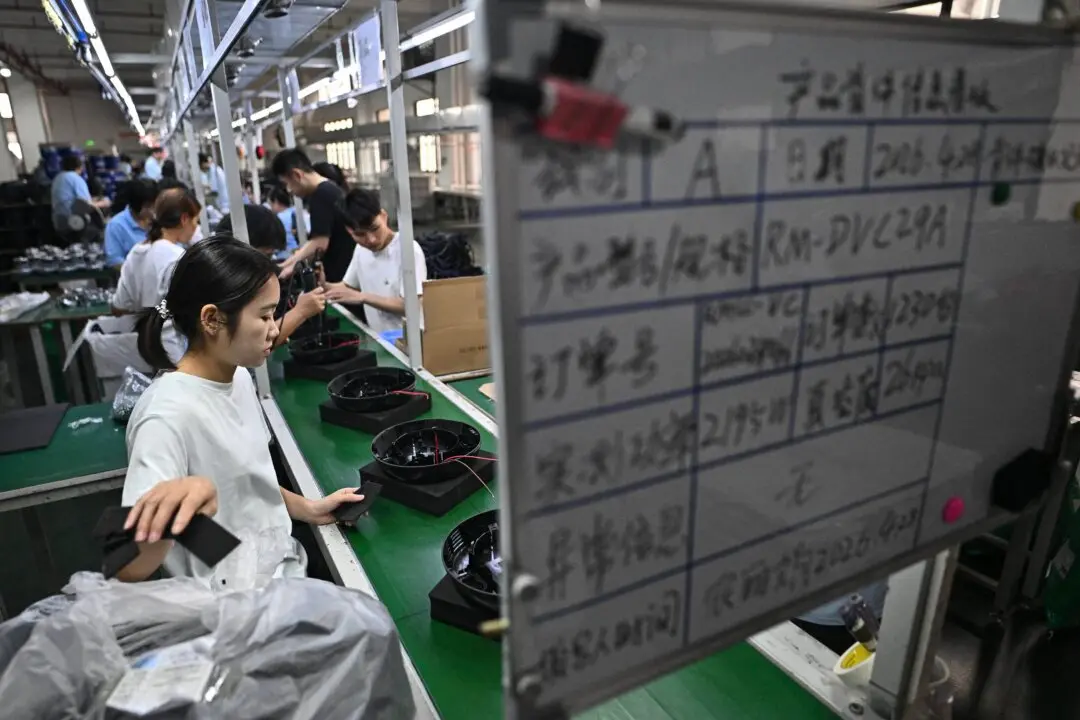
Students allegedly perform seasonal work including harvesting cotton, peppers, grapes, and tomatoes, as well as operating on production lines in tomato paste factories.
Among the materials shared online was what appeared to be a safety management agreement between workers and a tomato processing plant. The agreement lists an employment period from July 28 to Oct. 30, 2024, with positions including packaging, material handling, and boiler assistance.
Those jobs are part of the factory’s production process and involve industrial equipment, heavy lifting, and high-temperature working conditions, rather than short-term educational observation or training activities.
According to the agreement, workers must disclose any health conditions before beginning work. If they conceal medical information, the company may terminate the agreement without compensation.
Another provision states that the relationship is a “temporary labor service relationship rather than an employment contract,” adding that the company bears no obligation to provide any insurance coverage.
The agreement also states that if a workplace accident occurs during the employment period, the worker “shall bear full responsibility” and may not seek compensation from the company in any form.
It further provides that the company may terminate the agreement without compensation if the worker violates company rules, safety regulations, or management directives.
A sociologist from Xinjiang University told The Epoch Times that the agreement appears inconsistent with Chinese labor regulations and reflects an imbalance of power between universities, employers, and students.
“Universities control students’ coursework, academic credits, disciplinary records, and graduation eligibility,” the sociologist said. “When a university assigns students to these placements, they have little practical ability to refuse.”
He said the agreement characterizes factory work as an educational practice while transferring workplace risks onto students.
“The company determines wages, while students are expected to bear responsibility for workplace injuries,” the sociologist said. “Educational authority is effectively being used as a tool to supply businesses with inexpensive labor.”
He added that although the agreement requires workers to follow company management and safety rules, it places responsibility for accidents, medical costs, and compensation entirely on the individual worker.
“The company controls job assignments and has the authority to terminate the agreement, while workers are effectively required to waive their right to seek compensation in advance,” the sociologist said. “These standard contract terms clearly reflect unequal bargaining power.”
Questions Over University’s Labor Program
The agreement does not identify Xinjiang Agricultural University or specify the worker’s identity. However, the company named in the document, the factory positions described, and the seasonal employment period correspond with the graduate’s account of students being assigned to tomato-processing plants.
The materials have prompted questions about the safety arrangements, compensation, and relationship between the university and participating companies.
According to information published on Xinjiang Agricultural University’s website, the school says it has organized more than 80,000 students and faculty members to participate in agricultural work-study programs over the past 25 years. The university says those programs have generated nearly 4 billion yuan (about $591 million) in direct economic benefits.
The disclosure has renewed debate over the relationship between labor education and commercial interests.
In recent years, the Chinese Communist Party (CCP) has expanded labor education requirements in schools, promoting manual work as part of collective education, character building, and social practice.
A Xinjiang resident told The Epoch Times that he believes requiring students to perform production work through academic requirements resembles what he called a “Xinjiang education camp.”
“In Xinjiang, schools, businesses, and local authorities all hold power over students,” he said. “Schools place great emphasis on obedience. Students who repeatedly fail to comply with school requirements can face expulsion.”
The resident alleged that many businesses seek partnerships with schools to gain access to low-cost labor.
“If you go online and expose unfair treatment in Xinjiang, it’s not just a matter of having your account suspended,” he said. “Police may summon you for questioning.”
As of publication time, Xinjiang Agricultural University had not publicly addressed whether it assigned students to work at the factory identified in the circulated agreement, whether financial arrangements existed between the university and the company, or how participating students were compensated for their labor.
The Epoch Times reached out to Xinjiang Agricultural University for comment but did not receive a response by publication time.