Pop Mart’s Labubu dolls have become one of China’s most visible consumer exports, with Chinese state media portraying the brand’s global expansion as a model of manufacturing strength, entrepreneurship, and overseas influence. But the viral toy line is now facing U.S. scrutiny over potential forced labor after advocacy groups urged federal officials to investigate imports linked to cotton traced to Xinjiang.
State Armor and the Victims of Communism Memorial Foundation sent a May 20 letter to Homeland Security Secretary Markwayne Mullin, with Secretary of State Marco Rubio copied, urging U.S. Customs and Border Protection (CBP) to detain and test Pop Mart shipments tied to manufacturing hubs in Guangdong, Hebei, and Zhejiang.
The letter states that isotopic testing of 20 Labubu dolls purchased in the United States found that 16 contained cotton traceable to farms in China’s Xinjiang. Nonprofit organization Campaign for Uyghurs said it submitted information about Pop Mart to CBP’s Forced Labor Allegation Portal in August 2025.
Pop Mart’s Global Rise
Pop Mart’s own financial filings and reports show how central the Labubu series has become to the company’s business.The company said revenue rose from 13.04 billion yuan (about $1.9 billion) in 2024 to 37.12 billion yuan (about $5.46 billion) in 2025, a 184.7 percent increase.

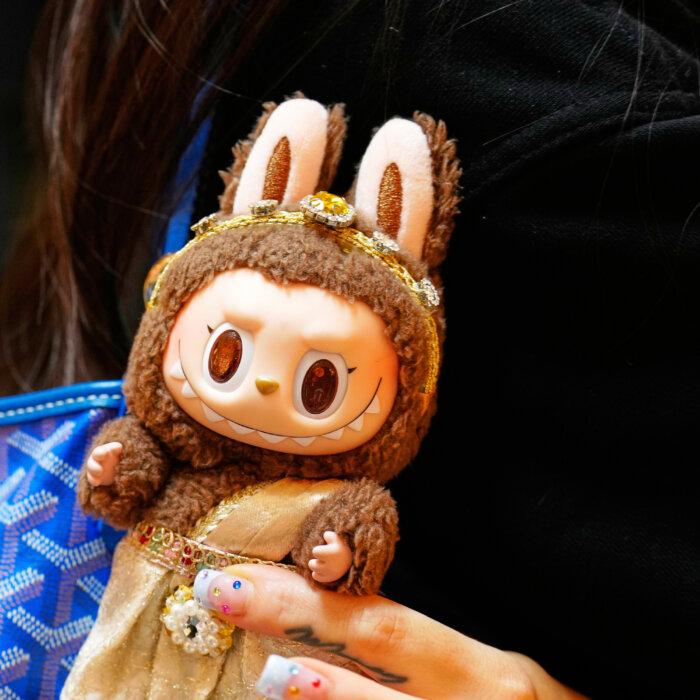
The Monsters generated 14.16 billion yuan in 2025—about $2.08 billion—and accounted for about 38 percent of Pop Mart’s total revenue, according to the company’s annual results filed with the Hong Kong Stock Exchange. The product line’s revenue rose 365.7 percent from the previous year.
State Media Casts Pop Mart as a Model Brand
Chinese state media have promoted Pop Mart’s rise in political and commercial terms.In an editor’s note to a People’s Daily interview, the outlet placed Pop Mart CEO’s profile in the context of Chinese leader Xi Jinping’s calls for entrepreneurs to innovate and contribute to China’s “new development pattern” and “high-quality development.”
The state media interview described Pop Mart founder and CEO Wang Ning as speaking from the company’s Beijing headquarters as Labubu gained global attention. Wang said Pop Mart had helped build China’s designer-toy industry and described the company’s shift from selling products to “selling culture.”
Wang also said overseas revenue reached 5.07 billion yuan in 2024—about $703 million—up 375.2 percent. He said North American sales in 2025 were likely to exceed Southeast Asian sales as overseas markets expanded. He cited China’s domestic market and manufacturing base as Pop Mart’s two major advantages.
Xinjiang Cotton and US Law
According to the Department of Labor, since 2016, the Chinese Communist Party has subjected Uyghurs and other predominantly Muslim ethnic minorities in Xinjiang to genocide, state-imposed forced labor, and crimes against humanity.The UFLPA presumes that goods made wholly or in part in Xinjiang are barred from entering the United States unless importers provide clear and convincing evidence that they were not made with forced labor.
The May 20 letter from State Armor and Victims of Communism argued that Pop Mart’s Xinjiang exposure is not incidental. The letter cited Pop Mart’s 2021 public dispute with Adidas after the sportswear giant pledged to stop using Xinjiang cotton over forced labor concerns. In Chinese court filings cited by the groups, Pop Mart accused Adidas of having “smeared Xinjiang” and “hurt the feelings of the Chinese people.”
Rep. John Moolenaar (R-Mich.), chairman of the House Select Committee on the Chinese Communist Party, said the possible use of forced-labor cotton in Labubu products was unacceptable and urged enforcement of the UFLPA unless the products are clearly proven otherwise.
China Labor Watch Report
Li Qiang, founder and executive director of China Labor Watch, told The Epoch Times that the Labubu case could test both corporate responsibility and the ability of U.S. customs officials to enforce the law.“If there is clear evidence that the products use cotton from Xinjiang, this would not only raise serious questions about corporate responsibility, but also test the enforcement of the Uyghur Forced Labor Prevention Act and whether U.S. Customs is truly able to implement the law’s requirements effectively,” Li said.
The report said China Labor Watch researchers conducted 51 in-person interviews and reviewed labor contracts, onboarding materials, training records, wage slips, attendance records, and workplace notices. The group alleged excessive overtime, extensive use of dispatched labor, opaque contract practices, possible social insurance evasion, inadequate safety training, and deficiencies in occupational health and safety protections.
According to the report, workers as young as 16 were employed as long-term production workers under the same conditions as adults without the special protections required under Chinese law. China Labor Watch called on Pop Mart to address labor violations in its supply chain, compensate affected workers, and ensure future production complies with Chinese labor law and internationally recognized labor standards.
CBP has not publicly announced a Labubu-specific enforcement action.