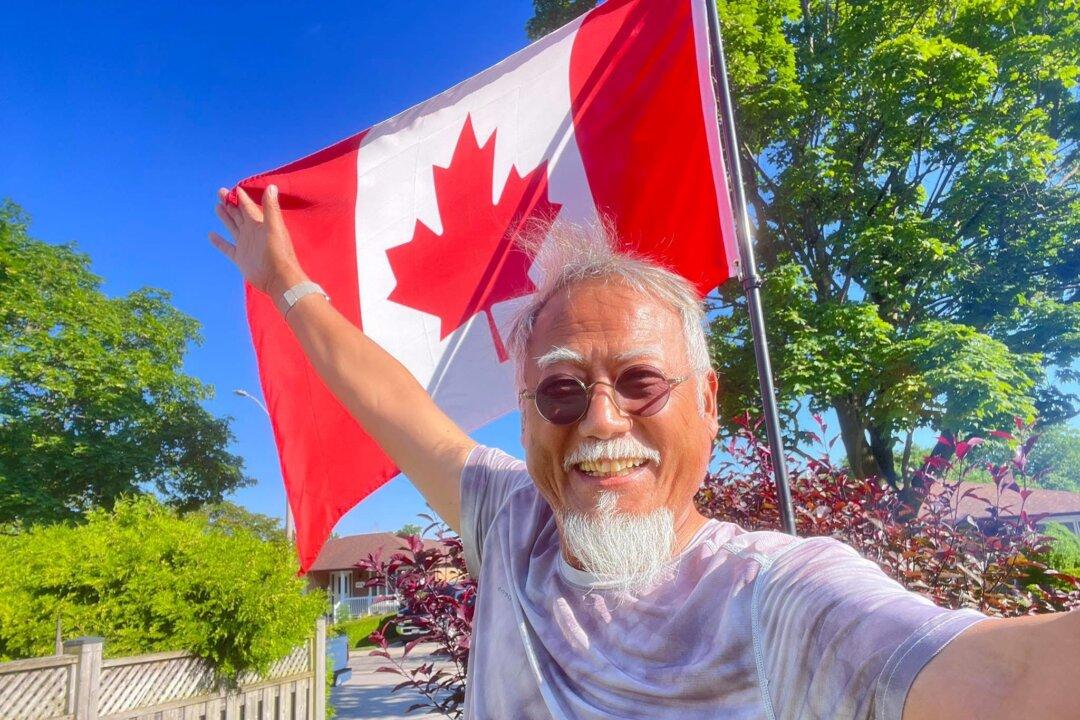
A Chinese commentator who exposed alleged land seizures by local officials in Inner Mongolia is seeking state compensation after suffering a severe stroke in detention that left him permanently paralyzed, alleging that authorities denied him medical treatment and later falsified records to avoid responsibility.
Yu Guofu, 63, a freelance writer from Henan Province, was detained in April 2019 in a controversial cross-provincial arrest after he published reports on behalf of more than 200 villagers.
Yu denies the allegations against him, telling the Chinese edition of The Epoch Times on April 29 that his reporting was based on genuine villagers’ complaints about long‑term land occupation and a lack of compensation.
His reporting accused senior officials in Tuquan County, Inner Mongolia—including then-County Communist Party Secretary Qu Zhenian, County Magistrate Geng Tianliang, and Land Resources Bureau Director Chen Dejiang—of occupying collective land in Mingxing village. A village representative who helped bring the allegations forward, Wang Guoxi, was also detained.
According to a criminal judgment issued by the Tuquan County People’s Court and obtained by The Epoch Times, Yu was convicted of “picking quarrels and provoking trouble” and “illegal business operations;” charges frequently used against petitioners, whistleblowers, and online commentators in China. He received a combined sentence of three years in prison and a 96,000‑yuan fine. Wang was sentenced to 18 months on the same “picking quarrels” charge.
Alleged Medical Neglect
Yu said that he remained fully mobile during two court hearings in late 2019 and early 2020. But around Jan. 20, 2020, while being held at the Tuquan County Public Security Bureau detention center, he collapsed and developed symptoms consistent with a stroke, including dizziness, limb numbness, and disorientation.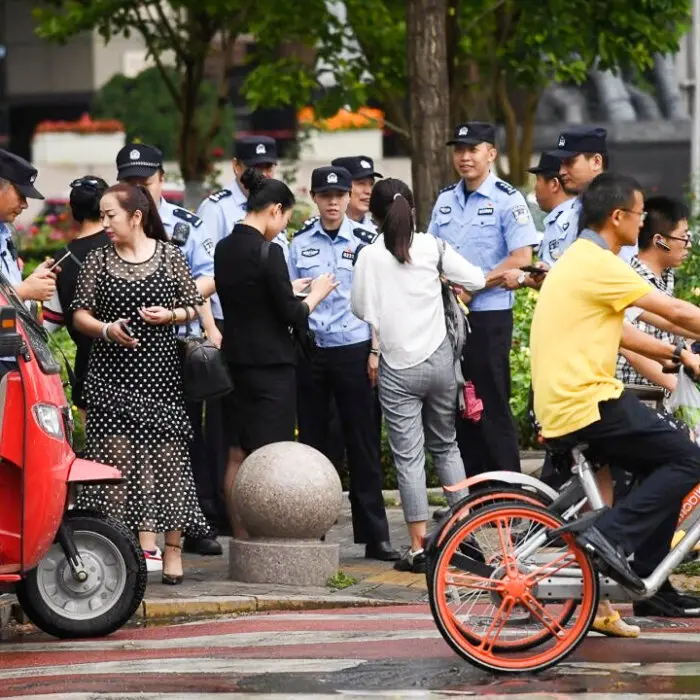

He said that his repeated requests for urgent medical care were ignored.
“Because of their indifference and delay, I missed the golden period for treatment and became completely paralyzed,” Yu said.
Disputed Records
Yu was released in 2022. After recovering enough to file a claim, he sought state compensation in 2024, arguing that the detention center’s failure to provide medical treatment directly caused his permanent disability.Yu disputes the courts’ findings that there was “insufficient evidence,” saying the detention center submitted fabricated records to suggest he had been seriously ill months before his stroke.
He said that officials claimed he required special care, a commode chair, and “sick meals” as early as May 2019. They later produced a medical report stating that a May 2020 intake examination showed no signs of a stroke—a report that Yu said was directly contradicted by subsequent CT scans at the prison hospital.
He has obtained a three-minute surveillance video from September 2019 showing him walking normally, which he said disproves the detention center’s claim that he was already ill at that time. Yu also said the court refused his requests for forensic analysis to determine the timing of his stroke and for handwriting examinations on disputed signatures.
The ‘Star Lake’ Dispute
The land‑seizure allegations centered on Mingxing village. Local officials and state media heavily promoted the area’s newly built “Star Lake Tourist Resort,” describing the village’s “gorgeous transformation” into a “4A-level”—or a top-tier—scenic destination that generated nearly 80 million yuan in revenue.High Court Petition
The dispute unfolded in a region long dominated by an influential political family. Inner Mongolia’s top leadership was held for three generations, culminating in the tenure of former regional chairwoman Bu Xiaolin, who was also named in Yu’s original 2016 petition. Entrenched political networks can make it extremely difficult for residents to challenge local decisions or seek redress.After his compensation claim was rejected at four levels of regional court review, Yu has now escalated his case by filing a supervision application with the Supreme People’s Procuratorate. He has also lodged a formal complaint accusing the Tuquan County detention center of rights violations.
“I will submit the surveillance footage, transfer records, and other key evidence to expose the falsified medical documents and the truth of what happened,” Yu said. “I appeal to the relevant departments to thoroughly investigate the detention center’s illegal acts ... and give me justice.”