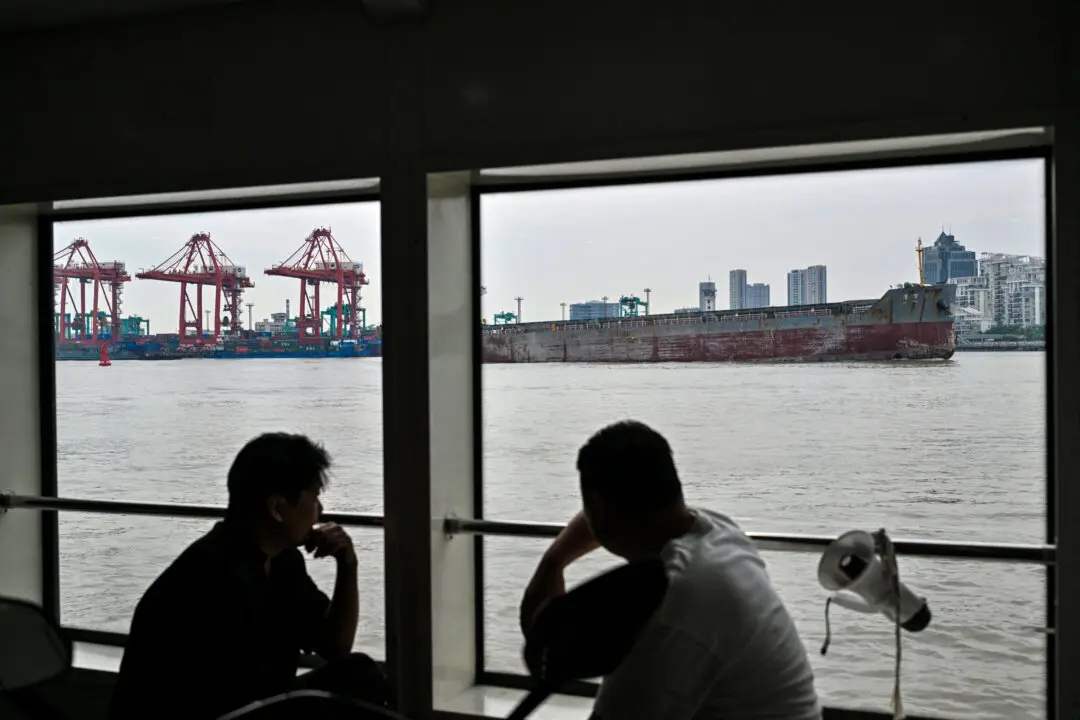
China’s economic momentum slowed across the board in July, as consumer spending, industrial output, and investment all posted weaker-than-expected performance, highlighting imbalances in the world’s second-largest economy.
Analysts surveyed by Reuters had expected a 4.8 percent rise.
Retail sales, a gauge of Chinese household consumption, grew 0.6 percent from a year ago in July, slowing from a 1 percent growth in June and missing expectations for a 1.5 percent rise.
Fixed-asset investment, which measures investment in buildings, equipment, and other assets outside China’s rural households, shrank 6.7 percent on year in the first seven months of the year, according to official figures.
It was worse than an expected 6 percent decline in a Reuters poll and widening from a 5.7 percent fall in January to June, official data showed.
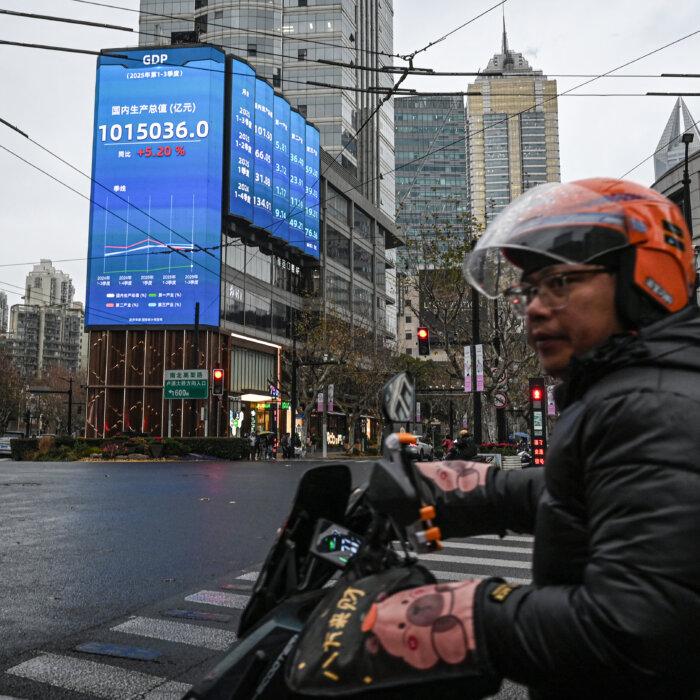
“We had another month of disappointing data in July as domestic activity fell short of forecasts across the board,” Lynn Song, chief economist for Greater China at ING, said in a Monday note.
“China’s K-shaped divergence continues to widen, and risks to the growth outlook remain balanced to the downside.”
Housing Crisis
China’s property sector, which economists estimate makes up more than half of household wealth, remains in a slump. New home prices in July fell 3.2 percent compared to the previous year.
Of the 70 large and medium-sized cities tracked by the statistics bureau, only 17 recorded month-on-month home price gains in July.
Investment in real estate plunged 19.2 percent in the first seven months, worse than an 18 percent decline over the January through June period.
The property downturn, now in its fifth year, has put additional pressure on broader economic growth and hindered efforts to get Chinese families to reopen their wallets.

Fu Linghui, chief economist at China’s National Bureau of Statistics, said at a press conference on Monday that extreme weather, such as high temperatures and torrential rain from typhoons last month, affected domestic demand and supply activities.
Imbalance
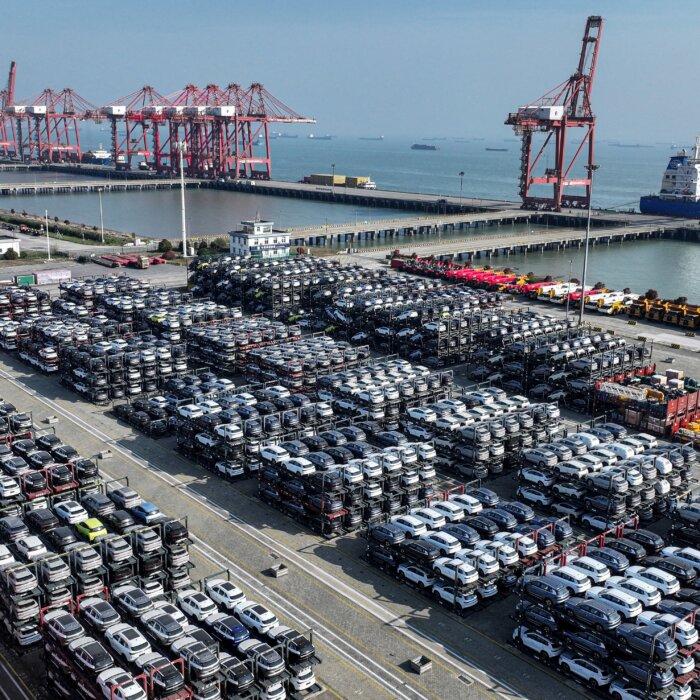
China’s economy is increasingly reliant on exports for growth amid sluggish demand at home.
In July, China posted another month of a trade surplus exceeding $100 billion, putting it on track to hit the $1 trillion mark for a second year in a row.
The widening gap between exports and imports has heightened concerns among China’s trading partners.
Roughly 30 percent of China’s trade surplus last month was generated by shipments to the European Union, according to customs data released earlier this month.
Germany saw China’s exports outpace imports by more than $4 billion—an 87 percent increase from the same period last year.
While Chinese leaders have pledged to bolster the slowing economy by accelerating fiscal spending and introducing new policies “in a timely manner,” they have so far stopped short of signaling major new stimulus.
At a state council meeting on Aug. 17, Chinese Premier Li Qiang reiterated a call for practical, effective policies to support the economy in achieving this year’s growth target.
“Currently, the problem of insufficient domestic demand remains pronounced, companies in certain industries are facing increasing operational difficulties, and uncertainties in the external environment are growing,” Li told the meeting in Beijing, according to state media Xinhua.
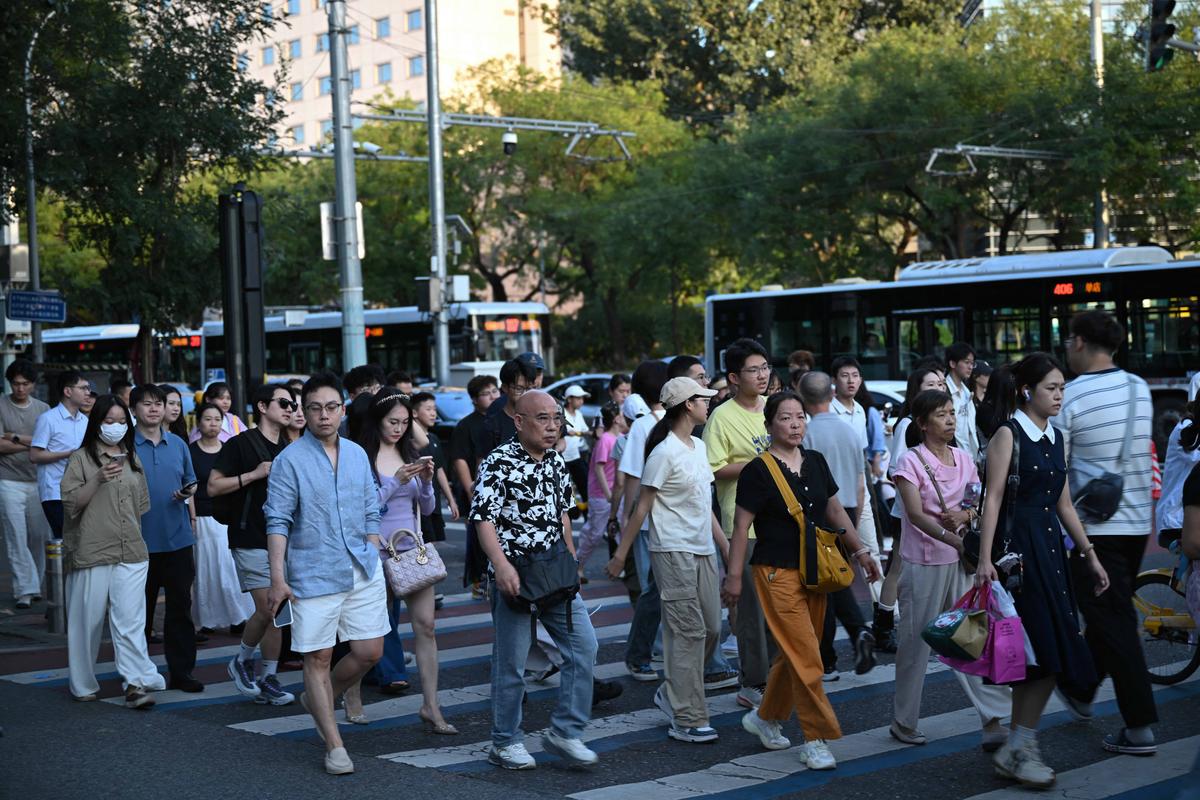
Residents and analysts have argued the situation on the ground is far grimmer than the official figures suggested.
Skepticism about the reliability of China’s economic statistics has persisted for a long time, largely due to the ruling Communist Party’s record of withholding information deemed harmful to its image.
Chen Yang, who runs a sanitary ware manufacturing company in Foshan—one of the country’s industrial hubs—recently shared how the prolonged property crisis and lackluster spending have reshaped the industry and impacted his own business.