A deadly gas explosion at a coal mine in northern China’s Shanxi Province has become part of a broader story of governance and safety after reports alleged hidden doors, off-book workers, false mine maps, missing worker-tracking cards, and earlier safety penalties at the site.
Chinese authorities have previously faced criticism over restrictions on reporting after mining accidents. Reporters Without Borders said in 2006 that journalists trying to cover a coal mine accident in Jilin Province were attacked while being denied access to the mine and hospital.
Worker Count Changed During Rescue
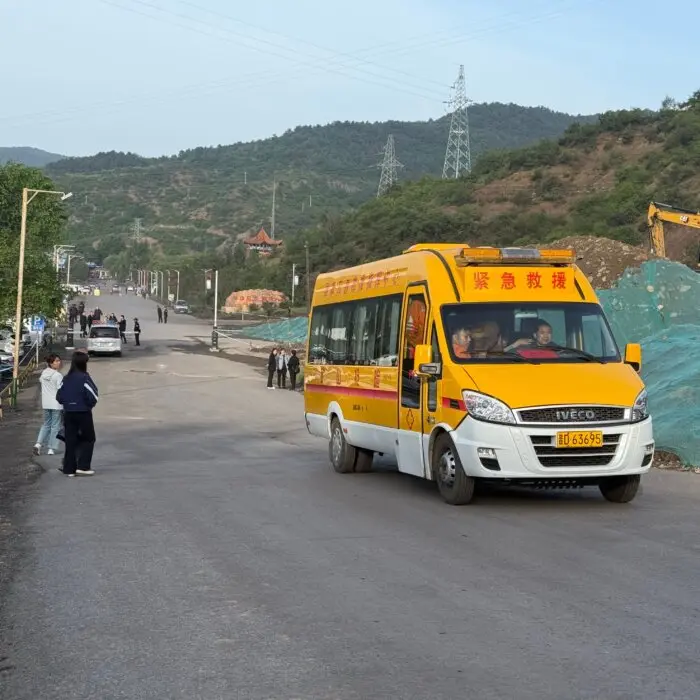
One of the earliest issues involved identifying the actual number of workers underground.Guo Xiaofang, deputy secretary of the Qinyuan County Party Committee and county head, said at a press conference the mine’s entry board showed 124 people underground on the day of the explosion. During rescue work early on May 23, authorities found that the list of workers who had come out of the mine did not match the company’s underground-worker information. After further checking, officials determined that 247 people had in fact entered the mine.
The count discrepancy was tied to missing location-tracking cards. Post-accident checks identified that 144 workers had carried underground positioning cards, while 103 had not. China’s mine-safety rules require coal mines to enforce identification-card entry procedures and bar workers from entering without cards, with mismatched cards, or with multiple cards.
Subcontracted Labor
The accident also exposed a labor structure that separated many miners from direct management by the mine.Miner Song Yueping told Xinhua that many workers at the mine did not sign labor contracts directly with the coal company but with outside teams. Those teams contracted with the mine under settlement models based on coal tonnage or tunneling footage.
Several said they belonged to outside construction teams and were not directly managed by the mine. One worker said the mine contracted with an outsourcing company and paid according to progress, while leaving management of personnel, wages, and safety to parties outside the mine’s direct control.
Off-Book Workers, False Maps
The blast later drew attention to alleged concealed mining areas and records that did not match the mine’s actual layout.Rescuers told Xinhua that maps supplied by the company did not match the underground conditions and that the mine had unmarked hidden tunnels. Later accounts said the company had two sets of mine drawings and two monitoring systems. Some areas using off-book workers were not shown in the official map, and preliminary findings said coal produced from the concealed area was neither counted in output nor taxed.
A mining construction expert told the news outlet that some mines use one set of drawings to handle inspections and filing requirements, and another to guide actual production. The rescuers also described hidden doors made with wire mesh, bags, and spray plaster that resembled tunnel rock, saying the setup could be closed and disguised during inspections.
A Mine Already Flagged for Risk
The Liushenyu mine had already appeared on the National Mine Safety Administration (NMSA)’s 2024 list of serious-disaster production coal mines, where it was identified as a high-gas mine.The NMSA issued an emergency gas-safety notice two days after the blast, saying the Liushenyu explosion had caused “particularly major casualties and property losses.” The notice said gas remains coal-mine safety’s “top killer” and warned that some companies continue to prioritize production and profit over safety, with gas-control measures repeatedly left unimplemented.
Regulatory Failure
The Chinese State Council Accident Investigation Team said preliminary findings pointed to major violations by the company, and that the company’s actual controller and other responsible people had been placed under control, according to Xinhua reports.The same accounts also said assigned safety supervisors did not effectively perform their role during the mine’s long-running unlawful production. They said the mine’s hidden work areas, unregistered output, untaxed production, and mismatched monitoring systems raised questions about how the operation continued despite prior penalties and regulatory attention.
A Wider Pattern
The types of practices described in the Shanxi blast have appeared in official mine-safety enforcement materials before.In 2020, the NMSA described a separate inspection in Guizhou. In that case, regulators found fake drawings, concealed mine conditions, weak training, and failures in gas-checking and safety responsibility systems.
The NMSA’s post-blast notice also warned of recurring problems in gas prevention, including weak red-line awareness, emphasis on production and profit over safety, serious complacency, and failure to implement prevention measures.