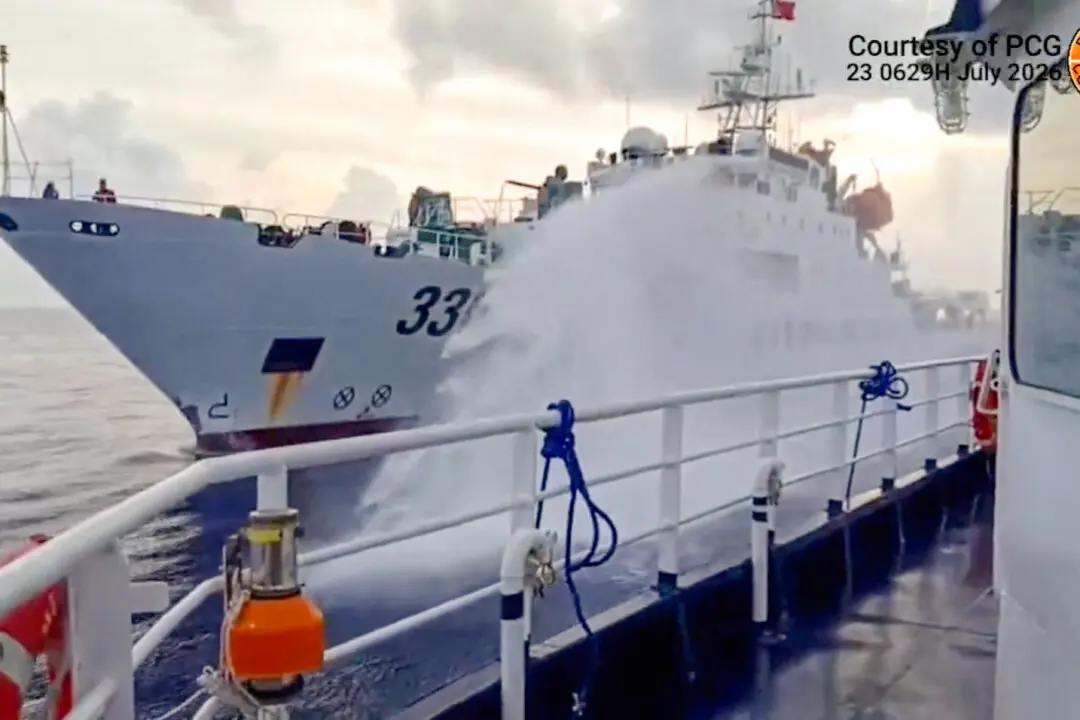
Chinese forces fired flares directly toward a Philippine plane undertaking a routine patrol on April 6 in the disputed South China Sea, according to the Philippine Coast Guard.
During the encounter, the Chinese forces also issued a radio transmission claiming they have “indisputable sovereignty” over the areas, he added.
Beijing did not immediately comment on the incident.

Manila denounced Beijing’s maneuvers as “a clear and deliberate act of bullying.”
“These reckless and aggressive actions by China represent yet another escalation in their campaign of intimidation and harassment,” Tarriela said.
“By targeting unarmed [Philippine Coast Guard] aircraft with flares, Beijing is not only violating established international aviation safety norms and the spirit of regional peace but is also directly endangering the lives of personnel on board.”
The encounter took place on the same day that the Filipino officials unveiled a newly established coast guard district on Thitu Island, another hotly disputed area in the Spratly Islands chain.
At a regular briefing earlier on April 9, in response to a question about recent criticism from Filipino officials regarding Chinese military activities in the region, Chinese defense ministry spokesperson Zhang Xiaoguang reiterated that Beijing is “unwavering” in defending its “sovereignty and maritime rights and interests” in the South China Sea.
He added that the regime will continue to take “resolute countermeasures” against any actions it deems to be “rights-violations and provocations.”
At a briefing on March 31, Philippine Navy spokesperson Rear Adm. Roy Vincent Trinidad said they had observed a surge in Chinese vessel presence in the South China Sea in recent weeks, coinciding with conflicts in the Middle East.
Trinidad described the buildup as a “deliberate” move by the CCP, saying Beijing aims to “take advantage of the focus of the international community in the Middle East.”
“They will take advantage of every opportunity to legalize their illegal presence and to normalize the situation,” he said.