China’s removal of more than 300,000 local enforcement personnel has raised questions over whether Beijing is correcting abusive grassroots enforcement or shifting responsibility onto low-level workers while deeper political issues and fiscal pressure remain in place.
Legal observers interviewed by the Chinese edition of The Epoch Times said many of those removed were not formal civil servants, but contract workers, labor-dispatch workers, auxiliary police, outsourced urban-management workers, and other personnel long used to carry out enforcement work at the local level.
Wu Shaoping, head of the Overseas Chinese Human Rights Lawyers Association, said Chinese authorities have long relied on people without formal staffing status or clear legal authority to perform visible enforcement tasks, while formal officials maintain distance from responsibility.
Chen Weimin, a mainland rights lawyer interviewed under a pseudonym out of safety concerns, described the pattern as one in which temporary or non-staff personnel carry out enforcement while formal staff avoid the burden.
The campaign, announced during a May 21 State Council Information Office press conference, was officially framed as a response to business-related enforcement abuses, including repeated inspections, arbitrary fines and fees, excessive penalties for minor violations, improper cross-regional enforcement actions, and seizures of company assets. The press conference also offered a rare glimpse into the widespread scale of these abusive practices in local enforcement.
Yang Ming, a Beijing scholar interviewed by the Chinese edition of The Epoch Times under a pseudonym, said the personnel cleanup should be read against the fiscal pressure facing local governments, whose spending is significantly exceeding their revenue. He said some local governments are already struggling to pay salaries, with some non-essential departments paying only partial wages or delaying payments by several months.Therefore, the removal of personnel was not a genuine institutional optimization but a passive response to this fiscal pressure, Yang said.
Low-Level Enforcers in the Crosshairs
Wu told the Chinese edition of The Epoch Times that the 300,000 officers dismissed were largely not formal civil servants but contract workers, labor-dispatch workers, coordinators, auxiliary police, outsourced urban-management workers, and other personnel in grassroots enforcement.He said the arrangement reflects a governance structure in which those at the bottom perform visible enforcement tasks while formal officials maintain distance from responsibility for the enforcement actions.
Chen described a similar pattern. He said grassroots governance often operates with temporary or non-staff personnel doing the “mixed, tiring, and dirty” work, while formal staff avoid the burden. Those workers, he said, are poorly paid and vulnerable when campaigns shift from enforcement to cleanup.
Temporary Workers as Scapegoats
The interviewees described a familiar pattern in Chinese public life: when local enforcement abuses trigger public anger, authorities separate the formal bureaucracy from the people who carried out the visible actions.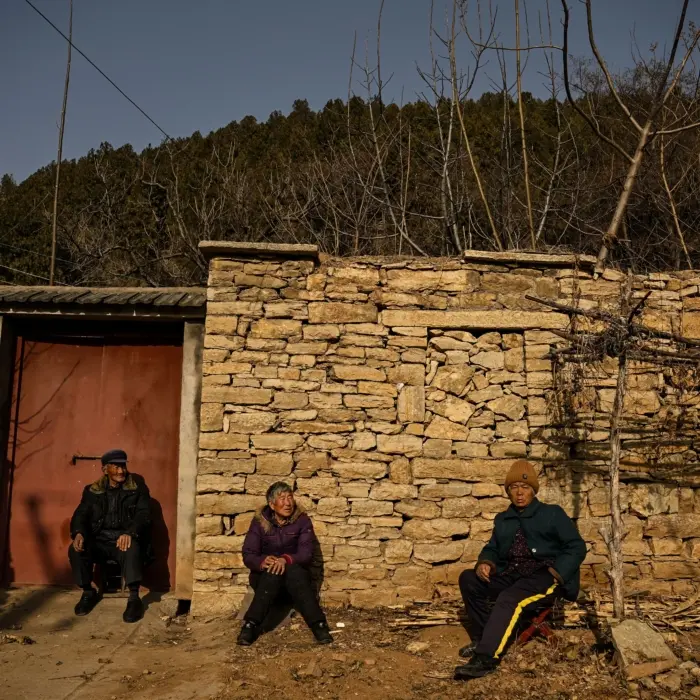
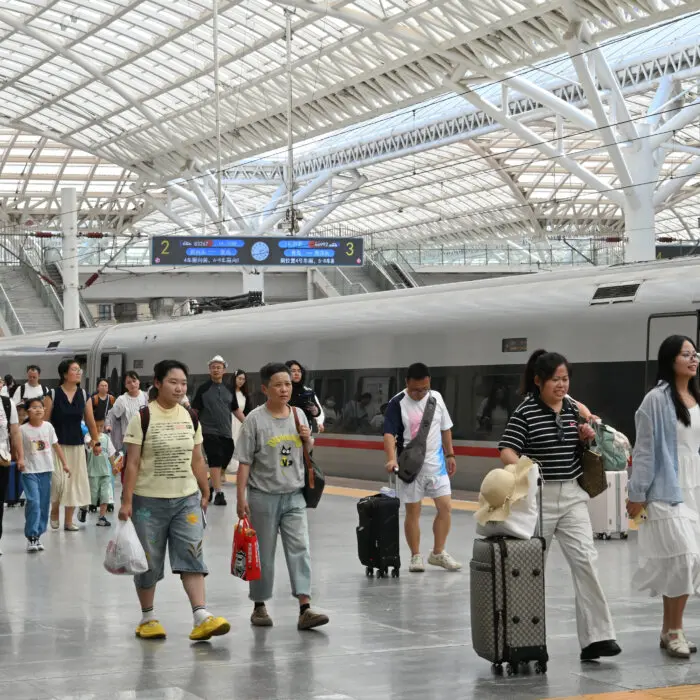
Chen said the people impacted by the campaign were at the bottom levels of the bureaucracy, while the political and fiscal incentives above them remain in place. Although some took part in local enforcement and stability-maintenance work, he said, their rapid abandonment reflects the way the system operates: when pressure rises, the burden falls first on those with the least protection.
What the Campaign Missed
The official campaign described the cleanup in terms of administrative bodies, enforcement qualifications, and business-related enforcement abuses. But it failed to address China’s extrajudicial political enforcement networks.Fiscal Stress and Profit-Driven Enforcement
Yang noted that the campaign comes against a backdrop of growing economic stress in China, which Beijing’s own budget documents outline as fiscal pressures such as ballooning debt, which has impacted local financing and grassroots spending guarantees.The Ministry of Finance reported in 2025 that the national general public budget revenue was 21.6 trillion yuan (about $3 trillion), down 1.7 percent from 2024. Local governments collected 12.2 trillion yuan (about $1.7 trillion) for their local budget revenues. However, local spending reached 24.4 trillion yuan (about $3.4 trillion)—almost double the revenue collected.
According to the same report, Beijing took action to strengthen its government debt management, defuse hidden debt, push reform for local government financing platforms, while promoting to the grassroots the “three guarantees”—a basic livelihood, wages, and government operations. The report also said party and government organs were under stricter “tight living” requirements, including a 5 percent cut to certain central department spending categories, such as meeting fees, training, travel, office expenses, and commissioned services.
The pressure has only continued into 2026. In the first quarter, local governments collected 3.66 trillion yuan (about $508 billion) in local budget revenue, while spending 6.56 trillion yuan (about $911 billion), according to Ministry of Finance data. Debt-interest spending rose 12.9 percent from a year earlier. Local government fund revenue fell 19.1 percent, while state-owned land-use-right transfer revenue fell 24.4 percent.
At an April 24 Ministry of Finance press conference, Qu Fuguo, an official with the ministry’s budget department, said localities issued 1.1599 trillion yuan (about $161 billion) in new special-purpose bonds in the first quarter of 2026, up 20.8 percent from a year earlier. He also said that 960.4 billion yuan (about $133 billion) in special-purpose bonds had been issued to repay hidden debt.