Beijing will implement new exit-entry regulations on Sept. 15 that significantly broaden authorities’ power to restrict overseas travel by Chinese citizens and impose stricter penalties on foreign nationals who submit false information, violate border rules, or are placed on China’s restricted lists when seeking entry.
Published by the State Council on Friday, the 19-article administrative regulations supplement China’s 2012 Exit and Entry Administration Law, which has been in force since July 2013. The new rules do not replace the existing law but expand travel restrictions, further tightening Beijing’s grip over Chinese citizens’ mobility.
Expanded Restrictions on Chinese Citizens
Under current law, authorities can already prevent certain individuals from leaving the country, including criminal suspects, defendants in ongoing legal cases, and those whose departure is deemed a threat to national security or capable of causing major national losses.
The new regulation goes further. One of the most significant changes allows the Ministry of Commerce, which is not responsible for border control, to ban Chinese citizens from leaving the country if they violate export-control or technology export regulations in ways that could endanger China’s industrial or technological security.


According to the new rules, authorities may also “dissuade” citizens from traveling simply by citing risks at the destination. The regulation does not define what such “dissuasion” entails or what measures can be taken if a person insists on leaving.
In addition, Chinese citizens who return after allegedly being involved in activities overseas that authorities deem “criminal activities” that “harm [China’s] national security or interests” may face a new exit ban of six months to three years at the discretion of provincial authorities where the citizen resides.
The ruling Chinese Communist Party regards overseas dissidents and their activities as threats to national security. For example, a Chinese student studying abroad who takes part in an overseas protest, a media content creator who interviews a politically sensitive figure, or a member of the Chinese diaspora who participates in an organization disliked by the Chinese regime could all potentially fall within the scope of the provision on “illegal activities committed overseas.”
Information about speech and activities abroad may be collected by Chinese diplomatic missions overseas, referred to local authorities in China for administrative or criminal action, and ultimately enforced through the country’s nationwide border control system. As a result, overseas Chinese dissidents may face significant security risks if they return to China.
A particularly notable provision allows authorities to withhold the existence of an exit ban—along with the reasons, legal basis, and available remedies relating to that ban—in cases involving national security or criminal investigations. As a result, some travelers may only discover they are barred from leaving when they arrive at the airport.
While these practices have existed for years, the new regulations make them explicit by writing them into law for the first time.

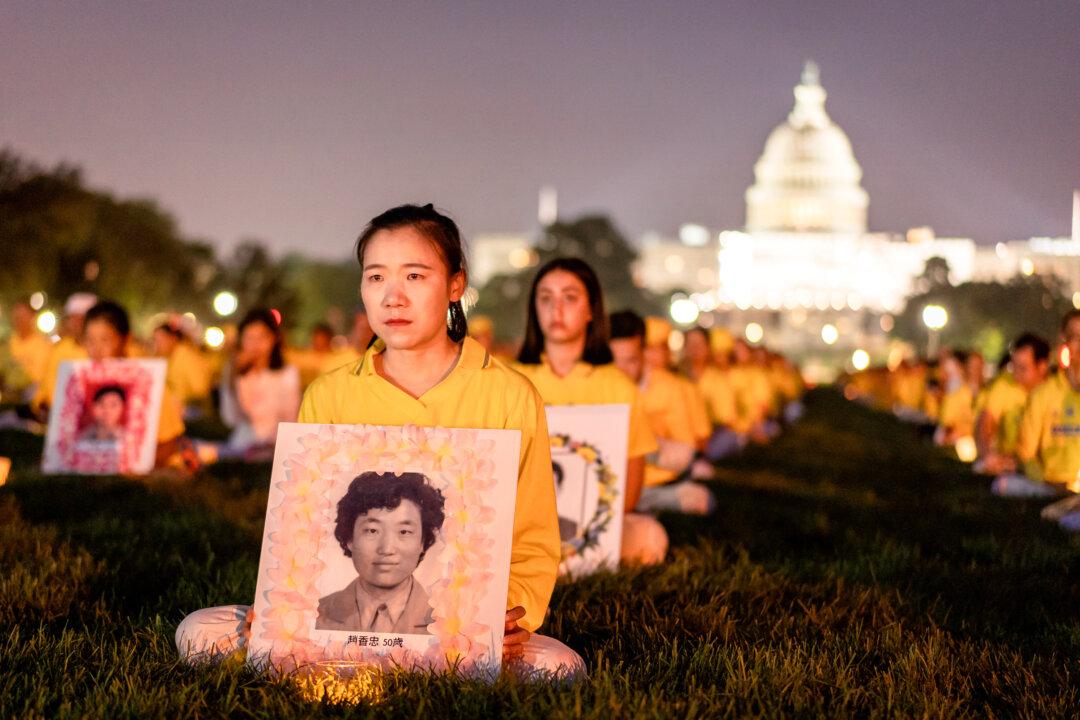
Falun Gong, also known as Falun Dafa, is a spiritual practice centered on the principles of truth, compassion, and tolerance. In 1999, the CCP, fearing that Falun Gong’s popularity threatened the regime’s power, launched a brutal campaign to eradicate the practice. Since then, many have suffered arbitrary detention, forced labor, torture, and death.
Wang had a valid Chinese passport and American visa when he was stopped by authorities. However, officers seized his passport and clipped off a corner of the document, invalidating it.
Under the new rules, immigration and visa authorities may also require travelers to present documents, materials, and electronic data when verifying identity or application purposes, though the regulation does not clearly define the scope of such information or protections of personal information.
Stricter Measures Against Foreign Nationals
According to the new regulations, foreigners who submit false documents or make false statements when applying for a Chinese visa or seeking entry at the border can be barred from entering China for one to five years.
Those who have been criminally punished for border-control violations, or administratively punished for obtaining exit-entry documents by fraud or for illegal entry or exit, may also face a one-year-to-five-year entry ban after completing their punishment.
Foreigners placed on China’s countermeasure lists, unreliable entity lists, or malicious entity lists can likewise be denied visas or entry by immigration and visa authorities.
Tighter Oversight of Travel Intermediaries
All agencies and individuals offering exit-entry intermediary services—such as policy advice, document applications, and procedure handling—must now register with local immigration authorities. Newly established agencies must file within 15 days of setup, while existing ones must register within 90 days of the rules taking effect.
Exit-entry intermediary agencies are also prohibited from helping public officials, military personnel, and certain other individuals obtain foreign citizenship, overseas permanent residency, or other immigration documents in violation of the rules. The agencies are required to report such clients to supervisory and other relevant authorities.
Foreign companies and organizations are prohibited from providing such services inside China.
Growing Concerns Over Restricted Mobility
The new regulations have sparked backlash and concerns on overseas social media platforms.
Independent China commentator David Tsai (also known as Cai Shenkun) wrote on X that the new rules signal that “China’s door to the outside world is slowly closing.”
Li Chengpeng, a prominent Chinese writer and social critic, wrote on X that Beijing is now attempting to keep both Chinese people and their money in China by restricting the outflow of funds and technology, “and now they’ve clamped down on the physical movement of people as well. Those who can’t get out basically can’t get out anymore—whether it’s money or people—trapped domestically,” Li wrote.