The doctrine was formally introduced on June 15 at a national CCP conference on Party-building in Beijing, where senior officials emphasized loyalty to Chinese leader Xi Jinping and called on Party members to study his writings.
New Ideological Campaign
According to Chinese state media outlet Xinhua, the conference was attended by Politburo Standing Committee member Cai Qi, one of Xi’s closest allies and the Party’s top official overseeing ideology and propaganda. Also present was Li Xi, head of the CCP’s anti-corruption agency.During the meeting, officials declared that “Xi Jinping Thought on Party Building” had officially taken shape, adding it to a growing list of ideological frameworks bearing Xi’s name.
Cai instructed Party organizations across the country to launch a new round of political study sessions, urging officials and Party members to “study the original works, learn the original texts, and understand the principles” of Xi’s teachings. He also called on cadres to support the “Two Upholds,” a political slogan referring to safeguarding Xi’s status as the Party’s core leader and defending the authority of the CCP Central Committee.
Analysts who spoke to The Epoch Times said the campaign reflects Beijing’s effort to reinforce ideological unity at a time of mounting economic and political pressures.

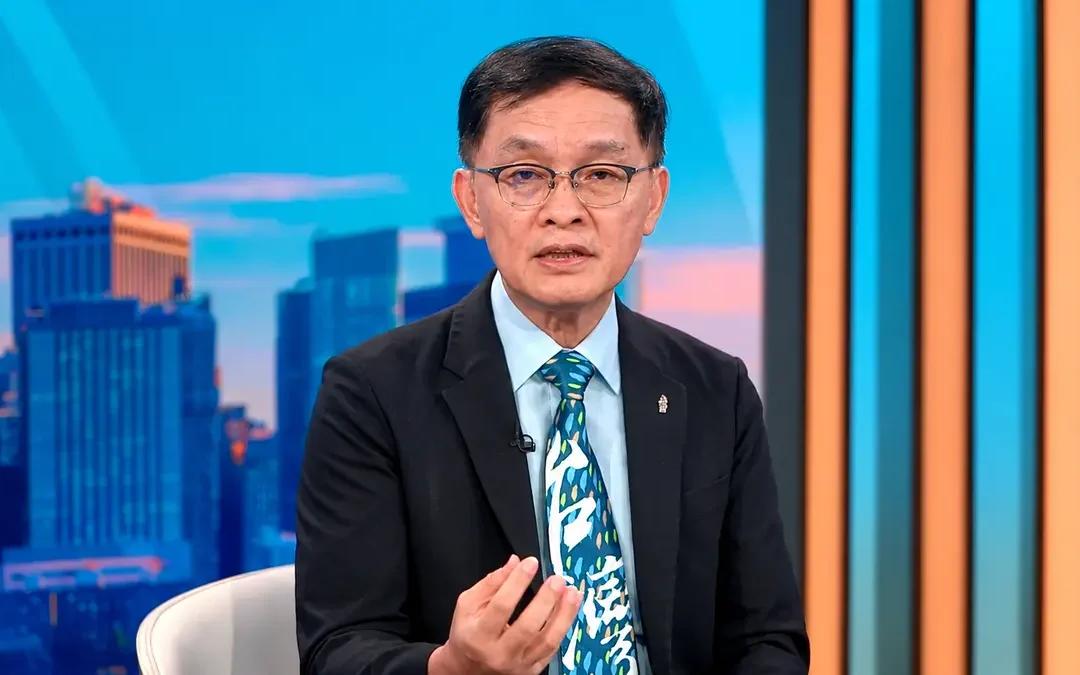
Chen Pokong, a U.S.-based China analyst and author, told the publication the newly unveiled doctrine largely repackages familiar CCP slogans emphasizing strict Party control and the principle that “the Party leads everything.”
Chen said that the initiative represents a symbolic break with the reform-and-opening-up era launched by former CCP leader Deng Xiaoping in the late 1970s.
“For decades, China’s reform period was, in essence, an attempt to move away from the Cultural Revolution and from Mao-era revolutionary politics,” he said. “Xi Jinping has reversed that direction and brought China back toward a system in which the Party dominates every aspect of society.”
This year marks the 60th anniversary of the launch of China’s Cultural Revolution, a decade-long political movement initiated by former CCP leader Mao Zedong that led to mass death and destruction.
According to Chen, the introduction of a formal “Party Building Thought” under Xi serves as an ideological declaration that the reform era has effectively come to an end.
“His theory ultimately returns to one central idea: The Party leads everything,” he said.
The CCP has increasingly incorporated Xi’s name into official ideological frameworks, elevating his status within the Party’s political canon. Xinhua described the latest doctrine as a “major original contribution” to Marxist party-building theory.
Chen argues that the growing body of “Xi Thought” serves more as a political branding exercise than a coherent theoretical system.
He said many of the concepts now associated with Xi were developed and packaged by Wang Huning, the CCP’s chief ideologue and a member of the Politburo Standing Committee.
“In all of the CCP leaders’ theoretical systems, Xi’s is arguably the vaguest,” Chen said. “It has become a container into which anything can be placed.”
He also questioned Beijing’s continued emphasis on Marxism, noting that many former communist states abandoned Marxist ideology decades ago, while China’s ruling elite has accumulated significant private wealth despite maintaining communist rhetoric.
State Media Highlight Xi’s Loyalty to the Party
State broadcaster China Central Television released a six-minute video titled “Communist Party Member Xi Jinping” on June 15. The video was prominently featured across major Chinese media platforms.The video emphasized that Xi’s “primary identity is a Communist Party member” and that his “first responsibility is to work for the Party.”
Chen said the messaging reflects Xi’s long-standing emphasis on the supremacy of the Party over all other institutions.
“The message is explicit,” he said. “Not working for the state, not working for the people, but only working for the Party.”
According to Chen, the campaign is designed both to reinforce Xi’s authority and to reassure Party officials that the existing political system will continue to protect their interests.
Chen said he believes that the initiative may be laying the groundwork for Xi to seek another term in power beyond 2027.
“The message is that whether officials want to study it or not, they will have to,” he said. “The content may be vague, but the political requirement is very clear.”
U.S.-based China current affairs commentator Li Linyi offered a similar assessment, arguing that the CCP continues to rely on ideological campaigns and political struggle to maintain control during periods of economic and social stress.
According to Li Linyi, the latest campaign could ultimately prove counterproductive. Although it is intended to strengthen loyalty to Xi, Li Linyi said it may deepen frustration among rank-and-file officials who privately resent the growing demands for ideological conformity.
“In this new movement, [officials] on the surface display loyalty to Xi while privately expressing dissatisfaction,” he said. “Everyone is doing this fake loyalty display. Eventually, the CCP at some stage would collapse by itself.”