The number of Americans filing for unemployment benefits fell to a two-month low, underscoring the lack of layoffs in today’s labor market.
For the week ending March 14, initial jobless claims fell by 8,000 to 205,000, according to Department of Labor data published on March 19.
This is down from the previous week’s reading of 213,000 and firmly below the consensus estimate of 215,000.
Claims had surged in the aftermath of January’s severe winter storm as businesses and employment agencies shut down. They have since stabilized and have returned to historically low levels, even in a labor market with anemic hiring momentum.
The four-week average, which strips out week-to-week volatility, was little changed, at 210,750.
Meanwhile, a claims program for federal workers ticked up by 26 from the previous week, to 643.
Economists have been using this as a proxy to determine the effects of the White House’s policies. In the first year of President Donald Trump’s second term, the federal workforce has declined by more than 10 percent: 348,000 workers were terminated, retired, or quit.
Despite a modest uptick, the number of individuals currently receiving unemployment benefits has been on a downward trajectory since November 2025.
Continuing jobless claims totaled 1.857 million, up from the previous week’s downwardly revised 1.847 million, the Labor Department said. This came in slightly above the market estimate of 1.85 million.
Job Creation ‘Near Zero’
The U.S. labor market’s health has been under the spotlight as the economy creates fewer jobs, and previous nonfarm payroll reports have been adjusted lower.Private employers added an average of 9,000 jobs per week in the four weeks ending Feb. 28, according to payroll processor ADP data released on March 17. This represented a sharp decline from the 14,750 jobs recorded in the previous period.
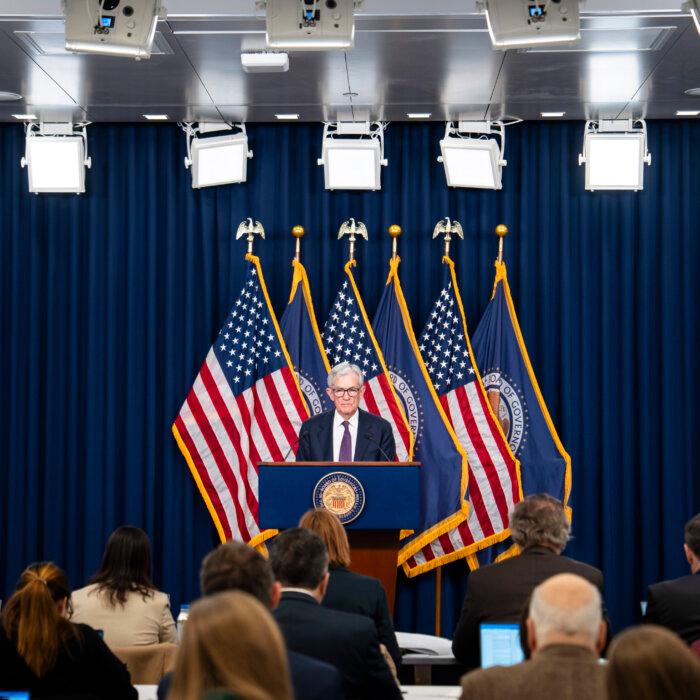
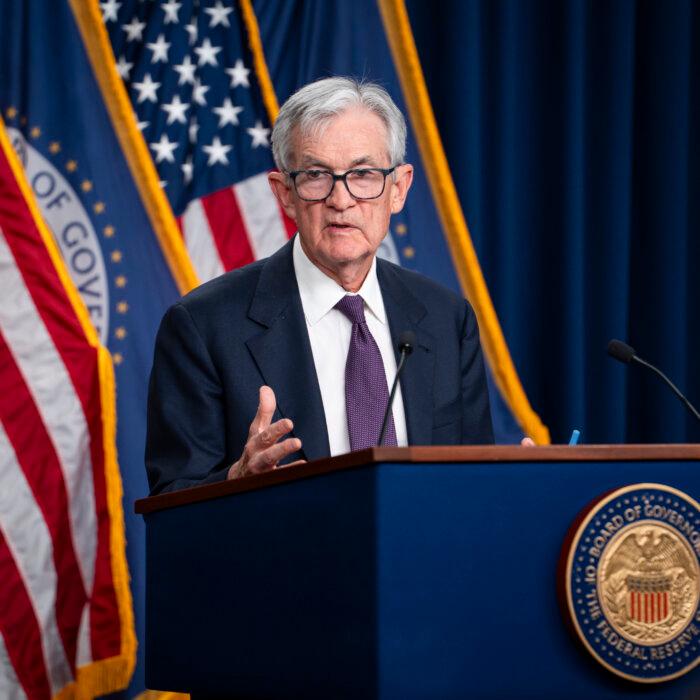
At the March 18 post-meeting press conference, Federal Reserve Chairman Jerome Powell told reporters that job creation has been “near zero.” He also said that there has been “zero net job creation in the private sector” after accounting for revisions.
“A good part of the slowing in the pace of job growth over the past year reflects a decline in the growth of the labor force, due to lower immigration and labor force participation, though labor demand has clearly softened as well,” Powell said.

The central bank chief said that current conditions indicate a “very, very low breakeven rate,” indicating that labor supply and demand have slowed simultaneously. Although this offers stability for the unemployment rate, it can also craft a “feel of downside risk” in the job market.
Estimates vary, but Dallas Fed economists project that the breakeven rate has fallen sharply to about 30,000. This means the economy needs to add only 30,000 new jobs per month to prevent the unemployment rate from climbing.
Monetary policymakers have predicted that the unemployment rate will remain at 4.4 percent this year and decelerate to 4.3 percent in 2027 and 4.2 percent in 2028, according to the Fed’s Summary of Economic Projections.
Notably, in its March 18 post-meeting statement, the rate-setting Federal Open Market Committee removed the phrase “signs of stabilization” from its description of the unemployment rate.
“The unemployment rate may no longer ’show some signs of stabilized' but at least it’s been little changed in recent months,” Jeffrey Roach, LPL Financial’s chief economist, said in a note emailed to The Epoch Times.
“I expect the weakening labor market will likely be more of a risk in coming months, giving the Fed room to cut rates later this year.”
Futures market data show traders pricing in the next rate action in September 2027, according to the CME FedWatch Tool. Additionally, there is a 10 percent chance of a rate increase at the April policy meeting.