The United States will stop collecting tariffs that the U.S. Supreme Court ruled were illegal because they were imposed under the International Emergency Economic Powers Act (IEEPA), Customs and Border Protection (CBP) said on Feb. 22.
Following the court ruling, the CBP said in an alert published on its Cargo Systems Messaging Service (CSMS) that duties imposed under the IEEPA will no longer be in effect starting 12 a.m. ET on Feb. 24.
However, the agency said that tariffs imposed under other statutory authorities will remain in place, including those under Section 232 of the Trade Expansion Act and Section 301 of the Trade Act.
The “CBP will provide additional guidance to the trade community through CSMS messages as appropriate,” it said.
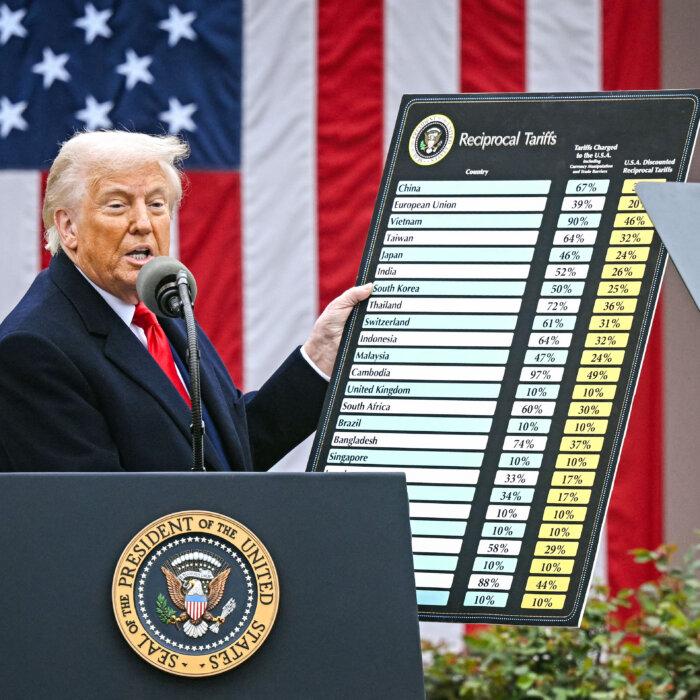
The IEEPA tariff measures include reciprocal tariffs on all countries; fentanyl tariffs on China, Mexico, and Canada; transshipment tariffs on Canada, Russian oil, and Venezuelan oil tariffs on India; free speech tariffs on Brazil; and trade deals with foreign countries.

The probe intends to counter “unjustifiable, unreasonable, discriminatory, and burdensome acts, policies, and practices,” Greer said. Further tariffs may be applied if unfair practices are found, he added.
The new trade investigations will cover various areas, including industrial excess capacity, forced labor, pharmaceutical pricing practices, discrimination against U.S. technology companies and digital goods and services, digital services taxes, and ocean pollution.
Greer said the probes will also look into trading partners’ practices related to seafood, rice, and other products, and he said that he plans to carry out the probes “on an accelerated timeframe.”
Treasury Secretary Scott Bessent has also cited Section 232 of the Trade Expansion Act as an option the Trump administration is considering for its tariff policies following the Supreme Court ruling.