Slowing factory orders and higher prices resulted in U.S. manufacturing activity contracting for the ninth consecutive month in November.
A reading below 50 suggests the sector is contracting.
But while last month’s number held above 42.3, a threshold long associated with overall economic expansion, Susan Spence, head of the organization’s Business Survey Committee, says most of the sector’s gross domestic product weakened.
“Looking at the manufacturing economy, 58% of the sector’s GDP [gross domestic product] contracted in November, matching the previous month’s figure, and the percentage of GDP in strong contraction decreased slightly, at 39% compared to 41% in October,” Spence said in the report.
“The share of sector GDP with a PMI® at or below 45 percent is a good metric to gauge overall manufacturing weakness.”
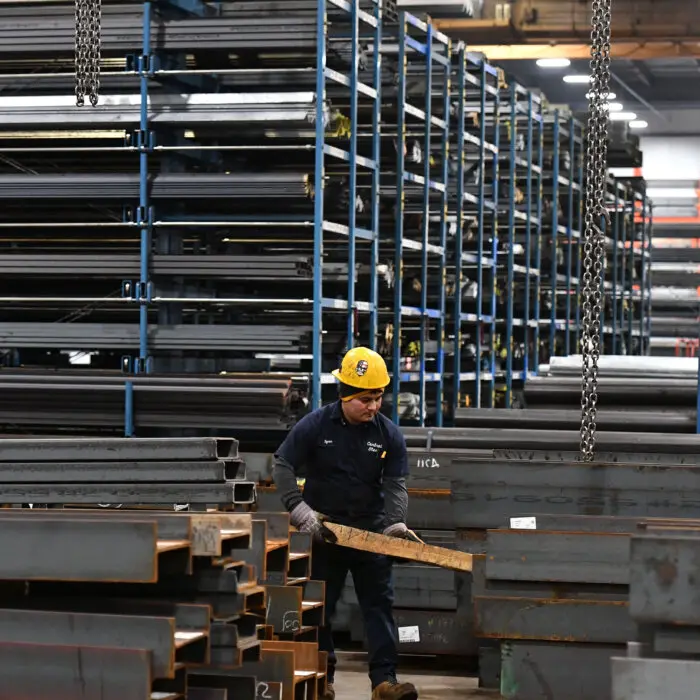
Manufacturing accounts for about 10 percent of the nation’s overall GDP.
The forward-looking new orders subindex slipped halfway through the fourth quarter. Pullbacks were also observed in employment and supplier deliveries. Signaling potential adverse effects from U.S. tariffs, price pressures ticked up, leading to higher input costs. This could have curbed demand, easing supply chain issues—the supplier deliveries index slipped into contraction, suggesting faster deliveries.
Conversely, production rebounded while inventories dipped less.
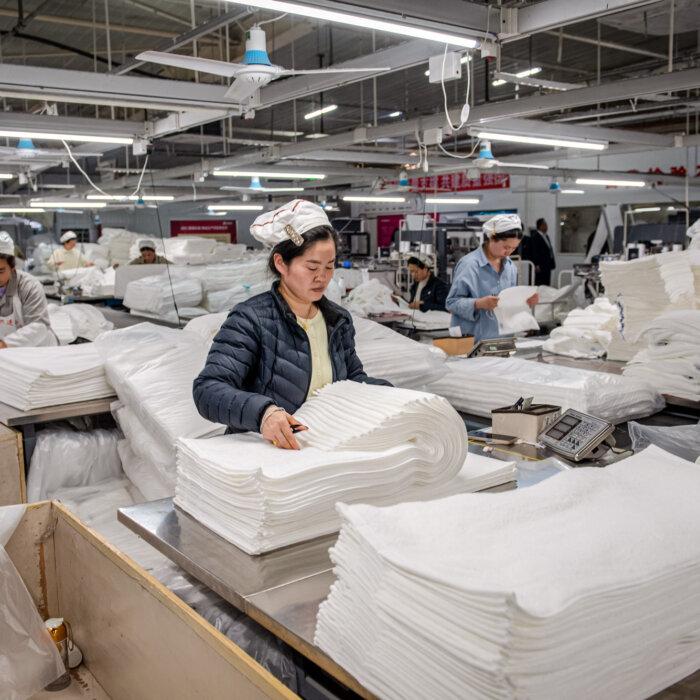
Eleven of the 15 manufacturing industries reported a contraction in November, led by apparel and wood. The rest of the industries posted growth, including computer and electronic products, food, beverage, tobacco products, and machinery.
Manufacturing executives continually pointed to tariffs and wider trade challenges in their written responses, with many warning of uncertainty and higher prices.
“We are starting to institute more permanent changes due to the tariff environment. This includes reduction of staff, new guidance to shareholders, and development of additional offshore manufacturing that would have otherwise been for U.S. export,” one transportation manufacturing executive said in the survey.
Assessing the Economy
While the Institute for Supply Management presented a bleak assessment of the domestic manufacturing environment, the alternative purchasing managers’ index (PMI) from S&P Global offered a more optimistic outlook for the U.S. industry.“Although the headline PMI signalled a further expansion of factory activity in November, the health of the US manufacturing sector gets more worrying the more you scratch under the surface. The main impetus came from a strong rise in factory production, but growth in new order inflows slowed sharply, hinting at a marked weakening of demand growth.”

Still, trade remained a challenge for businesses, particularly manufacturers, based on the Federal Reserve’s summary of economic conditions across the central bank’s 12 districts.
Before the acceleration of globalization in the 1990s and early 2000s, manufacturing had represented a large share of the national economy. Since then, the sector has contributed less to growth. The current administration has aimed to reverse this trend.
One of the chief objectives behind President Donald Trump’s global tariffs is to reshore manufacturing and ensure that key supply-chain components are in the United States.
Since returning to the White House for a second term, the president has attracted trillions of dollars in domestic and foreign investment. Scores of corporations have committed to building new factories or expanding existing ones, investing in skills training facilities, and hiring U.S. workers.
A lot of this investment in manufacturing has been focused on artificial intelligence and other high-tech fields. But other industries, from pharmaceuticals to automobiles, have pledged to maintain a greater presence in the United States.
Looking ahead, manufacturers’ confidence has improved, supported by the end of the government shutdown and heightened fiscal and monetary policy support, according to Williamson.