Easing gasoline costs bolstered U.S. consumer sentiment in July, but improving confidence may not persist as pump prices target $4 again.
The University of Michigan’s widely watched Consumer Sentiment Index surged 10 percent this month to 54.4, from 49.5 in June.
July’s preliminary reading marked the second straight monthly boost and represented the highest level since February. This also came in above the market estimate of 51.
The indexes for current economic conditions and consumer expectations also climbed 15 percent and 6.5 percent, respectively.
But overall sentiment remains down by almost 12 percent from a year ago as renewed price pressures weigh on Americans’ wallets.
Since the Iranian conflict began in late February, gasoline prices have been highly volatile.

After surging above $4.50 per gallon, the national average sharply fell below $3.80 earlier this month.
However, now that the ceasefire between the United States and Iran has collapsed, motorists are beginning to feel the pain at the pump again, something that could impact sentiment later this month, an analyst said.
“With prices remaining frustratingly high, consumers are hardly ebullient about the economy,” Joanne Hsu, director of consumer surveys at the University of Michigan, said in a news release.
“Sentiment’s upward momentum may prove difficult to sustain if recent declines in gas prices continue to reverse course.”
About 70 percent of survey responses were collected before the resumption of U.S. strikes against Iran and the reversal in prices, she noted.
With global crude oil prices firmly above $80 per barrel, gasoline stations are also raising their prices.
As of July 17, the national average price per gallon is $3.98, according to the American Automobile Association.
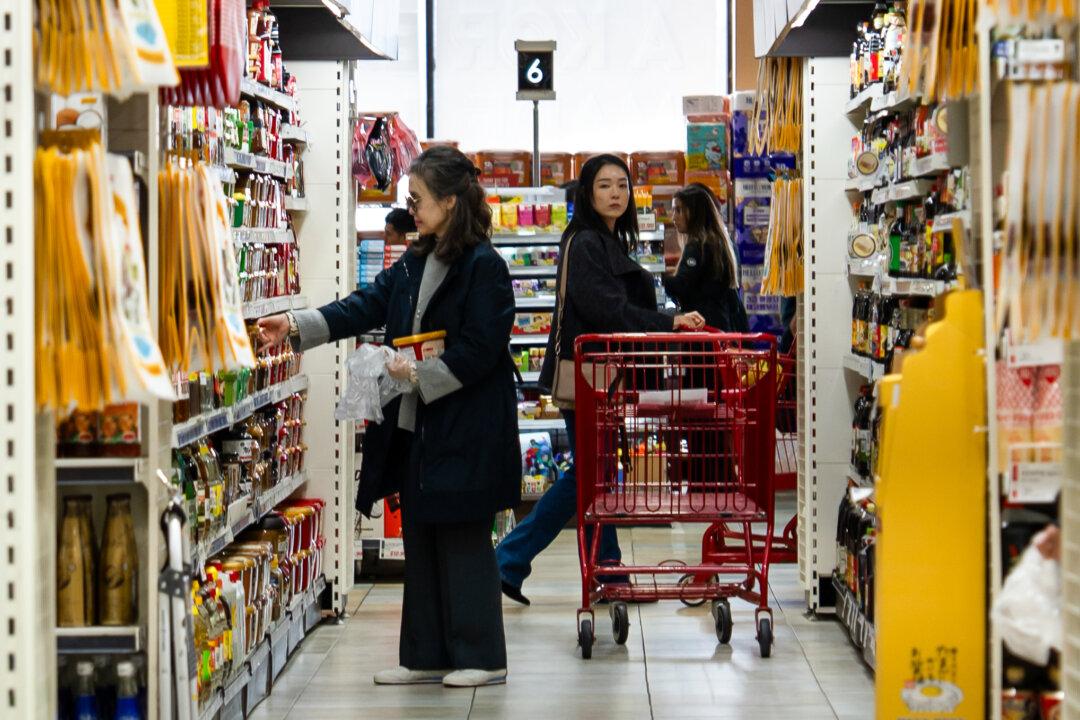
Shoppers continue to open their wallets amid fresh headwinds in the U.S. economy.
New retail sales figures show that gas station receipts fell more than 5 percent last month.
“That was no doubt an encouraging sign that American consumers continue to weather the impact of the Iran War. And when we take into account that inflation was negative in June, real retail sales should be even more impressive,” Tuan Nguyen, economist at RSM US, said in a July 16 note.
The expectation is that as long as the U.S. labor market remains healthy, Americans will continue to head to malls or log in to digital retailers.
Inflation Outlook
Consumers have adjusted their inflation expectations over the next year.
The one-year outlook eased to 4.2 percent, from 4.6 percent in June. The five-year forecast was unchanged at 3.3 percent.
A fresh tranche of data for June showed relief for consumers.
While the relief might be short-lived as rising energy prices could renew inflationary pressures, early indicators suggest that the cooling inflation trend could continue for at least another month.
The Cleveland Fed’s Inflation Nowcasting Model indicates that the 12-month consumer inflation could slow to 3.3 percent.
Core inflation, which strips out the volatile energy and food categories, could also ease to 2.5 percent from June’s 2.6 percent reading.
James Knightley, chief international economist at ING, says inflation might slow further heading into 2027, which would likely keep the Federal Reserve’s key policy rate unchanged.
“We recognise that the Fed has missed its inflation target for the past five years, and Kevin Warsh wants to put an end to this trend,” Knightley said in a July 14 research note.
“Nonetheless, consumer inflation expectations are within tolerable ranges, suggesting little risk of second-round price effects from the energy spike.”
The 5- and 10-year breakeven inflation rates, market‑implied expectations of average U.S. inflation over the next five and 10 years, are around the Fed’s 2 percent target rate.
Still, investors believe the Fed will pull the trigger on a quarter-point rate hike later this year.