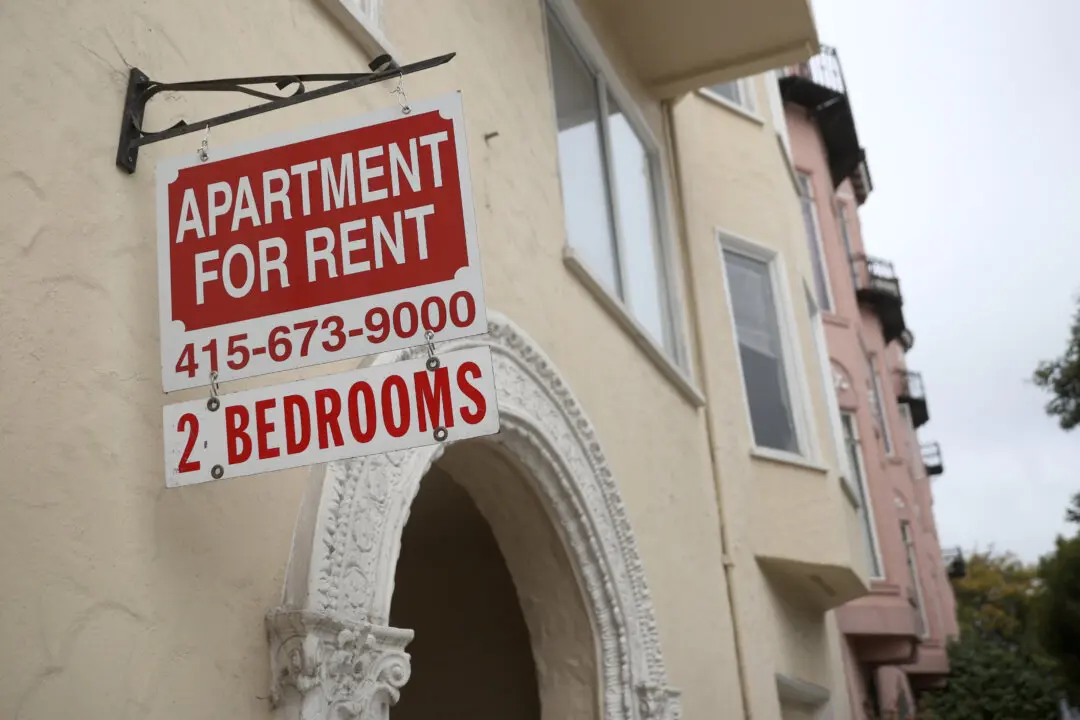
Americans appear to be staying put in their homes or apartments, as new data showed that household mobility dropped to a record low at the end of 2024.
The Feb. 9 report by the Harvard University Joint Center for Housing Studies shows just over one in 10 households moved in 2024, with homeowners driving the decline due to continuing home price increases and elevated mortgage interest rates.
The report indicates mobility in the rental market remained flat, with moves into new apartments being offset by higher lease renewal rates. Overall, it said the past two years reflect a “new normal” of a less mobile nation.
Citing recently released data from the Census Bureau’s American Community Survey, the report shows 14.8 million households moved during 2024, which represents a mobility rate of 11.2 percent—the lowest on record for this survey.
The most common moves were within state, but fell to a record low of 8.6 percent, and there were also fewer households moving across states. Meanwhile, household moves from abroad saw a slight uptick during that period.
“The decline in household mobility was driven by 320,000 fewer homeowners moving as they were disincentivized by high interest rates and home prices,” the report stated.

The report also notes that the median single-family home price was nearly five times higher than the national median household income of $83,730 at the end of 2024, as noted by the Census Bureau. The National Association of Realtors (NAR) reported the median home price at $404,400 in December 2024.
In its February report, NAR noted the national median single-family existing home price grew 1.2 percent year over year to $414,900 at the end of January. Home prices also rose in 73 percent of America’s metropolitan markets during the fourth quarter of 2025.
Harvard’s study found that in 2024, the average mortgage interest rate was fluctuating around 6.7 percent. As of Feb. 5, the average mortgage interest rate for a 30-year fixed-rate loan stood at about 6.11 percent, according to Freddie Mac.
Analyzing rental mobility, the study found an estimated 180,000 more renter households moved in 2024. However, the mobility rate was still statistically lower than in 2023. It added that rental supply was strong in 2024, with 608,000 multi-family units completed.
According to the report, mobility for both homeowners and renters remained stagnant last year. While slowly declining interest rates kept many potential home sellers at bay, renters continued to renew their leases.
“The reality today is that many households appear to be ‘locked in’ to their homes,” the report concluded. It also stated that the lack of movement could limit the flexibility of labor markets and affect regional economies.
United Van Lines, one of the country’s largest moving firms, reported similar findings to the Harvard study in its 48th Annual National Movers Study. It revealed that in 2024, more Americans chose to stay where they are rather than uproot themselves or their families.
The report attributed the lack of mobility to housing affordability and deciding to stay closer to families, among other factors.