President Donald Trump’s new global tariffs took effect at 10 percent at midnight on Feb. 24 despite his weekend social media post stating he would raise them to 15 percent.
The Supreme Court ruled last week that the International Emergency Economic Powers Act—also known as IEEPA—did not grant him the power to impose tariffs on U.S. trading partners.
This decision overturned a large swath of import duties, particularly the reciprocal tariffs spotlighted in April 2025.
Trump said in a weekend social media post that he would raise the global tariffs to 15 percent from 10 percent.
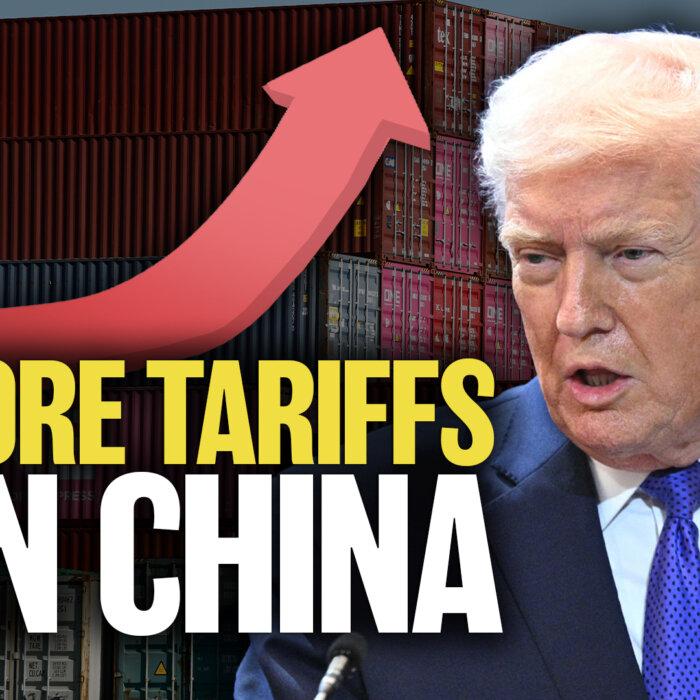
“During the next short number of months, the Trump Administration will determine and issue the new and legally permissible Tariffs, which will continue our extraordinarily successful process of Making America Great Again.”
Trump has not yet issued a new directive to increase the global tariff to 15 percent after the social media post.
There are key exemptions to the global tariff, including USMCA-compliant goods, pharmaceuticals, critical minerals, and food imports. USMCA stands for United States-Mexico-Canada Agreement.
Other elements of the tariff regime remain in place. These include 50 percent on aluminum, copper products, and steel; 25 percent on automobiles and furniture; and 10 percent on lumber.
U.S. Customs and Border Protection confirmed in a bulletin that tariffs implemented under IEEPA would no longer be collected after midnight on Feb. 24.
Adding to the uncertainty, the president warned on Feb. 23 that countries that choose to renege on trade agreements with the United States would face higher levies.
“Buyer beware!”
An increasing number of countries have confirmed they plan to assess the Supreme Court’s ruling.
White House officials stated that other countries have not backed away from their commitments. Instead, according to Trade Representative Jamieson Greer, foreign governments have reached out to the administration seeking clarity about the Supreme Court’s decision.
Tariff Refund Confusion
Companies are still seeking confirmation of the state of their requests for tariff refunds.The Penn Wharton Budget Model estimated that tariff refunds could total $175 billion.
Market watchers warn this could ignite short-term financing pressures for Washington.
“Even if processed gradually, this creates a new near-term financing need for the federal government,” Jeff Buchbinder, chief equity strategist, said in a note emailed to The Epoch Times. “Any meaningful issuance to bridge refund-related outflows would likely concentrate in the front end of the curve, steepening it modestly.”
Administration officials suggested that refunds would be delayed by litigation until the courts provide the federal government guidance.
“We need the court to tell us what to do. They’ve created a situation where they struck down the tariffs and gave zero guidance on this,” Greer said during a Feb. 22 appearance on ABC’s “This Week.”
“The Court of International Trade, which is a district-level U.S. court, my expectation is that they’ll have to step in and give some direction on how they want that to be done, if at all, whether plaintiffs had to have made the claim or not. We just need to have guidance from the court.”
“Plaintiffs seek for themselves a full refund from Defendants of all IEEPA duties Plaintiffs have paid to the United States,” the company said in an 11-page complaint.
FedEx joins a growing chorus of corporations racing to recover the billions in tariff payments.