This copy is for your personal, non-commercial use only. Distribution and use of this material are governed by our Subscriber Agreement and by copyright law. For non-personal use or to order multiple copies, please contact The Epoch Times Reprints.
President Donald Trump (R) shakes hands with Indian Prime Minister Narendra Modi during a meeting in the Oval Office on Feb. 13, 2025. Jim Watson/AFP via Getty Images
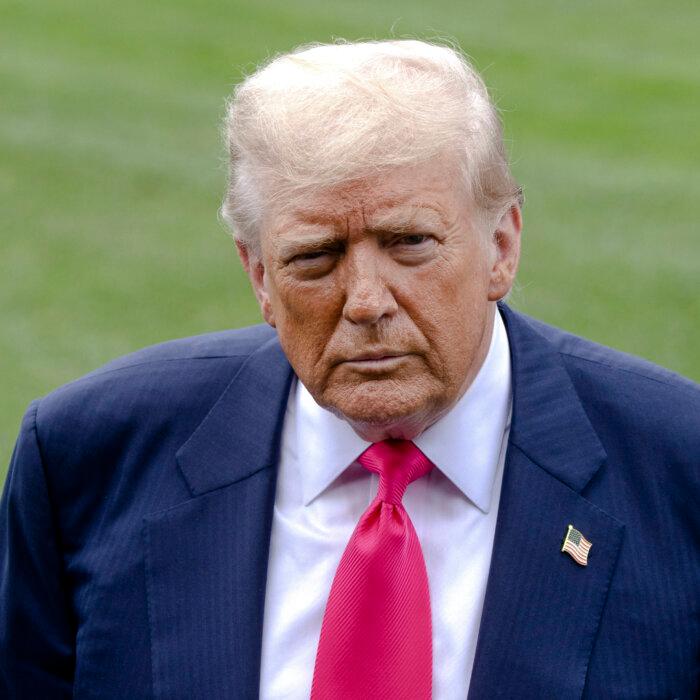
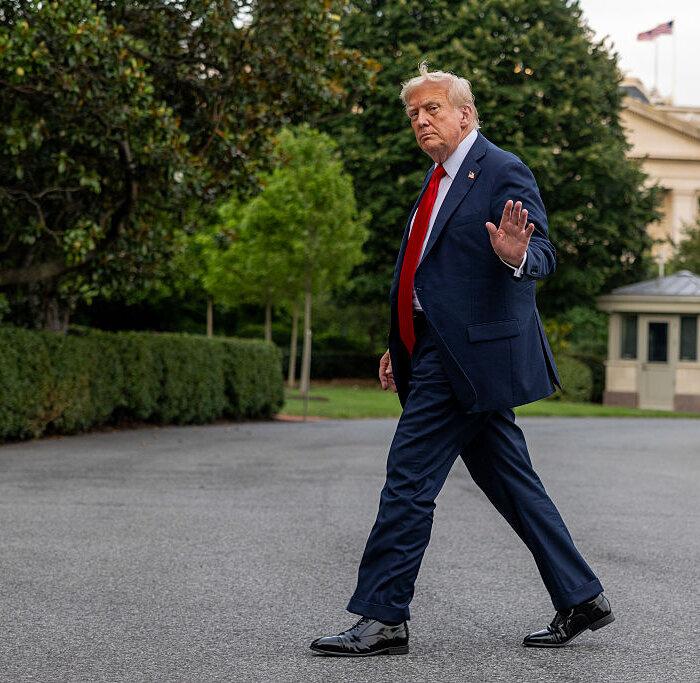
President Donald Trump said on July that the United States is “very close” to reaching a trade agreement with India and that a deal with the European Union is also possible.
Trump told Real America’s Voice (RAV) about the trade deals on the horizon but said that it was “too soon” to comment on the progress of agreeing on a trade deal with Canada.
The Trump administration has been in negotiations with several countries on trade deals ahead of the Aug. 1 deadline, when duties on imports to the United States are set to rise.
Under the current plan, India will face reciprocal tariffs of 27 percent if no deal is reached before next month.
According to the Office of the U.S. Trade Representative, the United States’ total goods trade with India was an estimated $129.2 billion in 2024. The trade deficit with India was $45.7 billion in 2024, a 5.4 percent increase ($2.4 billion) from 2023.
India’s minister of commerce and industry, Piyush Goyal, told reporters on July 14, “[U.S.–India trade negotiations] are going on at a very fast pace and in the spirit of mutual cooperation so that we can come out with a win-win, trade-complementing agreement with the United States.”
Possible EU Deal
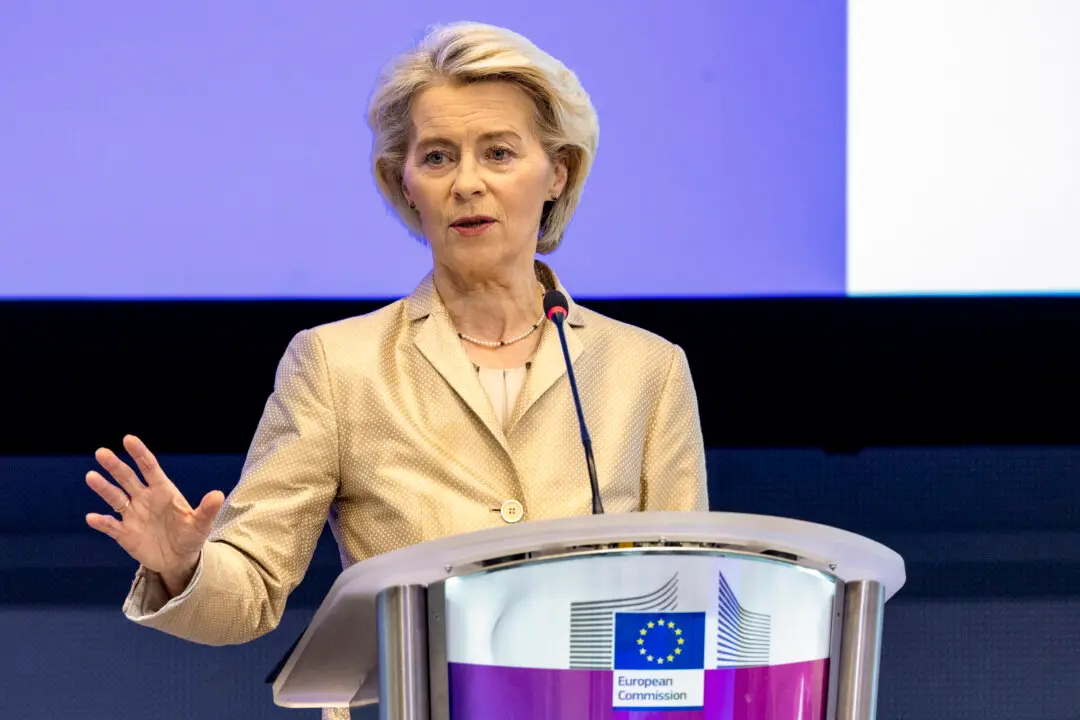
The EU is also facing an Aug. 1 deadline to agree on a deal with the United States.
U.S. goods trade with the EU totaled an estimated $975.9 billion in 2024, according to the Office of the U.S. Trade Representative. The trade deficit with the bloc was $235.6 billion in 2024, a 12.9 percent increase ($26.9 billion) from 2023.
EU goods could face a 30 percent import tariff if a deal is not made by August.
Trump told RAV co-host John Solomon that the EU “has been brutal, and now they’re being very nice.”
“They want to make a deal, and it'll be a lot different than the deal that we’ve had for years,” he said. “We could make a deal, possibly, with Europe.”
Germany, Italy, and Ireland are among the member states most likely to be affected if Brussels and Washington fail to reach a trade deal, as they have some of the largest trade surpluses with the United States.
Negotiations continue, with EU Trade Commissioner Maros Sefcovic having headed to Washington on July 16 to meet with U.S. officials.
Earlier this week, Sefcovic described the 30 percent tariff as “absolutely unacceptable” and “absolutely prohibitive to any trade.”
He added that although the EU would prefer to reach a deal with the United States, if negotiations fail, the bloc could implement its own levies.
‘Too Soon’ to Say on Canada
Trump also told RAV that it was “too soon to say” regarding the progress of negotiating a deal with Canada.
He said that Canada has “abused” the United States “very badly,” highlighting high tariffs on American dairy farmers.
The U.S. president has imposed several tariffs on Canada, including a 50 percent tax on steel and aluminum and a 25 percent tax on cars and auto parts.
Additional tariffs could also affect Canada following Trump’s promise to implement tariffs of up to 200 percent on pharmaceuticals and 50 percent on copper imports from foreign countries.
On July 15, Canadian Prime Minister Mark Carney suggested that a trade deal with the United States may ultimately still include tariffs on Canada. He said there “is not a lot of evidence right now” that any trading partner can achieve an agreement with Washington that does not involve some tariffs.
So far, Trump has announced trade agreements with China, the UK, Vietnam, and, most recently, Indonesia.
Under the latest deal, goods imported from Indonesia will be subject to a 19 percent tariff, and U.S. goods will have full access to the Indonesian market without tariffs.
Victoria Friedman is a UK-based journalist covering a wide range of international stories, with a particular interest in technology, eastern Europe, and defense.