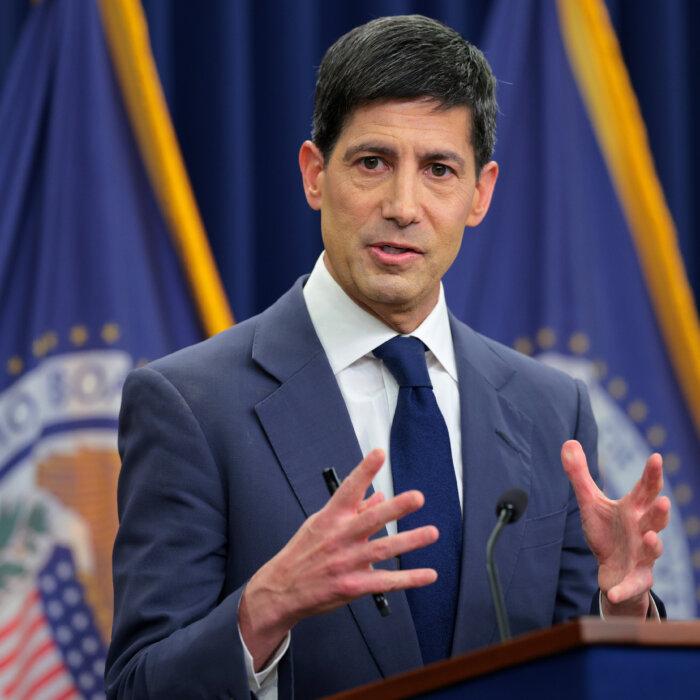
Federal Reserve Chairman Kevin Warsh reaffirmed a commitment to implementing his policy reform agenda, and his global central bank colleagues agreed with this approach.
Warsh made his debut on the world stage on July 1, appearing on a panel hosted by the European Central Bank in Sintra, Portugal.
Aside from his initial post-meeting news conference last month, this represented the first time Warsh has spoken publicly.
Following the latest tranche of inflation data, the new Fed chairman stated that he and his colleagues believe “prices are too high.”
“We’re all in the price stability business; that might not be our only business, but if there was a common thing I heard over the last couple of days, it was open-mindedness on these questions of AI, open-mindedness on productivity, but we’ve all looked around, and we’ve seen that prices are too high,” the U.S. central bank chief said.
A barrage of economic indicators reveals that the annual inflation rate is at its highest level in three years, driven primarily by the spike in global energy prices.
But these could be lagging indicators, as the sharp drop in oil and gas prices has led to lower forecasts for the June inflation numbers.
Structural inflation could also be tamer.
Warsh’s preferred measurement—Trimmed Mean Personal Consumption Expenditures (PCE) inflation—is much closer to the Fed’s 2 percent target than the other leading metrics.
Combating near-term inflation pressures is the top priority for monetary policymakers, he added.
But Warsh reiterated his optimism about the disinflationary effects of the artificial intelligence (AI) boom, citing the explosion in capital expenditures.
“Right now, they’re investing in the future, because their expectation is that the supply side of the economy will expand, and if it does, that has huge implications for monetary policy,” he said.
The AI hyperscalers—Alphabet, Amazon, Meta Platforms, Microsoft, and Oracle—are planning to spend up to $1 trillion this year on the AI infrastructure buildout.
Market watchers believe capex will remain elevated heading into next year as well.
“I think ... the AI boom is showing itself first and very prominently in the United States,” the new central bank leader stated.
Warsh vowed to deliver price stability in the United States.
“If there were people in the household or the business sector and the financial markets who thought that this central bank was going to be comfortable with an inflation objective above 2 percent, well, I guess they'd be disappointed,” he said.
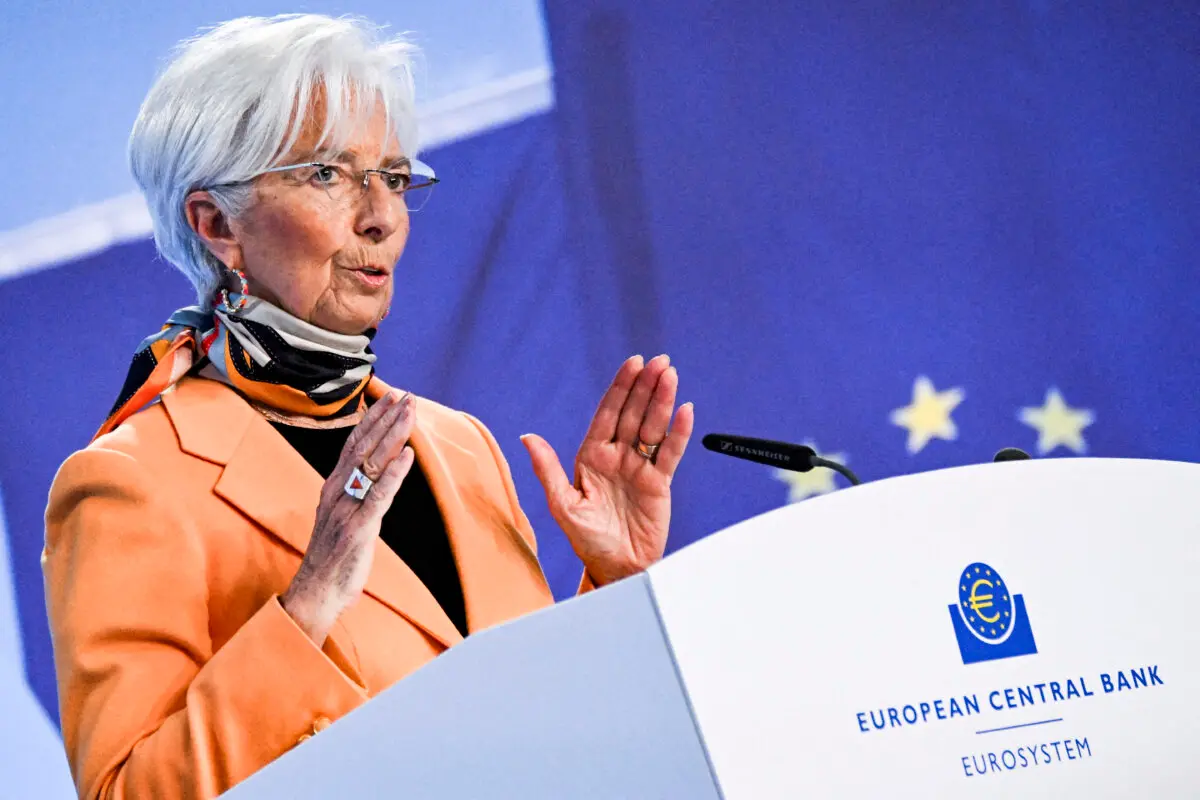
In addition to Warsh, the panel featured European Central Bank President Christine Lagarde, Bank of England Governor Andrew Bailey, and Bank of Canada Governor Tiff Macklem.
Updates to the Monetary Task Force
After June’s Federal Open Market Committee meeting, Warsh revealed that he has launched several monetary task forces to address the balance sheet, Fed communications, data utilization, and more.
While details remain scarce, Warsh confirmed that a personnel announcement could be made as early as next week—and the members could be outsiders.
“Some of them would have been folks in seats like this in prior years; some would have been academics in the audience,” he stated.
“But we really tried to find the best minds in the economics profession among practitioners, experienced hands, including people from countries outside the United States.”
One of Warsh’s top criticisms is the overreliance on outdated economic data and figures from government agencies compiled from irrelevant surveys.
This may have been a shot at the Bureau of Labor Statistics, which publishes the monthly nonfarm payrolls report.
The federal agency has been the target of scorn for its massive employment revisions and lack of adaptation to falling response rates.
“My hope, my aspiration, is that nine-12 months from now we’re going to be using new technologies to understand what’s happening in the real economy in a contemporaneous real-time way that positions us as central makers to make better decisions,” Warsh said.
Another complaint from Warsh has been about forward guidance, including the Summary of Economic Projections and the dot plot.
Once the task forces complete their jobs, forward guidance will likely be scrapped.
Over the past 25 years, the Fed has used this monetary policy tool to communicate its interest rate intentions, allowing markets to do some of the central bank’s work.
Warsh—and his colleagues on stage—say that while it can be useful in periods of economic uncertainty, it is unnecessary in calm economic environments.
“We have found common cause,” Lagarde said. “I have one regret: it’s to have felt bound and compelled by forward guidance.”
When asked about the Fed’s economic outlook, Warsh responded, “No forward guidance, no forward guidance.”