General Motors stock increased by nearly 15 percent on Oct. 21 after the Detroit-based automaker announced its third-quarter results and updated its full-year earnings guidance.
The company raised its full-year earnings before income tax (EBIT)-adjusted earnings outlook to $12 billion–$13 billion, topping its previously announced guidance of $10 billion–$12.5 billion. It also expects 2026 to be even stronger as it mitigates losses on electric vehicles (EVs) and scales back EV production capacity.
Mary Barra, GM’s chair and CEO, said in a letter to shareholders that the company aggressively expanded EV production over the past few years in response to more stringent regulations for fuel economy and emissions standards. However, changing regulations and the elimination of a federal tax credit of $7,500 on Sept. 30 for new EV purchases led to soft sales in the sector.
“It is now clear that near-term EV adoption will be lower than planned,” Barra wrote.

“That is why we are reassessing our EV capacity and manufacturing footprint. The work, which is ongoing, resulted in a special charge in the third quarter, and we expect future charges. By acting swiftly and decisively to address overcapacity, we expect to reduce EV losses in 2026 and beyond.”
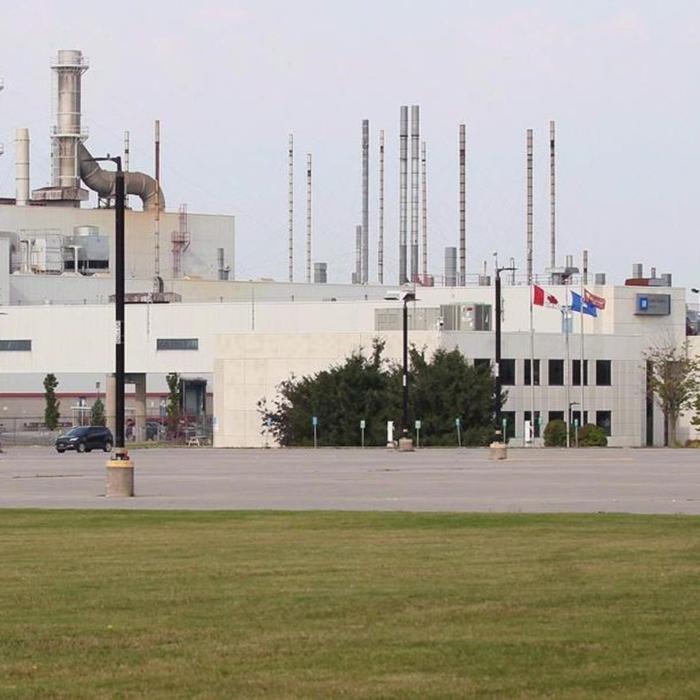
Kristian Aquilina, president and managing director of GM Canada, said the decision was driven by flagging market demand.
“This continues to be an uncertain time for our workforce at CAMI, and we are committed to working closely with our employees, Unifor and the Canadian and Ontario governments as we evaluate next steps for the future of CAMI,” Aquilina said.
Despite its troubles in the EV market, GM’s third-quarter sales of more than 710,000 vehicles, driven largely by record sales of crossover vehicles and SUVs, led to a U.S. market share of 17 percent, its highest percentage since 2017. General Motors sold 67,000 electric vehicles in the quarter, about 16.5 percent of the nation’s EV market for the quarter.
GM also said that a lower-than-expected negative impact from tariffs helped bolster its third-quarter earnings. The full-year gross impact was adjusted downward to $3.5 billion–$4.5 billion from the previously announced expectation of $4 billion–$5 billion impact.
Last week, the Trump administration announced it would extend an offset of 3.75 percent on the manufacturer’s suggested retail price of medium- and heavy-duty trucks to help offset tariffs on imported parts.
“The MSRP offset program will help make U.S.-produced vehicles more competitive over the next five years, and GM is well positioned as we invest to increase our already significant domestic sourcing and manufacturing footprint,” Barra said.