General Motors said it will spend between $1 billion and $1.5 billion in 2026 to bring more automobile production to the United States as it strives to offset the ongoing impacts of tariffs. Meanwhile, the company will introduce a new line of gasoline-powered Cadillac vehicles beginning in 2027 in a clear shift away from electric vehicles (EVs).
The Detroit-based automobile manufacturer stated during its second-quarter earnings call on July 21 that it will start onshoring significant manufacturing starting next year, bringing domestic production capacity to more than 2 million vehicles and reducing its exposure to tariff charges.
GM said it paid approximately $900 million in tariffs in the second quarter and expects to realize similar charges in the third and fourth quarters. GM maintained its forecast of full-year bottom-line charges of $2.5 billion to $3.5 billion from tariffs.
Despite the headwinds from global tariffs, GM raised its full-year 2026 earnings forecast after reporting second-quarter revenue of $48 billion and adjusted operating profit of $3.9 billion, driven by strong vehicle sales, reduced losses in its EV segment, and strong performance across multiple business segments.
“We continue to strengthen our product portfolio, grow software and services revenue, lower our warranty costs, reduce EV losses, increase operating efficiency and develop new revenue opportunities that drive improved results this year and going forward,” GM CEO Mary Barra said during the earnings call.
GM expects adjusted full-year operating income between $14 billion and $16 billion, topping previous guidance of $13.5 billion to $15.5 billion. It forecast adjusted earnings per share of $12 to $14, topping initial guidance of $11.50 to $13.50 per share. Adjusted automotive free cash flow was raised to $9.5 billion to $11.5 billion, up from $9 billion to $11 billion.
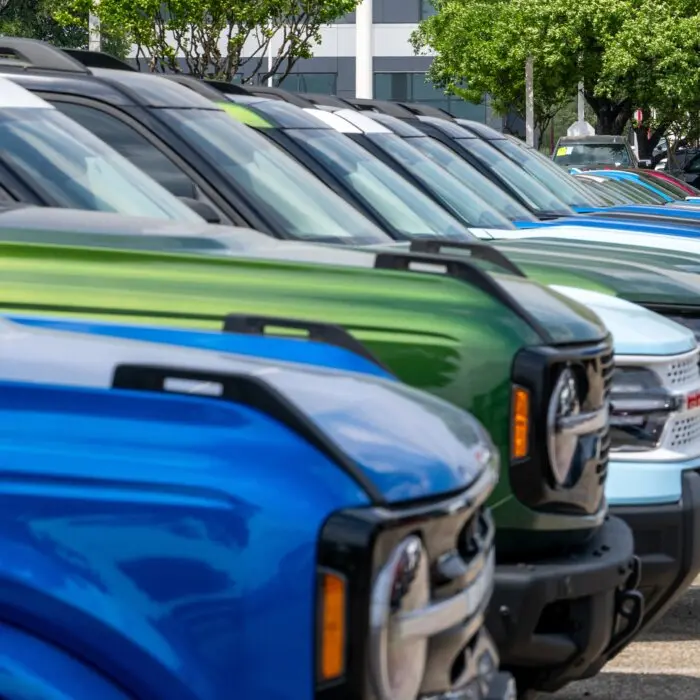

GM’s share of the full-size pickup market in the United States was more than 42 percent through the first half of the year, with strong commercial demand leading to record full-size pickup deliveries in its fleet business in the second quarter, the company noted.
GM highlighted the launch of a new line of gasoline-powered Cadillac vehicles that should hit the market next spring and continue into 2028. Barra said the new XT6 will return to North American markets to highlight production of three internal-combustion engine Cadillacs, including redesigned CT5 and XT5 models. The internal-combustion engine lineup will complement Cadillac’s existing Escalade, Vistiq, IQ, and OptiQ EVs.
In its push to bring manufacturing back to the United States—GM in June 2025 said it was investing more than $4 billion in its U.S. manufacturing plants—the automaker will shift production of the Chevrolet Blazer to its Spring Hill, Tennessee, manufacturing plant starting in 2027, and move production of the Chevrolet Equinox to its Fairfax assembly plant in Kansas City, Kansas, by mid-2027. It will also begin production of full-size sport utility vehicles and light-duty pickup trucks at its Orion Township, Michigan facility in early 2027.
GM has a network of 50 U.S.-based manufacturing plants and parts facilities, but it imports parts, accessories, and other components from China, South Korea, Mexico, and Canada. It has four vehicle manufacturing sites in Mexico, as well as multiple vehicle assembly plants and parts distribution centers in Canada.
Tariffs aren’t the only headwinds pressuring the largest automaker in the United States by sales volume. Chief Financial Officer Paul Jacobsen said commodity inflation, logistics, and higher computer memory costs would incur charges of $1.5 billion to $2 billion for the full year.
GM spent $400 million in the first half of 2026 in its efforts to onshore production, strengthen its supply chain and expand software capabilities, Jacobsen noted.
“We expect these costs to ramp further in the second half as we approach production in 2027,” he said.